inspiratia’s Decarbonising Central and Eastern Europe summit 2026: highlights
 Maya Chavvakula
EU
MultisectorsEventFinancial CloseEsgFinancingGeopoliticsPolicy & Regulationinspiratia gathered industry experts and commentators at the Presidential Hotel in Warsaw on 19 March for a discussion on some of Europe's most promising markets for renewable energy deployment, countries in Central and Eastern Europe (CEE).
The overwhelmingly positive response to our first-ever event in Warsaw was in line with the investor appetite for the region, culminating in a spirited debate over not just pure play renewables, but also transition fuels, which will be pivotal to Europe's energy security.
We kicked off the day with welcoming remarks and an overview of the day's discussion themes from our Head of Intelligence, Daniel Atzori.
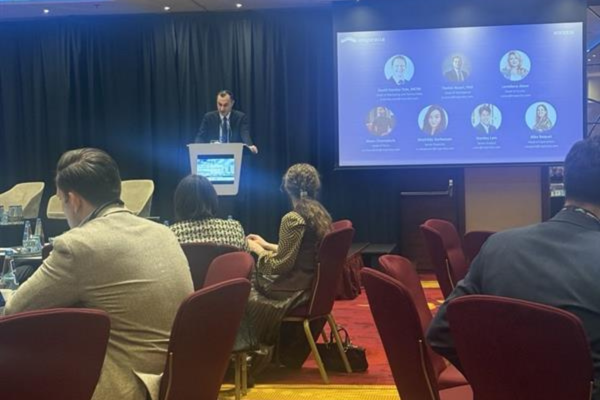
This was followed by a keynote speech by European policy expert Neil Makaroff, Director at Strategic Perspectives, a climate action think tank.
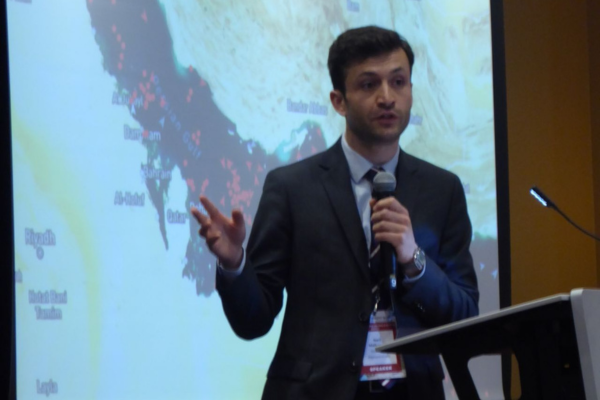
Makaroff touched on the energy crunch and how the geopolitical tensions of late have highlighted the need for energy independence. He highlighted the strategic importance of the CEE nations, for the EU, particularly Poland, Hungary and Slovakia, which continue to lead the bloc's manufacturing capabilities within the BESS sector.
The first panel of the day was centred around the financing models and opportunities in the CEE region. Speakers included:
- Carmen Izquierdo Serrano – CEO of nTeaser
- Letizia Coradeschi – Director of Energy Transition (Credit) at Gresham House
- Adrian Cantos Cuevas – Senior Project Finance Manager at Econergy
- Stefan Vatchev – Head of Renewables, Energy Transition & Natural Resource at CIBC
- Constantinos Peonides – Co-founder & CEO of MEGGITT
The panel was moderated by Rafa Sanchez, Head of Risk Management (Iberia) at PMC Treasury.
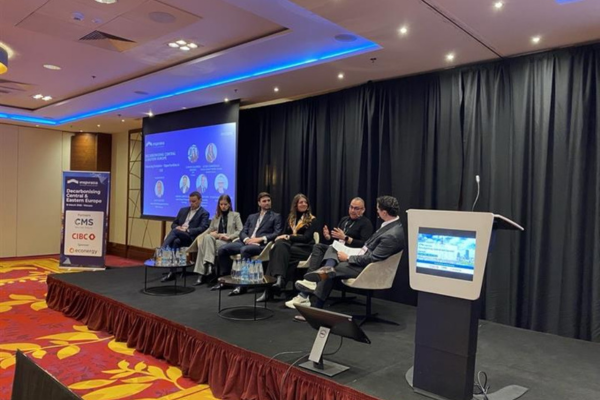
Key takeaways:
- Polish funding requirements are large, but there is enough political and policy push to meet demand. The country is leading the way for renewables buildout, including the introduction of the longest offshore wind CfD in Europe
- Investors are becoming increasingly comfortable with mandates in CEE, but key challenges include the "information gap", which could delay due diligence in some cases
- Financiers need to adapt to the requirements of the market to make up for policy gaps
- Asset optimisation is becoming central to the renewables financing and refinancing
The second panel explored offtake opportunities and market signals.
- Alastair Hammond – CEO of Rezolv Energy
- Jakub Kupcu – Country Director Poland and Head of Origination CEE at Claritas Investments
- Guillem Miró – Director of Business Development EMEA at Grupotec
- Piotr Dobrzynski – Market Lead (Poland, Czechia and Slovakia) at Aurora
The panel was moderated by Daniel Atzori, Head of Intelligence at inspiratia.
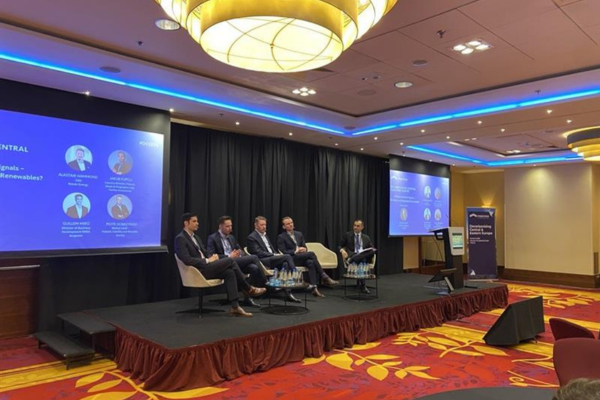
Key takeaways:
- CfD remains central to renewables off-take in Poland, but there is a gradual shift to PPA
- 7GW of contracted under PPAs in Poland, mostly solar, but hybrid is increasingly becoming popular
- The offtake conditions, however, are not uniform across all CEE markets, which could complicate investment in some cases.
- CfDs have historically been necessary in countries like Romania, but it is also possible to secure PPAs. The market is not as mature, but it is quickly catching up
- Public money is more useful in the C&I and PPA market to bridge the gap and redesign the market
- There needs to be a balance, as over-incentivisation by the public side remains a risk
- Traditional renewables (solar, onshore wind and storage) don't need public support; they need a stable policy environment to facilitate PPAs
The third panel focused on battery storage and the uptake of this asset class in the CEE. Speakers included:
- Gijsbert Huijink – co-founder of Sol Renewables
- Ioana Bozan – Executive Director of Origination (Infrastructure, Energy & Project Finance) at LBBW
- Jakub Fedorowicz – Head of M&A at R.Power
- Mathieu Ville – VP Of Origination at GoldenPeaks Capital
- Kacper Stanosz – Counsel (Energy and Infrastructure Practice) at CMS
The panel was moderated by Francesco Maggi, Investment Director (Europe) at Sosteneo Infrastructure Partners.
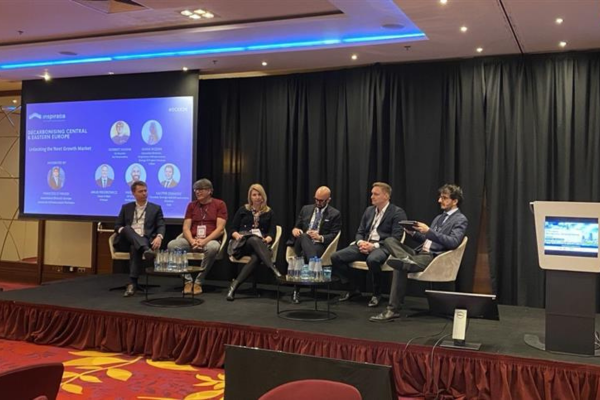
Key takeaways:
- The sector is evolving very quickly, but there is still a way to go
- CEE markets are focused on buildout, but policy uncertainty and the path to market may pose a roadblock
- Bankability of asset class tied to offtake agreements, with at least 50% contracted revenue required to attract lenders
- Romania: demand is exceptional, but the path to delivery remains uncertain. However, it is considered to be an "easier market to operate in" compared to German or Dutch alternatives
- Much more of a "can-do mentality" and much less resistance to renewables in Romania
- Increasing demand for flexibility in Poland and Romania
- First mover advantage is not the only determining factor, a strong argument for tried and tested
- A lot of untapped potential in Poland
The fourth panel looked at the opportunities in the Polish market across all asset classes. Speakers included:
- Piotr Maslejak – Investment Director at Amber Infrastructure Group
- Michal Sobczyk – Senior Technology Development Manager at European Energy
- Paolo Grossi – CCO at Galileo
- Martin Oravec – Vice-President (Poland) at RP Global
- Nicola Kopij Zanin – M&A Director at PST
The panel was moderated by Maya Chavvakula, Head of News at inspiratia.
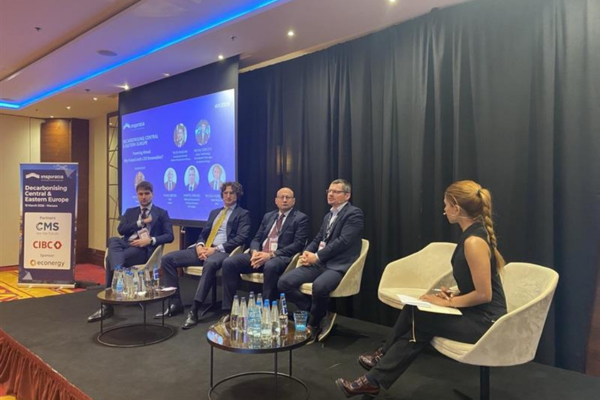
Key takeaways:
- Poland is promising and central to Europe's energy transition, but its policy needs to align with market interest
- UC84: threat of crowding out smaller IPPs in favour of larger international investors
- "zombie" projects are not as big of an issue (panel is not aligned on this)
- The 700m rule under 10H needs to be amended to the European standard
- Investment in transition fuels will not eat into renewables buildout
- Ramping up generation needs to be coupled with increased energy demand
- Despite policy uncertainty, Poland will still lead on decarbonisation within the bloc
Onshore wind and its deployment in CEE were central to the discussion for the fifth panel. Speakers included:
- Paolo Barabucci – Corporate Strategy and M&A at ERG S.p.A.
- Hassan Sabouri – Principal Renewables Energy Engineer at Mott Macdonald
- Rafal Skowronski – Head of Energy and Infrastructure (Poland and CEE) at JLL
- Adrien d'Ormesson – Director at Maxwell Advisory
The panel was moderated by Michal Andruszkiewicz, Partner (Energy and Infrastructure Practice) at CMS.
Key takeaways:
- Policy certainty key to delivery certainty
- 10H in Poland remains restrictive, but projects are progressed although at a much slower pace (the panel is not aligned on this)
- Energy mix, price of electricity and permitting timeline remain crucial to delivery
- Grid readiness continues to be a major hindrance
- Income certainty and revenue certainty in Poland are not an issue; it is more the technical specs that are constantly updated due to external factors, including security concerns over the war in Ukraine
- In Poland, time to market and route to market are the issues, with 7 years in some cases. In comparison, Romania goes through the same process in 3 years
The penultimate panel took a look at the offshore wind market in Poland and future opportunities in the other CEE countries. Speakers included:
- Patryk Figiel – Head of Energy & Infrastructure practice at Addleshaw Goddard
- Krzysztof Jaworski – Founder at KJ Strategy
- Emiliano Scrivo – Executive Director (Renewables & Energy Transition) at CIBC Capital Markets
The panel was moderated by Mathilde Dorbessan, Senior Reporter at inspiratia.
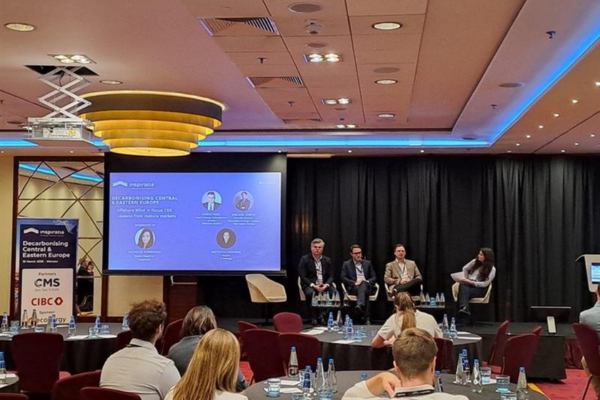
Key takeaways:
- Local supply chains and expertise essential
- CfDs have been central to derisking investment in Poland
- Grid infra remains the key hurdle, "particularly in Poland"
- Planned inclusion of nuclear, along with large generators such as offshore wind, puts immense pressure on the local grid. Offshore wind and nuclear to connect in north Poland
- The seabed around Poland is "complex", unexploded ordinances from WW2, along with other geological issues, pose additional risk
- A complex political element that could slow down deployment
- Difficult to build offshore wind in Poland without CfD, same case for mature markets like the UK, Germany
- Offshore wind is more vital for Poland than the onshore alternative
- Poland is "a little late to the party", but it is uniquely positioned to accelerate the pipeline
The final panel delved into the often-overlooked element of energy transition and independence – transition fuels. Speakers included:
- Anna Chmielewska – Associate Director/Senior Banker at EBRD
- Calvin von Bassewitz – Project Manager at Finadvice
- Rafal Staskiewicz – Market Manager (CEE) at NORD POOL
- Karol Chylinski – CEO of RAWICOM Group
The panel was moderated by Kostadin Sirleshtov, Head of Energy & Climate Change (CEE) at CMS.
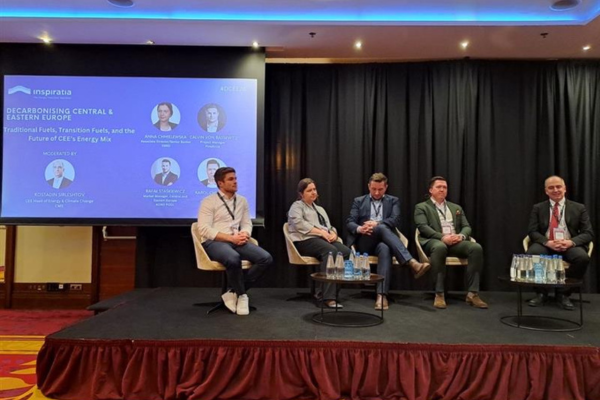
Key takeaways:
- For the short-term gas peakers will be pivotal to the energy transition. In the long term, this can be replaced by hydrogen derivatives
- Balancing capacity is essential to regulate price volatility
- Flexibility in the system, demand side and supply is essential
- Nuclear will need to be part of the baseload mix to facilitate coal exit (panel not aligned on this). Economic viability for nuclear remains precarious, making it unattractive to private investors
- SMR: comes with lower security factors, quicker to deploy, but loss of economies of scale could result in higher electricity prices. No permanent solution for waste disposal, which further makes it an unattractive prospect for private investors
- Political rhetoric may hinder the transition
A comprehensive write-up of key takeaways from this summit will be published in the coming days.