Q&A - UK Infrastructure Bank: Creating a niche in financing renewables
 Ashkenaz A.L.
EU
RenewablesQ&AThe UK Infrastructure Bank (UKIB) is a new, government-owned policy bank launched in June 2021 to finance infrastructure that meets sustainability and local economic growth criteria. The bank invests in sectors that are critical to the energy transition but do not receive as much attention from lenders as needed.
In August [2023], UKIB made its first direct equity financing, investing £24 million (€27.8m $30.6m) in Cornish Lithium. Meanwhile, in May [2023], UKIB invested in multiple battery storage and grid stability facilities across the UK in the bank's first debt transaction in the sector.
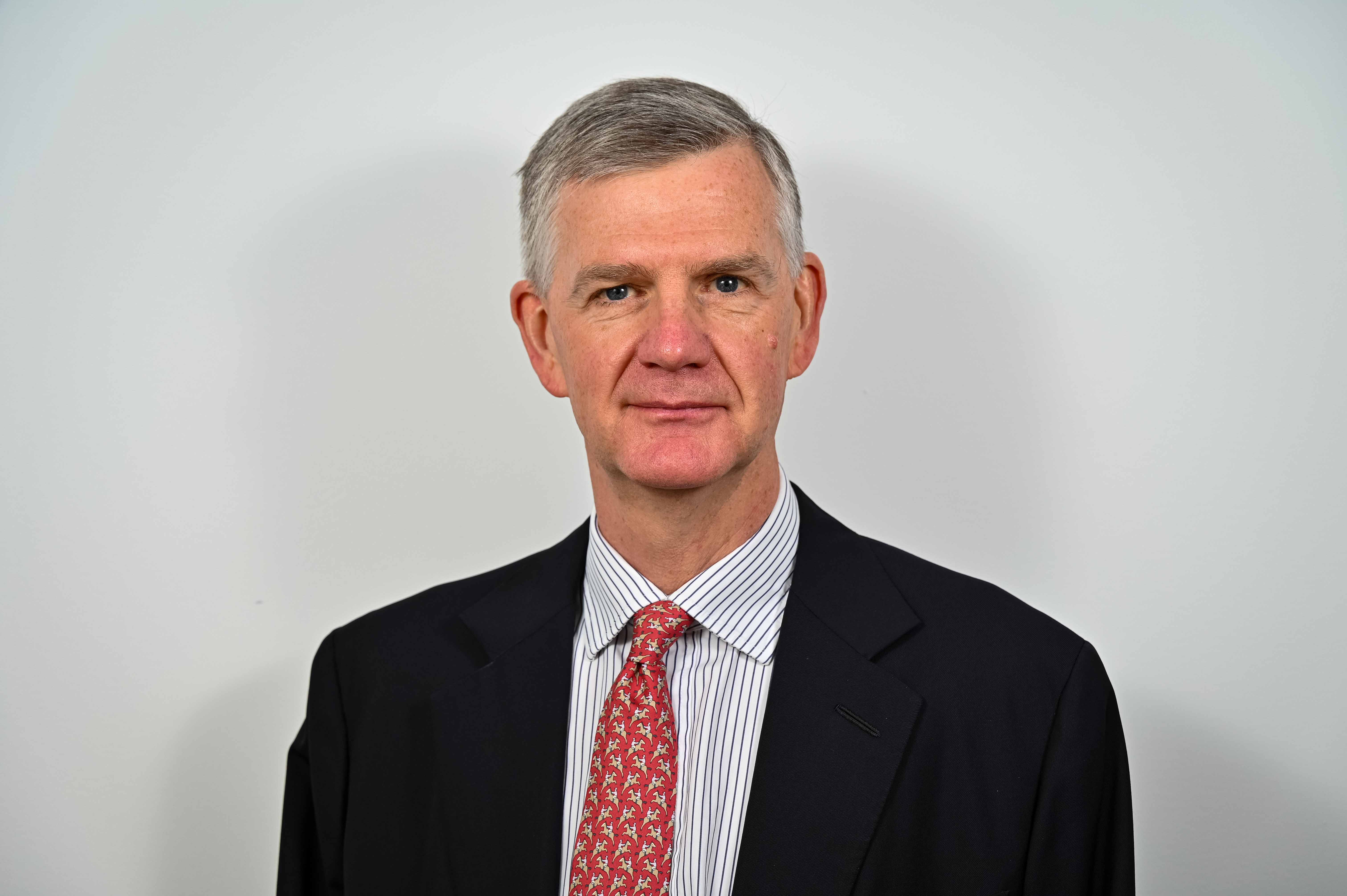
inspiratia speaks to Ian Brown, the head of banking and investments at UKIB, on its unique role in financing renewables, especially when compared to institutional players like Santander and Barclays. Brown, who is responsible for the origination and execution of the bank's lending and investing activities, notes that the UKIB does not compete with such lenders but offers its services in sectors that banks may shy away from.
How does UKIB identify suitable investments?
We were set up two years ago and were capitalised with £22 billion (€25.7bn $27.7bn), which we can use by way of debt, equity, or guarantees, and are very flexible with use across the capital structures.
There are four guiding principles to what we do. Firstly, everything we do has to be either in support of regional and local economic growth or help the country get a bit nearer to net zero.
Secondly, we're here to do infrastructure that gets us nearer to one of those two purposes, and that's either physical infrastructure, its infrastructure systems, or infrastructure technology.
Third, we need to make a profit. A lot of people see us as part of government and therefore think we might be doing grants. We don't. We're investing as far as possible on a commercial basis so that we get a return for the taxpayer.
And then, lastly and importantly, everything we do should crowd in other capital, either immediately or over a period of time. So we're not trying to compete with anybody, but the idea is we're here to fix problems. We're not trying to compete with banks.
And then we operate across five sectors. So clean energy is by far the biggest one where I think we'll do most of our work, and that's everything from hydrogen, wind, solar, carbon capture and storage (CCUS) when that comes on board, and then we look at green transport, water, waste and digital. So those are those are key areas.
What kind of role does UKIB play in the market, in contrast to other major players like NatWest?
If you're in a mainstream commercial bank, you will be almost entirely lending money rather than investing equity. The key thing you want there is relatively safe lending, and therefore, you are not going to be particularly adventurous with the sorts of industries that you're prepared to back. So, you want stuff that's really tried and tested, where you will see a financial model, and you can look at the assumptions around whether you are going to get your money back or not, but you're not taking a whole lot of risk on whether this technology will work; will the policy change or will the support programme be different in a few years' time.
We're not trying to compete with Barclays or NatWest or investment banks because there's plenty of private capital doing that. What we're trying to do is find problems that other equity or other debt players will not go near. It might be because maybe the technology is just too early stage. It may be that the amount of market and revenue risks risk is too great. It may be that the nature of the asset just needs a very, very long tenor, and banks typically have a problem with that. We can help with all of that.
How does UKIB manage and mitigate risk, given that it is taxpayer-funded?
So, we do deliberately take more risk than the market will. That is what we are here for. But we do not take crazy risks. We have the same credit committee process and credit committee sign-off, and we have a big risk team the same as any other bank. It is just that our tolerance, because of what we are here to do, is greater than some of those other major banks.
We are very conscious that we are capitalised with public money. As I said earlier, we are here to make a profit overall for the taxpayer. So, we have a return on capital hurdle that we need to meet. As long as we meet it, that will mean that the taxpayer will get a decent commercial return.
We've got quite a large team of experienced bankers and investors. Our processes are similar to other lenders. It's just because we are set up to solve problems, we have a slightly different mindset.
Where in the renewables sector is UKIB interested in now?
Within the five core sectors, there are 16 subsectors that we cover. Some, at the moment, need more help from us than others. Right now, there's not a lot of need for our help in solar, which is actually a fairly mature industry.
Whereas with something like CCUS, for example, sometime towards the back end of next year, I suspect we're going to be very busy here.
We are working on battery storage and have a battery storage fund that will look at some very specific equity requirements to push that market along. We are mainly looking at debt because there's a small handful of lenders involved in that market.
As technology is progressing, these batteries are getting bigger and bigger, and so the financing requirements are getting bigger and bigger. And we don't think there is going to be enough debt to go around.
We are doing some work on the electric vehicle (EV) rollout, we have got a fair bit of hydrogen in the pipeline, and we've just announced a deal on lithium extraction in Cornwall. We have a very full pipeline across all of our sectors, but there will be areas of concentration.
UKIB has mainly focused on debt investments, although it can do equity. Do you plan to make more equity investments in the future?
So, rather like the sectors, we are relatively indifferent to how we use the capital. Of the £22 billion (€25.6bn $27.7bn), we have got a big £10 billion (€11.7bn $12.6bn) chunk that we use for guarantees. In the transactions that were done in the first 12 months, actually, there was not much need for equity, certainly in terms of the volume of capital deployed.
I think this also reflects, in part, the way we've been building the bank. When we started off, the team we had was largely debt and guarantee bankers, not equity. So, a lot of hiring that I have been doing is with equity professionals that can help build up that part of our operation. But from here, whether we do debt or whether we do an equity transaction, we are indifferent. We can even do both in a transaction. It's really a question of what does the project need that the private sector cannot do.
UKIB has recently made its first investment in battery storage. How critical is that to your strategy?
It's certainly an area where we will be quite active. Because the batteries have only really been around for four or five years, it is a pretty nascent market.
Had we existed five years ago, we would have done a lot of equity and some mezze financing to get that market going. Right now, there are a reasonable number of transactions being done, but there is not anywhere near enough private capital in the sector yet. That is also because a lot of the ways the battery market is being set up involve taking merchant risks.
Also, the projects are getting quite big very quickly. 100MW is no longer considered a "large" battery. The 500MW sites are very big and quite expensive, and they're going to need more financing than there is currently available. So, I think we will be active there because that looks like a space where our capital is needed.
How important do you expect CCUS will be in the UKIB's strategy moving forward?
In the timeframe of the next two to three years, I think there is going to be a lot of activity in that area. We are in talks with industry across the three component parts - the emitters, the transport and the storage. Transport will probably need us the least because that's very well regulated, and regulation gives comfort to lenders because it gives certainty. But even then, these things are going to be very expensive because they are the first of their kind.
But on the storage site, almost certainly, we will be needed, but we'll see how that pans out.