Q&A - Triodos Investment Management: Tackling Europe’s heating problem
 Ashkenaz A.L.
Triodos Investment Management is a globally active impact investor based in the Netherlands. It has about €5.7 billion (£4.92bn $6.03bn) in assets under management with over 750 investments around the world. The firm has several funds with a variety of offerings in the sustainable infrastructure space.
Triodos has a portfolio that includes assets in solar, wind, and battery storage. However, the company has also been keen to tackle the challenge of decarbonising heat in Europe, which turned into a full-blown crisis following the invasion of Ukraine in February 2022.
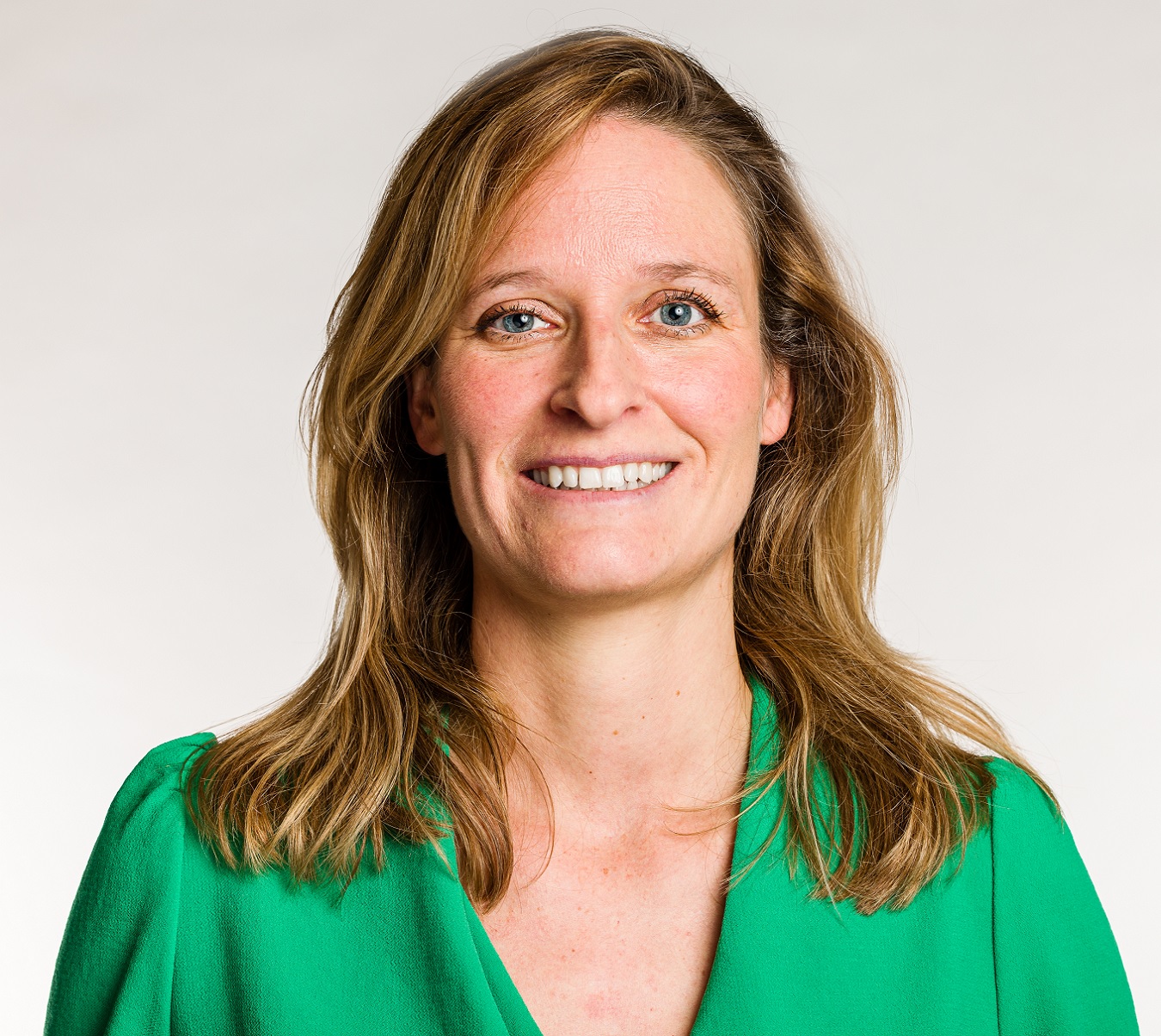
inspiratia speaks to Daphne Postma, the fund manager of Triodos Energy Transition Europe Fund, on how the investment manager aims to tackle bottlenecks in the energy transition.
What kind of sectors is Triodos Investment Management interested in the renewables space?
We have a few different funds that invest in renewable energy projects within Triodos IM, both in private debt and equity. One of them is the Triodos Energy Transition Europe Fund, a fund which invests in companies that generate renewable energy, improve energy efficiency and/or offer energy flexibility.
As an equity player specifically, we look not only at wind and solar, but rather one of the primary areas of interest at this point in time is storage. We need a lot of battery storage in order to absorb the quick increase in renewable energy generation. Especially in the Netherlands, where we've seen a real boom in solar energy over the past year. We've gone from a kind of a laggard in rooftop solar energy, for instance, to more of a front-runner in relative terms. This will need to be absorbed, and this is also why we see that the storage gap is a really important element to invest in right now.
Another sector for us would be heat, because globally it is about 50% of the total energy demand. This sector still has a long way to go before becoming sustainable, so there we are looking into more electrical heating and different sources and sustainable solutions.
Of course, EV charging is also of interest to us. But it has been a bit overpriced, I would say, over the past years. But it is something we remain interested in, specifically if there is a more integrated case.
Why do you find that the EV charging sector is overpriced right now?
It was a very hot topic in the market for quite a while. Especially from the perspective of growth equity, it caught a lot of interest in the market.
But the same goes for storage. I think the technology is having a similar surge of interest that EV charging had about a few years ago. I think by now, storage is slowly getting to that point as well where it has caught up with investor interest.
What kind of heating solutions are you looking at to be an answer to decarbonising heat?
There are several technologies that are going to be part of the solutions for the sustainable heat challenge that we face. For our fund, the ticket size that we can do for growth equity is about two to five million; for asset financing, we can go up to 20 million. Such ticket sizes mean that larger geothermal projects are a bit more challenging for us, but we will also be looking at portfolios there.
What is also interesting to us are consumer heat pump portfolios, which is something that governments are trying to stimulate. But you also see that where governments are trying to increase the speed of the rollout, it sometimes also leads to a bit more complication.
For instance, in Germany, there was an interesting trend where the government tried to incentivise consumers to make the switch by banning gas-fired heating by 2025. That has led to a bit of a backlash where consumers felt that they need to invest as soon as possible to still get a gas-fired installation. So, this can sometimes lead to counterintuitive results.
But we think that in the longer term, heat pumps are going to be one of the solutions to get to sustainable heating, and fit into the overall profile of becoming more sustainable for consumers.
Is there something you would like to see in particular from governments in order to accelerate the heating transition?
Mostly, governments need to incentivise demand, and I think that goes across the board. It's not only by incentivising attitudes through subsidies to make the switch but also through mechanisms. For instance, CO2 pricing can be something that stimulates the demand for less polluting solutions.
Meanwhile, is there something that needs to be done to incentivise investors?
When looking at government policies and investing in renewable energy, both stimulating demand and predictability are key to evolving the investor climate.
For instance, in the offshore wind sector – a sector in which investments take a really long time to be completed, sometimes years – I've seen that this has been an issue in the past where tenders were structured in a certain way, but then these tender policies were changed. This, of course, doesn't help to increase investor appetite.
One of the principles of the Triodos Energy Transition Europe Fund is to remove bottlenecks in energy transition. So what exactly does that mean? And how do you go about achieving that?
Both from an impact perspective and a risk-return perspective, we want to be present where other parties in the markets have difficulty addressing it. We do that by making use of our more extensive knowledge of the assets side of the renewable energy sector. We basically have a suite of solutions, including equity and mezzanine financing. And we can offer that both for project finance and for growth equity.
That means that we can offer solutions at an earlier stage than other parties could and are also more interested in a range of technologies.
Solar is, for instance, a very interesting example. What you see is that there are a lot of smart business models in the market that try to fix different bottlenecks such as flexibility and storage behind the meter. However, it is actually quite challenging to make those smart business models work.
A start-up may, for instance, have a great business model, but in order to convert it into actual business, they need to make investments, which they can't or don't want to do on their balance sheet, because it's not their core business. That's a phase where we can step in.
How does Triodos approach risk?
Part of our initial scrutiny is that we look for a return that we think is fitting for the risk profile that we have and that we promise our investors.
As I mentioned before, we have a few different instruments. The majority of it is project finance, which has rather reliable cash flows. It's the more run-of-the-mill solar and wind assets.
Then, we also have investments in more greenfield development portfolios, which is always on a portfolio level, and that's generally junior debt, with securitisation. And then we have a small part, up to 25%, of growth equity capabilities.
Are there any emerging technologies that you're interested in?
One interesting aspect would be thermal energy storage. Specifically, when you're looking at industrial purposes, there's a large demand for high-temperature heat. But in order for it to work with the large supply and demand, it will need to be much more efficient.
If we're looking at battery storage, second-life battery storage is actually interesting. Not necessarily a new technology, but all those EV batteries will be flooding the market, and there are a lot of applications which can make perfect use of those second-life batteries. It also solves a lot of other problems for recycling and waste management.
And as a final point, we're also seeing the cost of solar PV going down even more tremendously which leads to more integrated business cases being possible. For instance, as an impact investor, we're also very much interested in solutions such as agri-PV, where basically, you're using PV systems to both protect the crops and generate renewable energy.