Q&A- Santander: New opportunities in carbon capture
 Ashkenaz A.L.
EU
MultisectorsQ&AFinancingGeopoliticsMOUM&AEsgSantander Corporate & Investment Banking has been an active lender in the renewables space for nearly three decades. The bank was placed third in inspiratia's Q3 2024 league tables, with 15 deals across Europe.
While financing traditional renewable generation projects is still a key part of its strategy, Santander has increasingly been diversifying its mandate to cover newer technologies. The bank is currently one of the most prominent lenders in the battery energy storage system (BESS) sector, highlighted by its involvement in the recent financing of the Cellarhead BESS project.
However, recognising the importance of decarbonising hard-to-abate sectors, Santander is increasingly looking at other technologies like hydrogen, carbon capture and storage, and biofuels like sustainable aviation fuels (SAF).
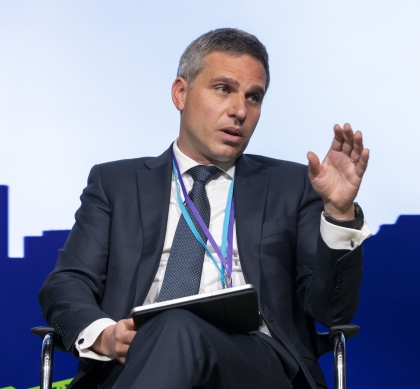
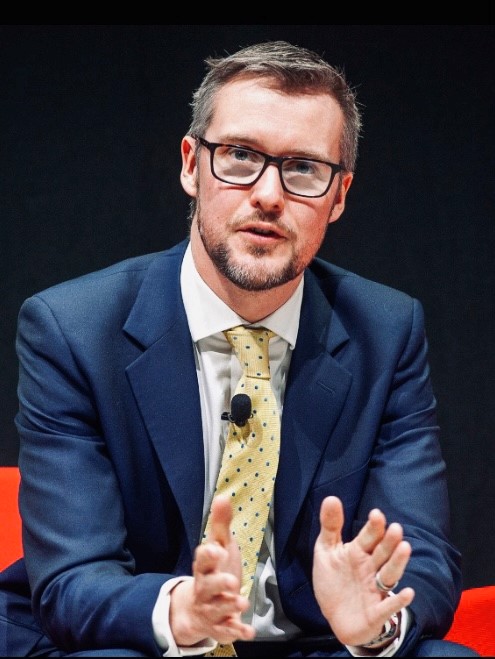
inspiratia sat down with Benoit Felix (right), global head of structured finance, and Bart White (left), EMEA head of energy structured finance at Santander CIB, to discuss the bank's evolving role in financing the energy transition.
Felix highlighted carbon capture as a major trend moving forward, evidenced by the recent financial close of The Northern Endurance Partnership and Net Zero Teesside Power projects.
White expanded on Santander's role as one the biggest BESS financiers and discussed steps that storage developers can take to minimise risks when presenting their pipelines.
Starting with a broader overview, what guides Santander's strategy in the energy transition space?
Felix: To summarise in one sentence, what we are trying to do is to position the bank as a trusted advisor and the preferred partner for all of our clients in their transition towards a lower or low carbon economy. I insist on this – all our clients – because this is not only about energy clients, this is about every single sector. We are actively working with people from industry, real estate, oil and gas as well, and we are helping them in all the possible ways.
This is not only about renewable energy, which is a big part, but we are also helping them in other things, such as waste management, water management, evolving their own business, and proposing the relevant targets for shaping those companies in the future.
We want to be the preferred adviser because we have been doing this for three decades now, so we really have knowledge that only a small number of players in the market can have.
Another thing we started five years ago was to diversify from traditional renewables to other asset classes like hydrogen, battery storage, circular economy, biofuels, carbon capture, etc. We have been involved in M&A and financing very early into those new asset classes.
We can propose to our clients the entire catalogue of energy transition solutions, both from the lending side and the advisory side, and we combine all this in a one-stop-shop approach. This strategy is clearly paying off, as you can see in the league tables.
You mentioned going beyond traditional renewables. What opportunities do you see in the broader decarbonisation space?
Felix: If you look at the transition of any company, the first step is always green energy. Then, obviously for industrials, you think about petrochemicals, cement, and steel, you need to do something with CO2 emissions, and that is where we see carbon capture as one of the major trends in the coming years.
It is a very quick win because it is not a new technology. We know how to capture carbon, what is new is how to store it or to do something with it.
We see a huge opportunity in carbon capture, and in the UK, there are very big projects and infrastructure in place to store this carbon. In other countries, you will see some projects that will capture, compress, transport, and store somewhere. We are looking at many transactions in the Netherlands and other countries.
You are also going to see a lot of biofuels, SAF, etc. Hydrogen is a little bit of a longer shot. But once again, when you look at the applications of the molecule, you could do green steel, you can do green fertilisers, you can do a lot of things beyond the hydrogen molecule. We are a firm believer in ammonia as a mid-term to long-term play. We are looking at very big projects that will come into the market in the next year. So, it is not as immediate as carbon capture could be.
The last one is battery storage. Battery storage is the big theme right now, as it is a necessity for the grid in Europe.
White: As we evolve the grid very quickly from conventional generation to renewable generation, the increased amounts of volatility on the grid create issues, and storage solutions are key. We have been the leading bank in financing new BESS projects, initially in the UK but now across Europe. So, we are looking at projects in Spain, Italy, the Netherlands, France, Germany, and Finland at the moment.
In addition to that, we are now looking at different forms of storage. Battery storage is conventional, but we are looking at pump storage, redux flow and gravity storage. We are looking at all sorts of different technologies that might be relevant in the context of the grid system in the future.
What is your appetite for merchant risk exposure for generation assets?
Felix: We have a growing view that it is a good moment to start doing merchant deals. But for selective clients, selected projects and the right metrics. We are one of the few players that can do merchant because we understand the market. We understand how projects would evolve over time.
You need to acknowledge at some point that some merchant is a necessity for the system. The question is how much and how you can control it.
We came up with a structure that makes sense and that provides flexibility to our clients to have merchant risk but with the view of flipping into a more contracted kind of business model at some point.
That is the way we approach it. But we are selective. We select our clients, and we will select good projects where the structure, the pricing and the commercial viability are the right ones. For those that tick the boxes, we can deploy our balance sheet.
Santander is one of the more active lenders in the BESS space. But as revenues (especially in the UK) have come under strain, have you changed your strategy in any way?
White: No, in short, it has not. In some sense, having a market reset is quite helpful because it means that you have a better understanding of the paradigm of how the market operates. We learn more when the market evolves because these are teachable moments. Our understanding of how the battery revenue system works now is better than perhaps it was a few years ago.
At the same time, the price of new batteries is expected to evolve and come down. As CapEx reduces, batteries can be sustained potentially on a lower level of revenue. We can create financing structures which allow for the volatility in revenue generation.
We are very much open for business, and we can provide new solutions, which are better structured for the way the market has been proven to behave. As we better understand the subsector, we are evolving to a more specific battery form of financing. I cannot say too much more on that, because each situation is quite bespoke. What we always encourage is for anyone interested in battery financing to come to Santander, and then talk about their specific situation. Then we can talk about their bespoke specific solution.
It depends on the market, it depends on how much the project is tolled versus merchant, versus some form of subsidy underpinning. It depends on whether there is a floor or not. The market is quite complex, technology is complex, and therefore the financing should be relatively sophisticated, it should not be generic.
What steps should BESS developers take to minimise risks when presenting their pipelines to lenders?
White: I think full transparency is always helpful early on in terms of the equipment and the revenues. The more detail we have, the more bespoke the solution.
But really, what I would encourage people to do is to come to Santander and have that conversation. The best way to think about bankability and think about establishing whether you can get your deal financed is to speak to the most active financier in the market.
Spain is your most active market according to our data, what is your outlook for the Spanish market in the next year?
White: Spain is our home market. We are very proud of the huge level of renewables investment that has happened in Spain. It is very important for us to continue to support and provide capital to deliver the next generation of projects in Spain.
Our pipeline for next year is very strong. So yes, we continue to see a large number of projects consented and being available to add to the grid. We have a very strong outlook going into next year.
Do you expect the BESS space in Spain to get going?
White: We are increasing the conversation around batteries in Spain as an adjacency to those new generation projects, whether they be co-located. Batteries would be very relevant to the Spanish system because the Spanish system is pivoting a lot towards solar and the periodicity of solar is a good fit for battery storage.
We do see a relevance in terms of batteries in Spain. Even the government is starting to put out some very ambitious targets around storage on the grid system in Spain. Clearly, we are still seeing some of the regulations crystallise around supporting the investment of new battery systems.
I think the whole market is going to evolve a lot because we have increased air conditioning, increased use of EVs and data centres. That is just three of many reasons why there is going to be more demand for electrons. As the demand side of the equation evolves, the supply side is already evolving because of renewables. So the whole grid will need to evolve.
Looking more globally, do you see the results of the US election having an impact on the sector, either in the US or even globally?
Felix: Well, I think it is a bit too soon to tell. The truth is the market is waiting to see those impacts. Volatility will be there in terms of ups and downs, and geopolitics will be a topic.
Going back to what Bart just mentioned, the demand on the power side is just massive everywhere. This is probably the case more in the US than anywhere else in the world. AI is actively reshaping the energy landscape completely. I think it is very hard to imagine the power demands of those new asset classes.
AI is of a totally different order of magnitude than the cloud data centres that we have been financing so far. Beyond all the geopolitics, as the world is embracing AI, this is going to drive massively the demand for new generation, be it renewables or traditional energy. The entire energy landscape will change massively because of the introduction of AI.
What is your outlook on hydrogen projects in Europe? How can developers create a bankable business case?
Felix: I think the answer is nothing new. We have been saying this for the last three to four years. We know what makes a bankable project. There is a long list, by the way. And the issue with hydrogen today is that the market is not yet there. There is no match between the offer at that price and the demand for that price.
I think the biggest bottleneck of everything is this gap, which translates into the absence of offtake. The one thing that makes a project bankable is actually solving the economic model of all those projects. These can only be fixed with offtakes. We are hearing a lot of MoUs signed, but no offtakes are being signed. The reason is that the gap is too high.
But let us see with the new instruments that the European Commission is putting in place, with the hydrogen bank and subsidies. The transition is an opportunity for growth and competitiveness. This requires well-coordinated policies which focus on incentives and market mechanisms.
The reality is that there are some niches that do work because, in those niches you can actually match the price. That is the case with H2 Green Steel, where if you look at the difference between the pricing of a ton of steel, traditional versus green, the difference is about $300 per ton. If you look at a car which has one ton of steel, the customer might be willing to pay that extra $300 to get a greener car. That is what we are doing, starting with those niches that work today. When you have the offtake solved, the rest is something that you can fix easily.