Q&A – RGreen Invest: Why the energy transition needs to be market-driven
 Mathilde Dorbessan
The energy transition has often been framed in terms of policy ambition: public good first, commercial opportunity second. But as government support wavers across major markets, this approach is showing its limits.
To scale at the pace required, the transition must be investable, anchored in projects with competitive returns and business models that can withstand macroeconomic and political shocks.
Infrastructure debt is playing a pivotal role in financing the next generation of sustainable assets. But behind the momentum lies a more complex reality: with rising interest rates, inflation, and supply chain volatility, the old playbook – long-term, low-risk, low-return – is no longer fit for purpose.
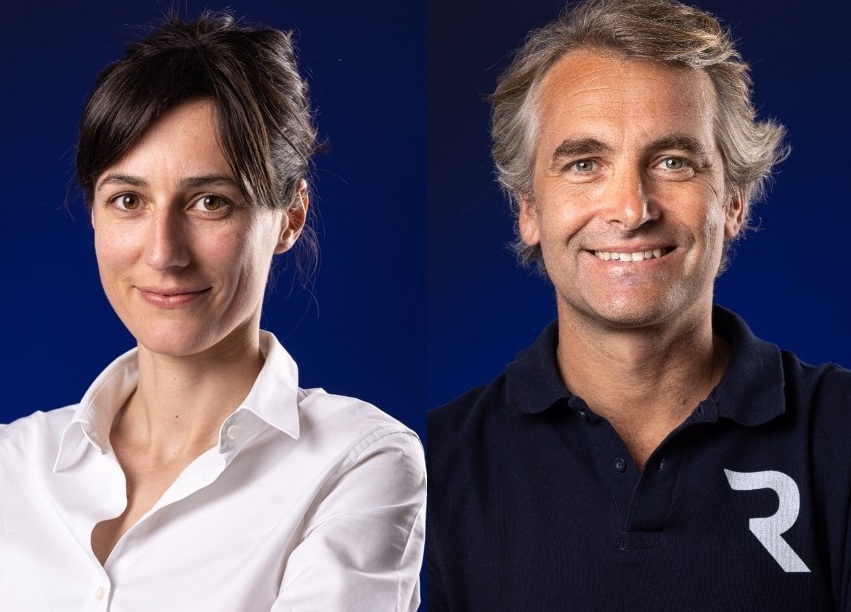
To explore this shift, and better understand the current fundraising climate, inspiratia sat down with Mathilde Ketoff, Head of Debt and Nicolas Rochon, CEO and founder of RGreen Invest, a French investment firm financing energy transition infrastructure across Europe and Africa.
Their ethos is mission-driven and pragmatic: if clean energy is to fulfil its promise, the market must be treated not as a constraint, but as the engine that drives it.
What comprises your infrastructure debt portfolio?
Ketoff: We manage three distinct infrastructure debt funds.
The first strategy is Infrabridge, which focuses on short-term financing – typically around two years – to support the construction phase of energy transition assets across Europe. This includes generation assets, grid stability projects, and, most recently, a transaction in geothermal energy. We are also currently financing the development of bio-methane facilities in Italy.
During the COVID crisis, our portfolio was less diversified due to market constraints, but we have since broadened our exposure. That reflects the growing range of opportunities in the market, driven by macroeconomic shifts, reduced capex and a renewed need for project financing.
The second is a long-term debt strategy, CATI, that we are managing for Crédit Agricole Assurance. This fund has a more traditional risk-return profile, focusing on assets with contracted cash flows. The underlying infrastructure is similar: renewables and grid-related assets, but it involves different types of sponsors.
The third strategy, Afrigreen, takes a very different approach. It provides long-term debt financing for projects in Africa, primarily in solar, storage, and wind. These projects are typically driven by demand from commercial and industrial (C&I) clients, often in off-grid settings where local utility infrastructure is insufficient or unreliable.
The energy transition is benefiting from strong momentum, but on the other hand, there is increased volatility. How do you explain that paradox?
Rochon: On the surface, we are seeing extremely favourable tailwinds for the energy transition in Europe. But these are driven less by environmental idealism and more by pragmatic factors: the need for energy sovereignty and the need to keep industrial energy costs low in order to remain competitive.
So we have moved away from a model that was heavily subsidised and motivated by climate goals, toward one that is grounded in market logic. Today's energy transition is increasingly shaped by solutions that must be commercially viable, and that has fundamentally changed the landscape.
We are benefiting from significant macroeconomic trends. Capex has massively decreased, and we are seeing the emergence of innovative business models, particularly around storage. Battery technology, for example, has been instrumental in enabling infrastructure deployment across Europe.
At the same time, we are moving away from the "old world" of 20-year power purchase agreements financed with 90% senior debt. That model offered predictable but low returns and high constraints.
The increased volatility we are currently seeing in the market actually plays to our advantage. It allows for double-digit returns and, in turn, a greater degree of resilience to macroeconomic shifts, especially rising interest rates. That is what makes this sector so exciting right now: it is inherently more robust and better aligned with current market realities.
Of course, this shift also demands greater selectivity. Certain asset classes – like biomethane, solar, storage, and wind – are showing strong performance. Others, like hydrogen or synthetic fuels, lack short-term economic viability and the capital needed to scale.
Ketoff: Our rationale is straightforward: there is already so much that needs to be done, so we need to focus on quick-win solutions. The priority is to strengthen Europe's energy independence and deliver energy at the lowest possible cost. That is the foundation for reviving European industrial policy, and frankly, that has always been central to our mission.
Rochon: Given today's economic and political climate, we have to get back to basics and ask, 'Is it profitable? Is there a viable economic model?' If not, then it doesn't make sense as an infrastructure investment today.
How are investors evaluating energy transition infrastructure in the current fundraising environment?
Rochon: I think investors are starting to realise that not everything they were sold was truly infrastructure. Some assets did not have the underlying economic strength to justify the label.
They have also become more aware of the impact of interest rates—especially on low-return projects. We are starting to see issues emerge, particularly with investments made between 2018–2019 and 2022, which are now coming up for exit. It is exposing the fragility of some of those models.
So investors are asking whether they are adequately protected from interest rate increases, energy volatility and inflation. They are questioning whether they should be exposed to single assets, how to diversify, and what actually constitutes economic risk.
What we are seeing today is that the energy transition is becoming a space for specialists. There is strong interest in the sector, coupled with a sharper scrutiny. Whether in debt or equity, investors want to understand exactly what risks they are taking.
So your strategy for adapting to market volatility is, above all, to diversify your portfolio?
Ketoff: Yes, diversification is essential – across both geographies and technologies – and LPs (limited partners) expect that. But our approach goes beyond simple diversification. Our core principle is to combine the right elements in the right location, building the right asset in the right country.
Europe is not a single, uniform market. There are around thirty countries, each with its own macroeconomic conditions, regulatory frameworks, and electricity market dynamics. You can't apply a one-size-fits-all model.
For example, we would not want to invest in solar where the project is highly subsidised and returns look reliable, but the exit is fully exposed to interest rate risk. Instead, we would rather do merchant solar in the Balkans: markets seen as riskier, but where CapEx is low and energy can be sold more flexibly.
The key question is always: 'Have I combined the right factors, or am I applying a rigid model that won't work everywhere?'
How do you adapt your strategy across geographies, particularly in markets like Eastern Europe?
Ketoff: RGreen has been active across Europe for 15 years now, and we were among the early movers in Eastern Europe. Our first major step was in Poland, where we acquired EDF's wind assets, which turned out to be a real success story in terms of performance.
What we have learned is that different parts of Europe have very different needs, largely depending on how far along they are in the decarbonisation process.
In countries like France, which are already quite decarbonised, the priority is not necessarily new generation capacity: it is more about grid reinforcement and the electrification of end uses. So we look for business cases that match those specific conditions.
In Eastern Europe, the picture is very different. These markets are still highly carbon-intensive, with very high electricity prices. When you combine that with lower capex, the investment case can be very compelling.
These are also markets that are still under-financed. There are fewer banks, fewer funds, and fewer active players overall. And that also creates opportunity: when you have the expertise to choose the right partners, you can operate in markets with very little competition, and significant demand. That is what we are seeing now, particularly in the Balkans, where investor interest is growing rapidly.
Rochon: We actually believe the risk is sometimes greater in countries like France or Sweden. That is the message we have shared with our LPs: infrastructure is only sustainable and profitable if it serves a long-term economic need. In markets where electricity prices are already low, the return on investment is often limited, even if the projects seem stable on paper.
First and foremost, the energy transition needs to provide solutions for people, businesses and governments. One of the major issues in recent years is that the energy transition has too often been seen as a constraint, rather than a solution. For economic actors, environmental benefits alone are not enough, especially in times of economic crisis or when public finances are under pressure. That creates real risk.
That is why our approach is to come back to fundamentals. We focus investment on areas where the energy transition can deliver tangible, profitable outcomes. It has to make economic sense to be sustainable.
What exactly are you looking for in the developers or companies you invest in? What makes a good partner?
Ketoff: First, we focus on the teams: the management, their experience, and their track record.
Ten years ago, especially in debt, we could finance teams without much of a track record. Capital was cheap, and in some markets, projects were straightforward, putting solar on a rooftop, for example, was easy to justify. Back then, a developer's track record was not always a deciding factor.
That is no longer the case. Today, you can't just assume a project will work, it is more complex, and explaining the value proposition is harder. So we are looking for partners with real operational experience: people who know how to sell assets, but above all, who know how to sell energy to customers and adapt to what consumers and the grid actually need.
That is a fundamental shift. The old developer mindset was about building, operating and selling at a fixed tariff. That no longer works.
Track record and team quality still matter. But the real priority is finding partners with the mindset and capability to adapt to customers, to the market and to evolving grid needs.