Q&A – Pulse Clean Energy: Adapting to a maturing BESS sector
 Ashkenaz A.L.
Pulse Clean Energy does not see itself as a battery energy storage systems (BESS) developer. The Investment Management Corporation of Ontario (IMCO) backed company sees its role expanding far beyond that, as an investor, developer and operator of flexibility and stability assets.
The company is roughly a third of the way to the target of develop 1GW of assets in the UK. Notably, Pulse Clean Energy completed a landmark financing deal last year [May 2023], securing £175 million (€208m $230m) in debt from a consortium of banks, including Santander, the UK Infrastructure Bank (UKIB), CIBC and Investec. The deal was significant for being UKIB's first deal in the BESS space, marking an evolution of the sector.
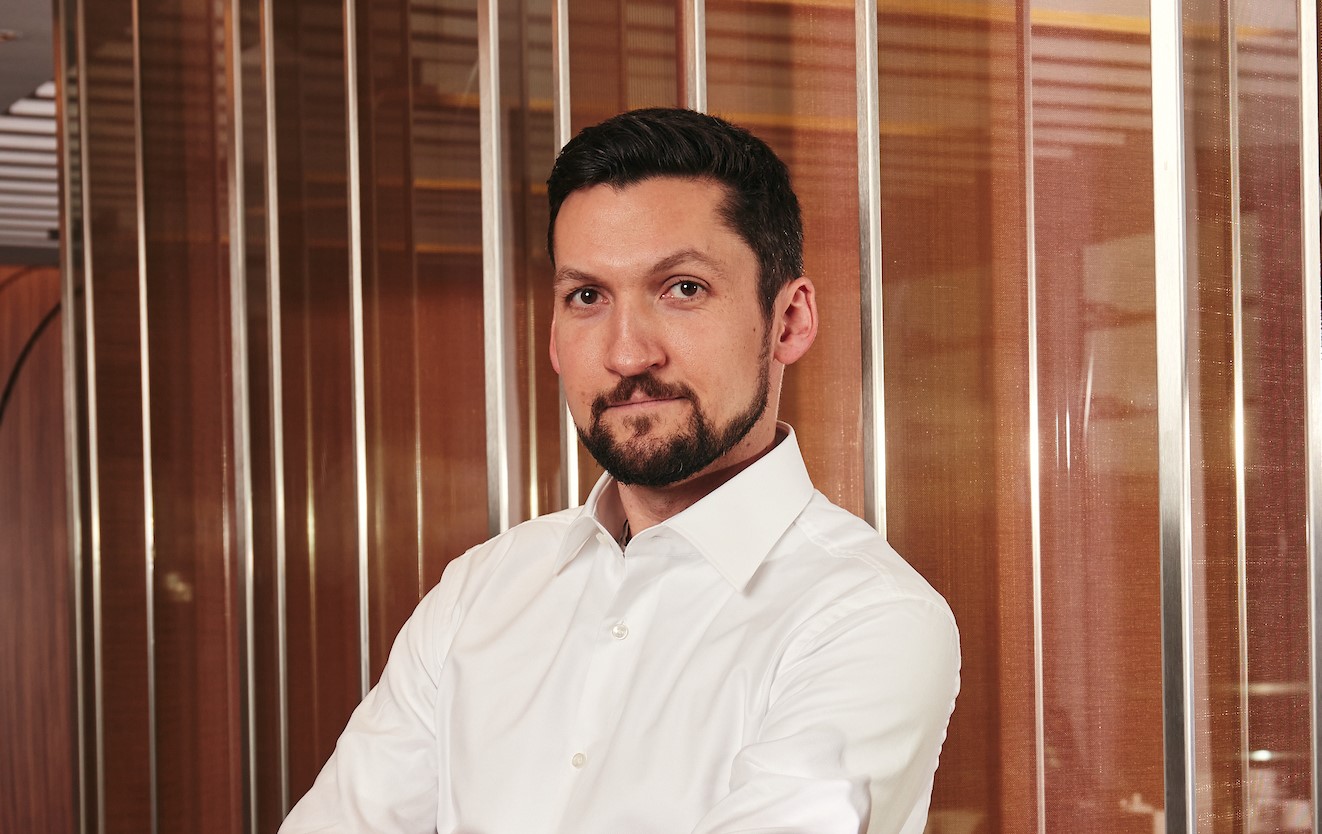
inspiratia sat down with Trevor Wills, the CEO of Pulse Clean Energy, to discuss the significance of the deal and how the BESS market has changed since then, particularly given market concerns over revenues. Wills noted that as lenders have gained a better understanding of the macro environment for the technology, exercising financial discipline has become critical for developers looking to raise debt.
Wills also expands on why Pulse sees itself as a "grid stability" business and how the company is looking to fill that role in the UK.
It's been a little over a year since your last debt raise [May 2023]. How have lender appetites changed since then?
I believe we will see a more purposeful and patient approach from lenders. I do not think we have seen a reduction in broad lender appetite for the space or the asset class, but what we do see is the lenders doing their homework on teams, on plans, on the ability to execute, as well as exercise financial discipline.
The execution and the exercise of financial discipline is a big one. Broadly speaking, most of the lenders have a good understanding of the macro environment for BESS and remain committed to the structural opportunity that is present in the asset class.
So, I think some of the lenders are looking beyond the next couple of months and thinking about the future opportunities in the space.
Where do the market concerns over BESS revenues really come from?
There is quite a bit of talk about the concern around BESS revenues. The current revenue levels for BESS have come off from the highs, but they are still above what we saw before the energy crisis. From a structural perspective, we are seeing opportunity manifest itself, and there are a number of items that are slated to improve that. As the balancing mechanism utilises BESS more effectively due to National Grid's introduction of the Open Balancing Platform, that will become a tailwind. As more renewables come onto the system, that is also a tailwind.
I think it comes down to your timeframe. Do I think we are going to see 2022 levels of revenue return? No, but candidly, crisis level pricing is not sustainable, and is not something that is healthy for the energy system.
If you came to the table with an expectation that revenues needed to be sustained at the 2022 mark, then that is probably an issue. Nobody is excited with where revenues are today, but it is about how long you think they will stay where they are, and where they are going to go next. I don't think they are going lower, and I don't think the answer is 2022 levels, but rather somewhere in between for the medium to long term.
In our view, this is not a sector where you benefit from having a one to three-year view. This is a 5-10, even 15-year opportunity that will strengthen over time. There will be ups and downs across that timeframe, but the key is to have a longer-term macro perspective and a business model that fits with that longer-term opportunity set.
Now, this does not mean that you don't need to manage inside of those shorter time frames. You need to have financial discipline and execution capability, but that is where we will see high-quality teams and high-quality projects come to the forefront.
Going back to your inaugural financing, the deal was notable for being UKIB's first BESS transaction. What was the rationale behind going for a mix of traditional lenders and government-backed institutions?
We wanted to cultivate a relationship with a group of lenders who were interested in and had belief in our vision and our long-term plans. In addition to CIBC and UKIB, we had Santander, who is no stranger to the space, and Investec, for whom I believe it was their first European BESS deal as well.
So we had two lenders who had BESS experience, and two groups that didn't. But the thing that was in common across all four of them was their desire to work as thought partners and collaborators in the space as we drove our business model forward and as BESS continued to mature as an asset class. We obviously talked to several lenders, but getting down to those four was a purposeful exercise.
UKIB came to the table with an approach that was governed by its investment framework. This includes increasing regional investment, acceleration of clean energy, and crowding in private capital, all wrapped around the principle of additionality. Having somebody with those types of connections, along with the patience and understanding to think over the longer term fit well with what we are looking for.
We selected these lenders with a perspective on who is thinking about this for the long term, who we can grow with, and how we can work with those institutions to advance the maturity of the sector and thought leadership in the space.
Given this long-term outlook, could we see more players like UKIB and institutional lenders like debt funds play a greater role in the BESS space?
That is a good point, but no matter who your lenders are, you need to have a business plan and an investment case that anyone would want to lend to. Then, it is about bringing the right partners in, which could be banks, debt funds, or financial institutions from any region or type.
When we started, we had conversations with several dozen parties. Some of those conversations dropped away, but for us, it was a process of finding the right fit for the business model and the investment case.
Do I think that there is more room for those types of funds to come in and play? Absolutely, there is. Part of that is a function of how mature the sector is. As the sector becomes more mature, you will see more of that long-dated capital coming in.
Because we have institutional and investor backing that thinks long-term, that aligns well for us. But not necessarily everybody has long-term backing, so they have to think about the cycle of their equity as well as the cycle of their debt.
Debt funds and institutions like UKIB can be well suited to providing capital and lending into this space, but it has to be against the right investment case and business plan that can stand up to the scrutiny of any lender committee. That is how we strive to structure things. We want as many people as possible to be willing to lend, and then work to try to make sure that we are creating the best sets of collaborative relationships to facilitate growth and drive the maturity of the sector forward.
Pulse Clean Energy has a plan to develop 1GW of BESS in the UK. How have those targets been progressing?
We are tracking towards that 1GW target. We have four operating assets today, seven currently under construction, and a number of projects under development that would take us past that target.
Of the seven assets under construction, six are BESS, and one is a synchronous condenser. So that, plus the four operating assets takes us to approximately 300MW in 2025, which is a third of the way to our target, with a number of near-dated opportunities in our pipeline beyond that.
A portion of those projects we could begin construction on in relatively short order. But we don't want to stretch ourselves too thin, so we are focused on delivering the seven active construction projects over the next few months. We are phasing the construction on the remaining projects to make sure that we are not overloading our engineering teams.
The industry has been challenged with bringing grid connections into service, but we continue to work hard with our construction partners and DNOs to bring more assets online.
At our most recent Energy Storage event, you mentioned that Pulse is not just an energy storage business, it is a grid stability business. How do you achieve this?
As we think about what the future of the energy system will need, we are seeing some major transitions take place. We are shifting towards a grid that will have an increasing amount of renewable penetration, which introduces a certain amount of intermittency or unpredictability. If we think about the energy system as it sits today, we produce our energy fairly predictably but with a lot of uncertainty around price because of fuel price volatility.
As we bring more and more renewables onto the system, we are inverting the issue now. We are producing electricity with relative unpredictably but at a predictable price. The bridge that needs to sit in the middle of that transition is energy system stability. The simplest form of that is energy arbitrage, which is that if you are oversupplied, you store the energy, and if you are under-supplied, you put it back out. When you do this correctly, the carbon and emissions benefit that you can create is very meaningful – all while increasing energy security and reducing the price that consumers are exposed to.
But in addition to energy arbitrage, there are all sorts of other important physical properties that need to remain stable in order for the grid to function that are less talked about. That includes things like inertia, voltage support, and short circuit level management. Developing, designing, and constructing the infrastructure required to manage these items requires specialist expertise and is a part of our core capabilities.
Notwithstanding the fact that we are building BESS assets, we are also actively involved in National Grids' network services solutions. We have two stability services contracts in South Wales, where we are constructing a synchronous condenser and will provide those services into the grid. We have also recently submitted proposals in National Grid's voltage 2026 tender process, which is using a different type of technology in an effort to bring more stability services to the grid.
We are working closely with stakeholders to understand how we can build not just assets, but business models that will create stability, security and balance across the energy system. This is what will allow people to access certainty of supply and certainty of price. We achieve this not only with our technological approach, but also with a mindset that we need to bring solutions to the energy system which actually deliver the energy where it is needed, when it is needed - affordably, reliably and at a predictable price.