Q&A - Nadara: Bidding for future energy
 Natalie Bannerman
EU
MultisectorsQ&APolicy-driven momentum is reshaping Europe's renewable energy landscape. Governments across the continent are implementing new grants, legislative mandates, and market reforms aimed at accelerating the energy transition. These measures are not only intended to drive decarbonisation but also to position clean energy as a pillar of economic growth.
The European Union's Clean Industrial Deal, introduced in February 2025, is a clear example of this shift, promising to make industrial decarbonisation a competitive advantage rather than a cost burden. National policies are following suit, such as Italy's long-awaited Mechanism for the Procurement of New Storage Capacity (MACSE), set to launch in September 2025, which will facilitate the deployment of battery energy storage systems through long-term contracts awarded via Terna-led auctions.
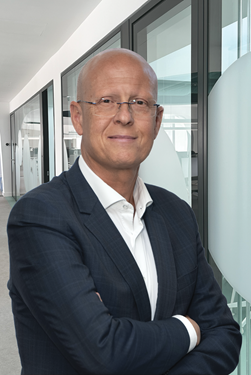
Against this backdrop, renewable energy companies must navigate an evolving regulatory and financial environment while scaling their operations. inspiratia spoke with Carmelo Scalone, Nadara's Chief Growth Officer, on how the company is navigating this new landscape and where it will go from here.
Eight months post-merger and independent power producer Nadara continues to expand its renewable energy footprint across Europe and the US. The company rebranded as Nadara in July 2024 following the merger between Ventient Energy and Renantis.
In that time, Nadara has announced plans to repower its Beinn Ghlas Wind Farm in Scotland. In December 2024, Nadara secured a €420 million (£353m $459m) debt package from Macquarie Asset Management.
The Nadara portfolio is comprised of more than 200 sites, totalling approximately 4.2GW of installed capacity, as well as an 18GW pipeline of projects across onshore and offshore wind, solar, waste-to-energy, biomass and energy storage projects.
What is Nadara's approach to project development?
The first component is what we call organic growth. That is based on the potential we are sitting on, which is maximising our existing portfolio through repowering efforts and hybridisation.
It also involves extending the lifespan of these projects, extending the plant, or upgrading substations.
We also develop in the greenfield space, which is us building from scratch by finding the site, picking the land, applying for grid connection, etc.
The two parts are equally important and feed into our dual nature of being a developer and being an owner-operator.
How important is the first mover advantage to Nadara when it comes to investing in new technologies?
We are led by the investment mandate of our shareholders in terms of the countries and technologies in which we will invest.
We are established in traditional renewables like solar and onshore wind. In storage, we started four years ago, with storage as both a hybrid offering and a standalone project.
We have a portfolio of six projects under construction in Italy and Spain, which will bolster our position in these technologies.
More nascent technologies, like hydrogen, for example, we see as a way developers can use our green power to generate it, but we are not directly involved in its production.
What are your thoughts on the U-turn that the O&G players have made on renewables in the last couple of months?
I think we have seen this shift in position from oil and gas companies happen more than once before. In that respect, it is not a shocking or surprising thing that we are seeing, it is the nature of the business.
Some of it could be as a result of geopolitical factors, but shareholder value is what is driving all decisions. We are continuing at pace with all our renewable energy plans at Nadara.
What impact do you think the EU's Clean Industrial Deal will have on the European energy transition space, if at all?
We are consistently speaking to governments about how we can improve the regulatory space for renewable energy projects in our markets. Everything from national level legislators to the evolution of the different policies.
We must first recognise that, after many years of challenges, the Clean Industrial Deal is a sign of tremendous progress.
However, I was hoping that the European wind industry would be more prepared to directly address the bottleneck around processes. To speed up, simplify and accelerate things for developers in this area.
The government is moving the needle, but we in the private sector need to help shape these changes in line with our direct needs.
What regulatory hurdles is Nadara facing, and what needs to happen to overcome them?
We have already touched on the idea of simplified processes, but also, certain markets where we operate, for example, much of the land is designated as agricultural land, making it very hard to get new projects approved. Changes in this area would be beneficial.
The UK has done very well with its various subsidy schemes. There are many EU markets that need to follow suit in order to attract the best conditions for investors to want to operate in the space.
Most markets continue to suffer from older network grids and their associated infrastructure, which in turn has an effect on the projects that are able to be completed. This is something that needs to be addressed head-on.
On that topic, do you think the upgrading of the grid will be led by the government, industry, or a combination of both?
Ideally, the involvement of the private sector alongside that of the government will lead to the best outcome. Governments cannot fund it alone, and the private sector drives the demand.
The regulations in place in different countries mean that the operation and ownership of the grid have to remain public and under the control of the state. That could require a change in the way those assets are regulated.
These changes are being explored in the UK. However, in France, for example, it is a monolithic thing that is exceedingly difficult to change.
An increasing number of projects tend to be collocated with a battery energy storage system (BESS). Is this now the norm?
From a business perspective, it makes a lot of sense. Renewables are volatile, so the more you can stabilise production and generation, the better it is and the more valuable the product.
Having said that, when you add a battery to solar plants or wind plants, you have increased CapEx.
So, the question becomes, how will I recover the extra money I have invested in this collocated battery?
So, you either have a regulatory auction or subsidy to offset it against, or you have to take on a lot more uncertainty on earning those funds back.
In the long term, of course, you have a more valuable product, but you still have to convince a board or an investment committee to spend that extra money, and that is challenging.
How does Nadara's growth in the BESS space complement its existing assets?
We started to develop our BESS strategy in Italy targeting the capacity market auctions and the MACSE auctions. These mechanisms allow Nadara or other investors to secure the revenues associated with BESS investments.
Were other countries to adopt a regulatory framework like the one we see in Italy, it would make those markets more attractive to investors.
What are your thoughts on Italy's upcoming Energy Storage Capacity Procurement Mechanism (MACSE) later this year?
We are very excited about MACSE. I think it is a mechanism that will attract investors from all over the world.
Over the last few years, we have been seeing several projects under development.
As always, there will be competition between the cost of capital, capacity exported to these batteries, expected returns, and cost of land and distance from the connection nodes.
But I am sure that for Italy and the industry, it is the right way to go. It is providing long-term visibility and opportunity.
What are Nadara's strategic priorities for in the short term?
The first word that comes to my mind is execution. We are developing the largest agrivoltaics plant in Sicily, Italy. We are also building plants in Spain, all hybrid – solar and wind.
We are also going to participate in the FER-X solar auctions in Italy, as well as the Energy Release mechanism, under which the renewables projects are chosen to provide cheap energy to large industrial consumers.
We are also taking part in the Contracts for Difference (CfD): Allocation Round 7 in the UK as well as the Appels d'Offres de la CRE CfD auctions in France.
Our challenge now is executing all of these projects, building them on time, on budget, and at the same time, participating in auctions.