Q&A - Maxwell Advisory: Bridging the gap between developers and funds
 Mathilde Dorbessan
EU
MultisectorsQ&AFinancingFundsRiskIn today's uncertain renewable energy finance landscape, developers often face challenges securing capital for niche sectors such as commercial & industrial (C&I), agri-solar, and circular economy infrastructure.
These technologies hold promise but often fall outside the comfort zone of institutional investors, who remain wary of regulatory complexity, fragmented project sizes, and unfamiliar risk profiles.
To explore this issue, inspiratia sat down with Adrien d'Ormesson (pictured left) and Joe Davis (pictured right), Co-Founders and Directors of Maxwell Advisory.
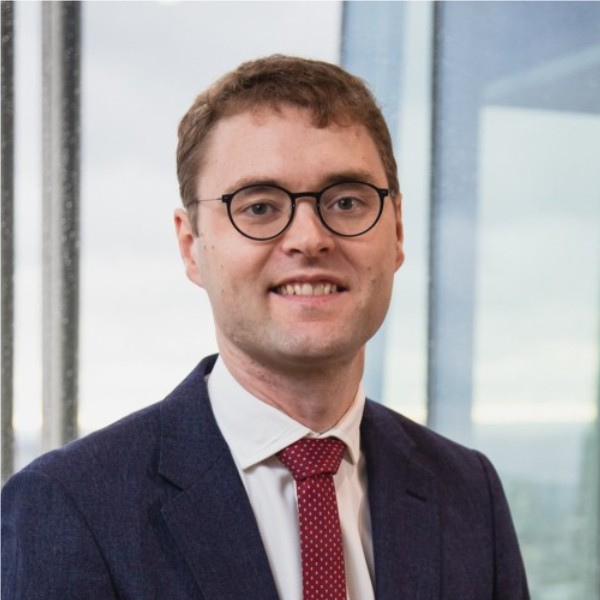
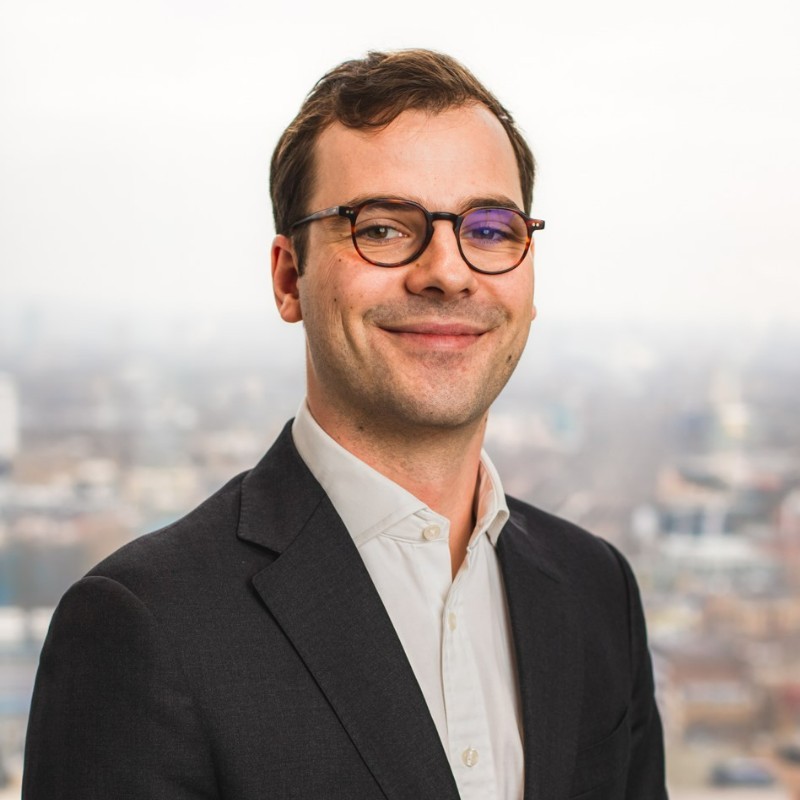
Spotting a gap in the market, d'Ormesson and Davis, both formerly of Foresight Group, have launched, earlier this year [2025], a new firm that aims to go beyond conventional financial advisory.
They discuss the investor appetite for niche energy transition assets, and how better alignment – not just more capital – could unlock the next wave of sustainable infrastructure.
What is the mandate for Maxwell Advisory?
Davis: Maxwell Advisory helps companies and investors in the energy transition sector by bridging the knowledge gap between them.
There is a lot of capital out there to invest in energy transition businesses, and there are a lot of businesses or projects that are looking for capital. But sometimes, the needs of the two sides don't quite line up. We are trying to bridge that gap, essentially.
Maxwell is not simply a financial advisory firm; we are offering an extra layer of development support.
In practice, we are supporting developers before the fundraising stage, by integrating into their development team to help them align their projects to the needs of potential future investors. In addition to that, we will also help them with the fundraising.
We will also work with investors, acting as an additional resource to help them work through time-consuming or complex portfolio management transactions.
What gives you an edge over other financial advisors within the renewables space?
D'Ormesson: Joe and I recently moved from the buy side to take on more of an advisory role, so we are very culturally aligned with the investors. We know what they are looking for in terms of service, and investment opportunities. We are a good intermediary between companies and investors. Maxwell can help companies implement portfolio strategies that are attractive to institutional investors in turn giving them access to an investment pool that was previously out of their reach.
Through our previous experience in the industry, we have created a wide network of close contacts within funds, from very senior management to mid-level fund members. We know how the investment and the decision-making processes work in the funds that we are tracking. Maxwell can help developers target the right people at the right time, which is key when developers first approach investors with an opportunity.
Lastly, what we provide is more specific than financial advisory. We work as part as a company, sometimes in the development team, prior to the fundraising. Our goal is to make sure we position a project perfectly for the investors, maximising the chances of completion and success for everyone involved.
What sectors does Maxwell Advisory operate in?
Davis: We are looking to work in energy transition and broader sustainability-related infrastructures, such as circular economy and waste management.
Maxwell is looking to support businesses in sectors that are not yet fully commoditised and require more tailored fundraising efforts.
For example, we could not provide the same added value for utility-scale ground-mounted solar projects, that are already very familiar and attractive for investors.
We intend to work with more niche technologies within the energy transition space, such as agri-solar or floating solar projects, the kind that currently require a little more work to raise capital. As most of these projects, individually, tend to be delivered on a smaller scale, developers need a platform approach to peak institutional investor appetite.
These sectors don't present any additional technology risk, and they can offer investors additional returns above the highly commoditised renewable projects. It's a matter of aggregation and portfolio management.
D'Ormesson: We are also active in the industrial decarbonisation sector. We see more and more opportunities to invest in new infrastructures to help industries decarbonise in the next 10 to 15 years. For examples, there are very promising new technologies in the construction sector, to produce building materials from recycled goods.
What emerging business models are favoured by institutional investors and why?
D'Ormesson: Institutional investors and investors in general prefer to avoid technology risk. From what we see in the industry, two sectors are quite attractive for funds in the UK and Europe.
The first is C&I platforms, where solar investors are actively seeking to diversify their revenue streams by selling to commercial and industrial facilities directly. This sector is currently benefiting from significant government support.
Maxwell also sees quite a lot of interest from investors in agri-solar. We are particularly focused on Western Europe, with projects in France, Germany and potentially some areas in Spain.
Some investors are afraid of the additional capex needed for solar panels to be mounted quite high above the ground. But there are different business models: for many projects, solar panels are not placed on the same piece of land as livestock and crops, but rather on under-utilised plots. Depending on the different regulations in each country, fields can become solar farms.
We know the agriculture sector is currently suffering, getting an additional revenue stream with solar projects is quite attractive for farmers. It's a good solution for both the energy world and agriculture, a win-win for everyone involved.
What has kept funds from investing in this asset class and how will Maxwell help bridge the knowledge gap?
D'Ormesson: Niche industries, such as C&I and agri-solar, can be difficult to assess due to certain operational difficulties. A large-scale photovoltaic plant is quite easy to manage on its own. Smaller assets are more complicated to manage and optimise. Agri-solar is also heavily regulated, with a wide disparity between locations which tends to put off risk averse or passive investors.
What Maxwell offers is a knowledge of the industry, with a focus on the developer and the management team and people that know their industry. We source the opportunities with developers, and we make sure that investors have access to that market.
Are you planning to expand the team near future?
Davis: We are open to expanding, and our aim is to grow the team organically, in line with the overall company growth. We don't want our own capacity being a constraint on the growth of the business.
Since we went public with the business, we have received great feedback across our network, from investors and developers. We are very encouraged by the reception we've had to date, with a lot of people telling us there is real value that can be added in this sector.