Q&A - Ilika: Commercialising solid-state batteries
 Aishwarya Harsure
As intermittent renewables play an increasing role in global energy systems, the demand for high-performance energy storage solutions has never been greater. The shift towards electrification—whether in transport, industry, or grid management—hinges on the development of more efficient, safer, and cost-effective battery technologies.
Yet, conventional lithium-ion batteries, while transformative, still face limitations in energy density, charging speed, and safety. Solid-state batteries have long been considered the next frontier in battery innovation, promising to address these challenges and reshape the future of energy storage.
One company at the forefront of this transformation is Ilika, a UK-based developer specialising in solid-state battery technology. With roots in advanced materials research, Ilika has evolved into a key player in the effort to commercialise solid-state batteries.
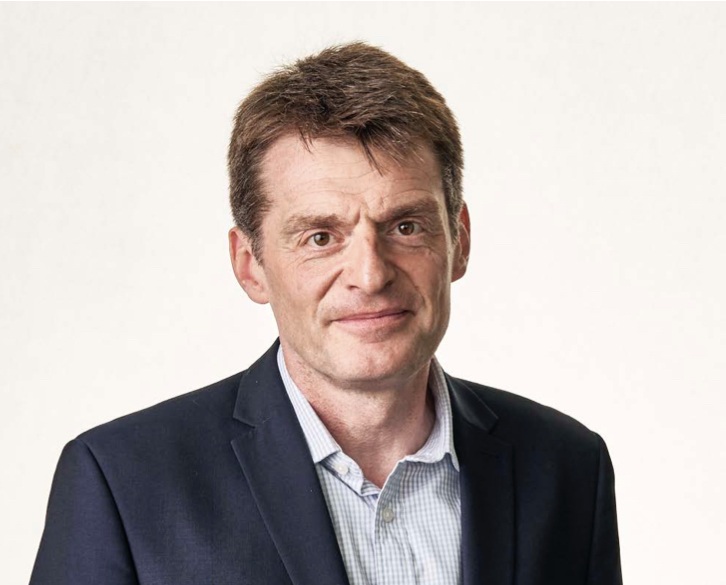
inspiratia sits down with Ilika's Chief Executive Officer, Graeme Purdy, to discuss the company's journey from a university spin out to a leader in solid-state battery development. He shares insights into the technical and commercial challenges of bringing this technology to market, Ilika's partnerships with major automotive and medical device manufacturers, and the broader industry dynamics shaping the battery sector.
How did your journey with Ilika begin, and how has it evolved in the energy transition space?
We are a UK-based solid-state battery developer founded in 2004 as a spin out from the University of Southampton. The company was grown through venture capital before we floated it on the London Stock Exchange in 2010.
In the early days, we focused on the high-throughput development of new materials, particularly for energy transition applications. We had a technology platform developed at the university that allowed us to make systematically varying arrays of different functional materials that we could rapidly test and identify the most useful ones for the application.
In the 2010s, we started focusing more and more on new materials for better batteries. We did a lot of work with Toyota at the time - they had just changed the battery in the Toyota Prius from a nickel metal hydride battery to a lithium-ion battery, and they were interested in improving the intrinsic safety by moving to a solid-state equivalent. At the time, there was not much known about the materials needed for solid-state lithium-ion batteries, so we made and screened lots of different alternative electrolyte materials. We still have jointly held patents with Toyota to this day.
Now, as an organisation, we focus entirely on the development of solid-state batteries, with two product lines. On one hand, we have miniature solid-state batteries under the Stereax brand name, specifically designed for miniature medical implants and wireless sensors as part of industrial IoT networks. On the other hand, we have developed larger-format solid-state batteries called Goliath for EVs and consumer appliances.
When it comes to manufacturing, how does Ilika operate? Do you have factories across the UK?
We are a company that focuses on the development of products and processes. This means we have facilities where we develop the product and then run initial manufacturing volumes on pilot lines. We have two facilities in the Southampton area - a development facility where we use fairly manual processes with a low degree of automation to do the initial prototypes and a pilot-line facility where we have automated approaches to making larger numbers of these devices on a pilot scale.
We then enter into relationships with manufacturing companies that focus entirely on producing commercial quantities of batteries. For instance, in 2023, we entered into a relationship with Cirtec Medical in the US, and they took a license to manufacture Stereax batteries in their large facilities in North America. We have been working with them for the last 12 months to transfer our technology from our pilot line to their facility.
Just earlier this month [Feb 2025], we announced that we had successfully done a production trial at the UK Battery Industrialisation Centre with our Goliath technology. We transferred a process from our pilot line onto the large-scale gigafactory-equivalent equipment they have at their facility.
Who are your primary customers? Which industries are most interested in your technology?
For Stereax, the companies particularly interested in what we are doing are large medical device companies - organisations that might make products requiring batteries to power active implantable medical devices.
On the large format battery side, we are interacting with either tier-one manufacturers - for instance, it is in the public domain that we are working together with Agratas, which is the sister company to Jaguar Land Rover, owned by Tata Sons - or automotive companies. BMW, for instance, is on the steering committee of a product development program we have going at the moment, and we work with most other global automotive brands you can imagine. The majority of automotive companies interested in us are based either here in the UK and in mainland Europe, where there is a big appetite for improved battery technology, or in the US.
Could you explain what solid-state batteries are and how they differ from other technologies?
The whole concept behind solid-state batteries is really just a "better battery". People are interested in lithium-ion batteries that can be charged more rapidly, are lighter weight, and are lower cost. When you look at the reasons why people have not bought or leased EVs already, it is because they are either concerned about range, how long it takes to recharge, or the cost – there is still a cost differential between an equivalent vehicle with a traditional ICE.
Our Goliath solid-state battery is designed to perform better in the context of an EV. The principal difference is instead of having a liquid electrolyte, which is the medium through which the lithium ions are transferred when you charge and discharge the battery, we use a solid medium. The problem with current batteries is that the liquid medium is flammable, creating a safety concern that has to be managed within an EV context.
That is not to say EVs are dangerous - quite the opposite. The Swedish fire rescue department last year published compelling data showing EVs are 17 times safer than normal vehicles when it comes to fire risk through accidents.
What about the cost comparison between traditional and solid-state batteries? How has this evolved?
The cost of traditional EV batteries has been dropping in recent years and is at the level of between $120 and $150 per kilowatt hour, depending on the battery quality. Solid-state equivalents will probably come in at about 10% lower than that price when manufactured at giga scale.
The reason there is not a lot of additional cost saving just at the cell level is that solid-state batteries still use many of the same materials. The thing that really dominates lithium-ion battery cost is the cathode, and you are still using the same amount of materials - if it is an NMC battery, which is used a lot in the automotive industry, that is nickel, manganese, and cobalt.
But the key cost advantage comes when you start integrating these batteries into vehicles.
We did some studies in the past few months, working together with an organisation called Balance Batteries, and they calculated that by moving from a traditional lithium-ion battery to a solid-state battery of the type Ilika has developed, you could save about £2,500 from the cost of the battery pack once it is installed in the vehicle. By the time that is grossed up and reflected in the vehicle cost, that really starts to erode the price differential between a normal ICE and a lithium-ion battery pack.
How do you see solid-state batteries helping Europe compete with Asian battery manufacturers?
The challenge for the battery manufacturing industry here in Europe or in the US is whether you can really compete with the lower cost manufacturing environment in China and Korea. There is no point trying to make the same thing that can be made cheaper in China.
The answer is really a differentiated product - you have to make something people want to buy because it has superior properties and qualities compared to alternatives. I do think improved batteries, like solid-state batteries, offer the opportunity for a differentiated product that can be sold to customers.
What about recycling these batteries?
Currently, disappointingly few traditional lithium-ion batteries are recycled - recent data shows about 5% are recycled effectively.
This number will grow as EV penetration increases and as the EV fleet becomes older, so there are more batteries requiring recycling from the scrapyard.
Solid-state batteries offer the prospect of being recycled more easily than traditional lithium-ion because solid-state does not have the flammable and often toxic liquid electrolyte to dispose of safely. Once the solid-state packaging is removed, the materials can be granulated and processed to remove the valuable metals, which can be returned to the supply chain.
What have been the biggest challenges in bringing this technology to market?
The biggest challenges are probably the timelines involved in turning the initial invention into commercial prototypes and integrating batteries into products ready for market. In particular, the automotive industry locks in a product design and then typically has about a 5-year cycle as that design is made ready for manufacturing, testing, and release to market. You need to jump on board the design cycle at the right time, and you need patient capital prepared to finance you as a company through that period as the technology is adopted.
Are you considering expansion into other European countries?
Absolutely - we are geographically agnostic in that we are happy to do business with anybody in Europe, the US, and Asia interested in manufacturing our technology. The automotive industry in particular is a global industry - the supply chains are very long, and even though a company might be headquartered in one particular jurisdiction, they sell their products globally.
At the moment, we are not just focused on licensing to organisations based here in the UK. That would be too restrictive - there are only two battery gigafactory locations here in the UK: the AESC Envision factory that supplies batteries to Nissan in the northeast, and the recent investment from Agratas based in Bridgewater in Somerset, which is just getting up to speed and in the middle of a construction project to build that gigafactory.
What makes your Goliath battery special compared to other solid-state batteries?
Ilika has chosen an oxide-based electrolyte which has its challenges. It is not quite as ionically conductive as some materials, which means the lithium ions have to work harder to transfer between the electrodes, but it is a very stable material that can be handled easily in a large-scale factory. What we demonstrated at UKBIC was that we could coat our electrolyte material easily onto the electrode of a standard lithium-ion battery, showing good compatibility of materials and ease of handling.
Some alternatives might use a sulphide electrolyte, which is easier to get to work in a solid-state battery because it has higher ionic conductivity - the lithium ions can move backwards and forwards more readily through it. But it has difficulties in handling because sulphides react with oxygen and moisture, giving off gases. We actually use a silicon anode which is much more stable in an operating environment. We have done a lot of work to ensure our batteries are easier to manufacture - and easier means cheaper.
Where do you see the industry heading in the next five to ten years?
It is a really exciting time to be active in the battery sector. Although some automotive OEMs were saying forecasts for sales were not quite as large as imagined in 2024, they were still very strong - EV sales were up in many jurisdictions by as much as 25%. So it is a rapidly growing sector.
We are going to see more gigafactories built to manufacture batteries and new industrial players come into the sector. The automotive industry is very volatile with new entrants and lots of investments going into the sector - some of it is done very efficiently, and some of it is disappointing. We have all read about some of the challenges that Northvolt has had in deploying gigafactory technology in Sweden.
But Ilika will be doing deals with manufacturing partners, rolling out our technology, and it will be integrated into vehicles that will hopefully improve the offering that we as users of EVs expect - longer range, lower cost, rapid recharging. These are all things we'll benefit from.