Q&A – GRIDSERVE: Achieving an integrated EV charging eco-system
 Zachary Skidmore
EU
Electric Vehicle ChargingQ&AFundsGRIDSERVE is a British critical infrastructure company focused on the development of sustainable energy production. Founded in 2017, it primarily focuses on the development of electric vehicle (EV) charging infrastructure across the UK. However, unlike most EV charging developers, GRIDSERVE has developed a completely integrated Sun-to-Wheel ecosystem. As a result, the company covers everything from the development, construction, and operation of solar PV sites. By delivering dependable renewable energy to EV batteries, GRIDSERVE provides greater dependability and stability to charging stations and the grid network.
inspiratia speaks to Mark Henderson, the chief investment officer (CIO) of GRIDSERVE, about the current state of the UK's EV charging infrastructure market, the challenges of upscaling the sector and how the company achieved the largest global debt raise for a privately owned charge point operator.

What is GRIDSERVE?
GRIDSERVE is a tech-enabled sustainable energy business that aims to move the needle on climate change. We are more than an EV charging company and have developed a completely integrated Sun-to-Wheel ecosystem.
We started off at the top end of the spectrum, focusing on solar and battery energy storage and then evolved downstream. A major change came in 2021 when we acquired the Electric Highway, an existing charging station network along the UK motorway service area network. Currently, we are focused purely on the UK, but we are also casting an eye towards overseas markets for potential future expansion.
In July, it was reported that 1,300 clean power projects with permission are awaiting construction. However, grid connections for these projects often take years, and sometimes decades to be connected. Why has transmission infrastructure failed to keep up with renewable generation? And what major challenges are there for the successful upscaling of the grid to meet this new demand?
It is a constant bugbear for the entire industry. What's particularly irritating is that this is not a new problem. It's been a problem that everyone in the UK power industry has been shouting about for well over 20 years, ever since the late 1990s, when the "dash for gas" IPPs exposed the grid's constraints. Government after government has acknowledged the issue but hasn't done anything to address the problem. This is because it is highly capital intensive and will take a long time to implement, which doesn't fit into short-term political ambitions.
This has severely delayed the development of the renewable energy sector and, in turn, EV charging infrastructure and its development. Similar to monetary policy, which was handed over to the Bank of England, control of the grid network should be provided to a specialist team, which could be broadened out to include other key elements of the UK's infrastructure.
It shouldn't be hard, but it will take time and require focused investment. If the government can't incentivise companies to do it, a stick approach should be employed to force investment in the sector.
GRIDSERVE's Electric Super Hubs require new, or reinforced, grid connections for their deployment and operation. How can EV charging be effectively upscaled with a suboptimal grid? What potential is there for off-grid solutions such as renewable colocation and long-duration battery storage to provide another route to market?
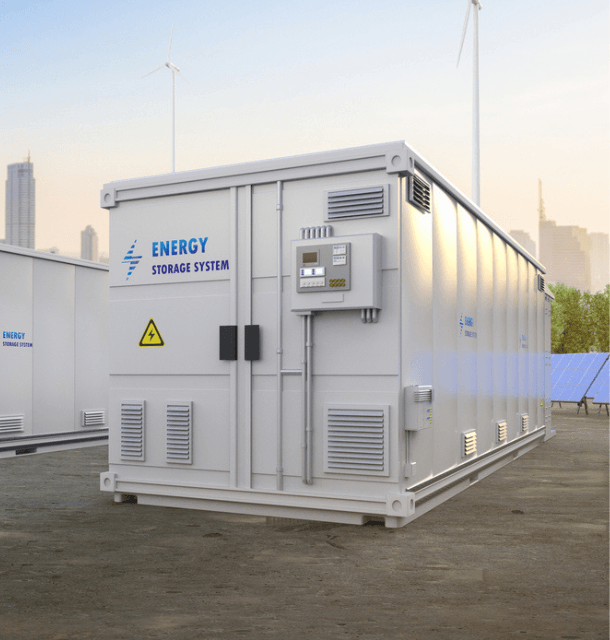
This is something we have been tackling with proactive investment. We are more than just an EV charging company and create a broader infrastructure that includes solar installations and batteries. There is a site in Cornwall where we very recently put a solar canopy over the chargers and an oversized battery. It has a grid connection, but it is very small, so the combination of solar and batteries allows us to put in place many more chargers at a faster speed than would normally be possible, demonstrating our Sun-to-Wheel ecosystem in one place.
Another example is in Moto's Ferrybridge services, where we have installed a temporary microgrid that uses batteries and vegetable oil generators.
So, we are constantly looking at ways to work around the grid but also ensuring we adhere to our low carbon targets.
How important is it to cultivate a localised supply chain for your EV charging technology?
This is important for several reasons. We are trying to cultivate a localised supply chain, although, at the moment, we have to supplement this with the broader global market. It will lower our carbon footprint by reducing the transit distances of the technologies. It will also support the wider UK community and provide certainty of product, ensuring we are not sourcing battery materials from regions with poor labour conditions and high emissions in the production of the materials - if we are importing something built using coal power in, say, China that is counterproductive as it goes against our low-carbon agenda.
Battery recycling could also become a key supplier for us. We have batteries throughout our network, and the more recycling and reuse we can employ will bolster our supply chain even more and improve these goods' lifecycle and carbon footprint.
In July, GRIDSERVE announced it had achieved the largest debt raised to date globally for a privately-owned charge point operator. Fundraising in the EV charging sector has been difficult. How did GRIDSERVE achieve this, and what confidence does it demonstrate in the sector?
It didn't happen overnight and took many months of preparatory work with potential lenders so that they understood the sector, our strategy and the growth story. It also worked very well because of our existing EV charging network, so by the time we closed the financing, we had up to two years of utilisation data on those sites, with a proven base load of revenue and performance.
One of the major issues in any industry is confidence in revenue. We proved the utilisation levels, so the other half of the equation was pricing. As prices were not volatile at the charging end of the business model, this made the revenue forecast reasonably predictable, which made the financing much more accessible. In addition, the location of our network on sites with high volumes of traffic, supported by continual improvements and additions to these sites, provided confidence to the banks.
In addition, before beginning the debt raising, we completed an equity investment round where we brought in Infracapital as a significant minority investor, which indicated further confidence in the sector and our business strategy.
Banks generally prefer not to be the first mover, but they do like to be a very fast second mover. Therefore, as the process was a success, we hope that it will greatly benefit the rest of the sector, as there is a lot more growth needed in it, and we will all gain from a rising tide of investment.
Often, rural areas do not receive the same attention for EV charging development as urban areas. How key is it for GRIDSERVE to form an equitable spread of EV charge points across the country?
We want to see the same EV charging quality across the country. It is not only fair and necessary, but there's a practical business benefit as it gives people more confidence to switch to an electric vehicle and drive it further distances if they can see a reliable network of chargers up and down the country.
While we have hubs across the motorway network, we also have standalone Electric Forecourts® that host up to 24 high-power chargers, plus AC chargers. The first is in Braintree, Essex, with one in Norwich, Gatwick's is under construction, and further approved sites are planned in the short term for Derbyshire, Gateshead and Plymouth, with 30 other sites in development.
Our business model is not to be either purely rural or purely urban. Instead, we are primarily a short-stay or en-route charging company, with our high-power charge points being capable of delivering up to 100 miles of range in only five minutes (although the fastest charging cars currently available take about 10 minutes). Therefore, while other firms focus more on urban or rural stations at present, for us, they would have to be part of a future expansion and are not an immediate focus.
Is UK regulation up to speed with the fast and efficient deployment of EV charging infrastructure?
The best part of the UK regulation is that the 2030 target of no new combustion engine cars (i.e. petrol and diesel cars) is staying in place. It doesn't require any handouts. It doesn't require subsidies or any taxpayer money. But it gives a very clear signal to both industry and consumers of future change, allowing long-term charging infrastructure strategies to be developed and attract investment through the confidence that the Government is sticking to this target. This makes the UK a very attractive market for investors in the whole EV and EV charging sector.
In terms of making it faster and more efficient, we don't want any more regulation, just consistent Government support for the current targets. Industry and finance can then develop the infrastructure with speed and efficiency. The only exceptions are certain situations where it would be commercially unviable or prohibitively expensive for the private sector to invest. Here, some level of government support would facilitate deployment.
Where deployment generally can be faster and more efficient, then we come back to the grid, which is the single biggest roadblock. Therefore, the faster we can upgrade and expand the grid, the faster and better we can develop the EV charging infrastructure and extend into more rural areas and inner cities.
In April, the National Grid announced the Great Grid Upgrade, which will see £16 billion (€18.7bn $20.2bn) invested from 2021-2026. Will this help drive private investment in both grid infrastructure and EV charging?
Well, I am not an expert in this area, but I understand that this upgrade is focused on around 9 projects in reasonably localised areas, so this alone won't drive more private investment. We still need a much more root and branch improvement of our transmission and distribution systems to support secure, cheap, low carbon energy as well more EV charging - even at home.
This can involve the current DNOs, but any proposed solution will depend on how the regulation is set up. If we look at the water industry, for example, it has a very clear framework of how investment can be repaid and how to measure and reset it. Unfortunately, despite it working well in theory, it hasn't worked well in practice, with some companies apparently more focused on returning cash to shareholders than investing in, maintaining or improving their infrastructure.
Therefore, to incentivise investment in grid infrastructure, we need a clear mechanism consisting of a concession period, required targets, certainty of a baseline of revenues and penalties for not achieving these targets or keeping up minimum standards.