Q&A – Eurowind Energy: Onshore wind is our DNA
 Ashkenaz A.L.
Eurowind Energy's core investment mandate is no secret to anyone - it is in the name. The company has been at the forefront of Europe's onshore wind market for nearly two decades. The developer owns and operates a portfolio of over 1.3GW of energy parks and has an ambitious development portfolio of over 53GW.
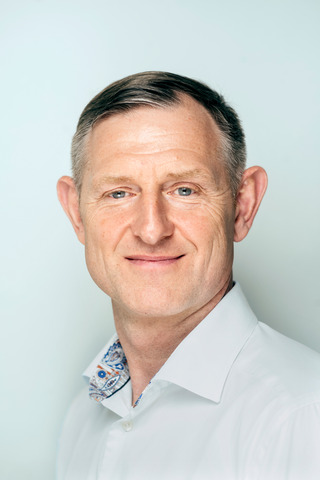
While Eurowind Energy intends to remain true to its original focus, chief executive officer Jens Rasmussen sees tremendous opportunities in co-locating wind farms with other technologies. While solar and wind energy parks are the most popular options right now, Eurowind will harness synergies between onshore wind and battery storage, biogas, hydrogen and power-to-X (PtX).
Rasmussen sat down with inspiratia to discuss how the company's strategy has evolved, and where the company might head next.
What are the most exciting opportunities for Eurowind right now?
You can say that onshore wind is in our DNA. It is our core technology; the rest of the technologies are add-ons for us. That is why we end up with projects that have multiple technologies, like wind and battery energy storage systems (BESS) for example. We will also eventually co-locate wind with biogas and hydrogen facilities, but it all starts with our onshore wind sites.
What other opportunities do you see with the colocation of onshore wind?
Colocation is the core of our strategy – to develop wind and add other technologies to the sites. It does mean that if the opportunities are special, we can also do other technologies on a standalone basis, but that would be rare.
What countries keeping you very busy these days? Are there any other new markets you are looking to break into?
I would say Germany, Poland, and Romania are keeping us very busy, even Portugal to some extent. We are busy with activities both in the development and the construction of projects. These are the markets that will be keeping us extremely busy for the next couple of years. There are a few other markets where we will catch up, but at the moment, these ones are leading the way.
We focus on OECD countries, and we are constantly looking into new markets. As we are extremely busy at the moment, especially in Europe, we are pushing hard in to expansion.
We are looking into markets like Australia and Japan, but these plans are at a very early stage. I cannot promise that we will enter those markets shortly.
Earlier this month [November 2024], Eurowind Energy published a financial report for the financial year 2023-2024. What are some of the key takeaways from that report?
The key takeaway is that the power markets are back to normal. But we do see that as a positive turn. Yes, we will earn less money than before, but the prices are more acceptable from the consumers' point of view, and it is now at the right balance between production and consumption.
We are down from the extreme power price levels compared to 2022. But at least from our company's perspective, we are at a level where we can make bankable projects. That is ultimately what is important – that projects are bankable and can be executed. We also received permits for 1GW during the fiscal year in our target markets in Europe. That is a positive takeaway for us. So good prospects for the future.
How do you navigate these lower prices, and what factors do you consider when making bankable projects?
We have a portfolio view, which means we have a flexible approach to securing a route to market. A large majority of our projects, like those in Germany, have fixed long-term offtake contracts. This means that we can take some merchant risk in less mature markets, or even in more mature markets like the Nordics.
We can take a bit of merchant risk there, which means that we do not necessarily have to wait to have fully contracted offtake before we can commence construction.
That is a strength – having some projects with long-term offtake contracts, which allows you to do a bit more merchant on new projects.
How do you decide which markets favour more contracted revenues versus merchant exposure? Does risk play a factor?
Yes, but often that is not something that we can decide. For example, in Germany, we have an auction system where, if you win in the auction, you end up with a 20-year fixed-price contracted portfolio. We have been very bullish on having additional projects in that market.
In Poland, we can bid into 15-year inflation-linked CfD contracts. We have decided to put all our projects in that market into this framework.
Then, in other markets like Denmark, our approach is quite mixed. We have a lot of merchant, but we also target corporate PPA offtakers.
It is a matter of looking at the right strategy in each market. If the offtake market is not there for fixed contracts or if the offtakers do not want to take enough risk, then we can go fully merchant.
Speaking of bankability, what is your financing strategy?
Our target for each project is to sign up for non-recourse project finance. But in some cases, we can also have a return-increased equity stake.
If necessary, we can also initiate construction a bit before taking a partial final investment decision (FID), etc. That is the key for any player in this market. If you have to wait until the final contract is in place, then I think you will struggle in the future of this market. It helps to be able to take a flexible approach. In some markets, we have had to wait until a corporate PPA market has matured. But because of our portfolio strategy, we can opt for a fully merchant approach in those markets and still be bankable.
Are there any exciting opportunities for the team in 2025?
There are a lot of interesting things going on building all our projects. We can also mention cable pooling in Poland is an exciting opportunity to pursue. That involves doing multiple technologies that will enable a lot of grid benefits. We have a lot of operational solar PV and wind farms there. We will then do cable pooling and add other technologies like BESS, which is a requirement for cable pooling.
This is something that we will chase in all markets. I think that the TSOs all over Europe are looking into hybridising renewable assets. But I think we have a great advantage there, as it is easier to add PV to a wind farm than to add wind to a PV farm.
When it comes to co-locating BESS, we generally see the market co-locating it with solar. Are there any other factors to consider when co-locating with onshore wind projects?
The way I see it is that the most optimum BESS is one that is co-located with multiple technologies, because that way you will have a high usage of that battery. Rarely do we see strong wind at the same as a lot of sun. This way, you can scale the usability of your BESS.
I think hybrid projects will dominate the BESS market because you have a behind-the-meter revenue scheme. It makes so much more sense than standalone BESS. Of course, there will be some markets where the regulations need to be adjusted to some extent, but I think that generally, this is our view across the board.
How important is hydrogen to your strategy? How does it fit into your core onshore wind business?
Contrary to other market participants, we want to be a strong second-wave entity here. We want to make sure that the technology is ready. We are just dipping our toes into the hydrogen business.
We are now operating a hydrogen plant with a direct pipeline to a local offtaker. We will build our know-how and then be ready to scale it. I believe the winners of tomorrow's PtX sector will be asset owners of tomorrow's facilities because it is very complex to have offtake agreements between renewable energy producers and single offtakers. It requires a lot of guarantees both ways, and I do not see it as feasible.