Q&A – European Energy: Strategic shift and Power-to-X
 Ashkenaz A.L.
EU
MultisectorsQ&AFinancingEuropean Energy is a developer and independent power producer with a diversified technology portfolio with onshore and offshore wind assets, solar PV, and Power-to-X (PtX). The company is active in 28 countries, managing a gross pipeline of over 60GW, as per its Q3 2023 report.
Over the past few years, European Energy has been increasing investment in the PtX sector. In October 2023, it was awarded three mandates under Denmark's PtX tender. Earlier this year [2023], it divested 49% of the Kassø Power-to-X Plant and Kassø Solar Park to Mitsui & Co.
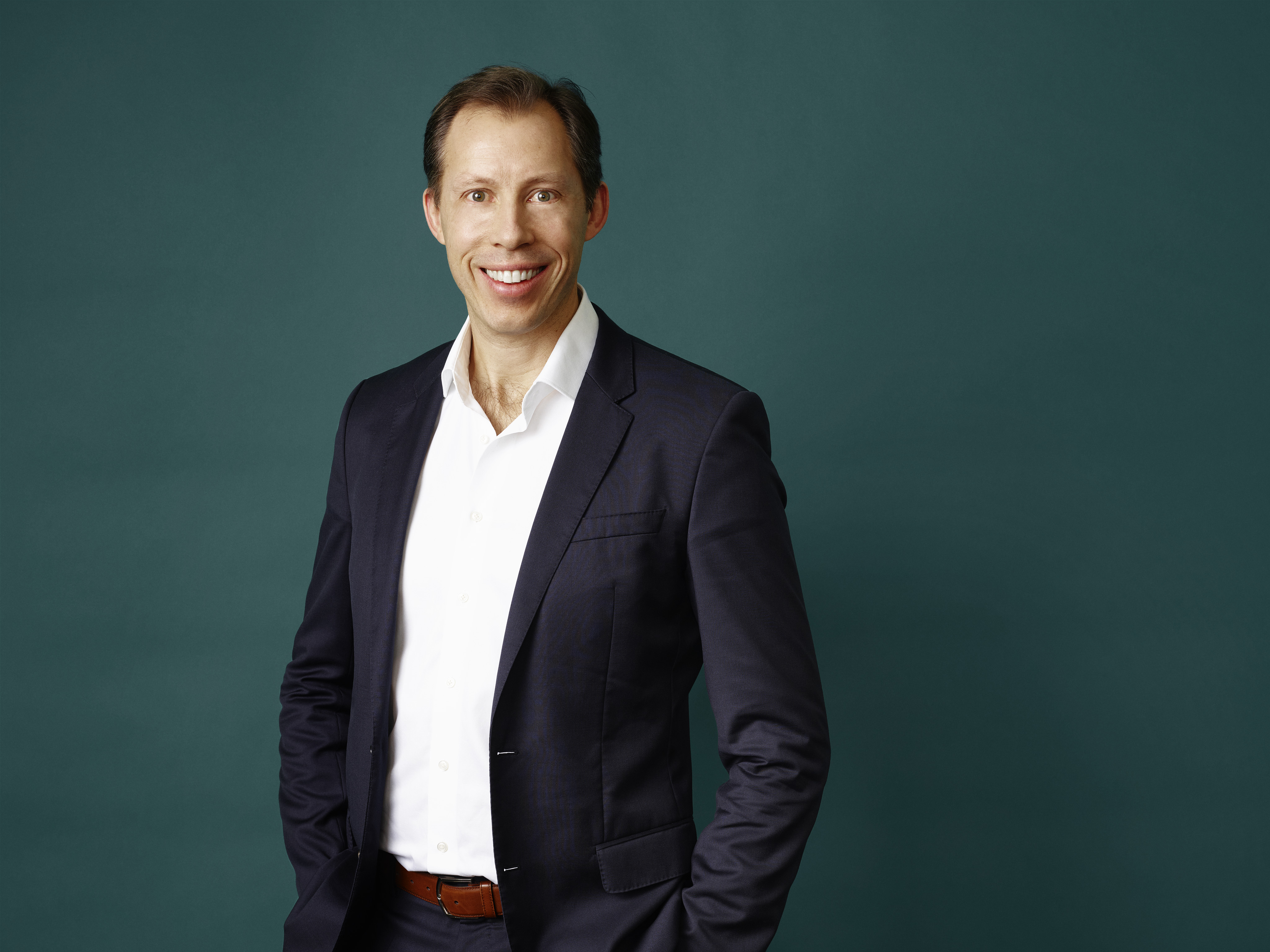
inspiratia speaks to Jens Peter Zink, deputy chief executive officer at European Energy, on the company's strategy and why it has expanded its footprint into the PtX sector.
What strategies has European Energy used to sustain its growth over the past year, given the turbulent market conditions?
There's not one single and simple answer to that. First of all, as we saw that our technology was becoming subsidy-free and we were able to provide competitive-priced electricity in more and more markets, we began expanding our pipeline. So today, we have a very large pipeline of solar and wind projects.
That, of course, was the first step. What we have also seen is that there is an interest in buying specifically renewable electricity. So, we have made strategic partnerships with off-takers of some of the energy that we are producing. These factors have allowed us to take FIDs despite the underlying interest increases that the market has seen.
For us, it's a matrix of things. The price of the turbine is one factor; the permits and the natural conditions for the energy are another. Of course, interest rates and energy prices are included in the calculation. Especially in Europe, there has been an increase in turbine prices and an increase in interest rates, but then we also have the energy price going up.
While the price of energy is not as high as it was in 2022, I think we are looking at a higher energy price than we saw four or five years ago. And that means that there are onshore projects that are still viable. Clearly, maybe the profits were higher two or three years ago, but we still see healthy profits that meet our return expectations.
Are you looking to expand your geographic footprint? Why/Why not?
We have always been a very international company. We are present in a lot of European markets and in selected markets outside Europe. The ground consideration for that is that there is a need for renewable energy all across the globe. We have two underlying issues – number one is the climate change issue, and secondly, we need to have some kind of energy independence. There is a vulnerability in being too dependent on the importation of energy, and I think that the war in Ukraine has created awareness of this.
Europe is a market where we see a lot of potential, and I think we are right now more focused on strengthening the markets where we are active and then increasing to new markets. Our focus is strengthening the core markets where we are already present. This is simply because there's so much opportunity in the markets where we are, and we are still a small player in many of the markets where we are present.
Could you expand your shift to producing hydrogen and e-methanol?
A couple of years ago, we began to diversify our company from producing electricity to producing energy more broadly through PtX. There is a huge growing demand for hydrogen, as Europe is trying to reduce its dependence on gas. We have a lot of heat in Europe that is created through gas and other sources.
We are seeing an electrification of different sectors. It is here in those sectors where we, for instance, will be able to offer some new products such as hydrogen, or e-methanol and potentially also ammonia. And it could be that there come other products like sustainable aviation, efuels and other markets where we are able to electrify some of the sectors that are today utilising fossil fuels.
In our e-methanol plant in Kasso, we will be selling some of the excess heat for district heating. We can also use the e-methanol for the shipping industry, and that e-methanol can potentially be made into aviation fuel as well. So, there are a lot of sectors where we are expanding now.
This is also why we think that our geographic expansion right now is not our main focus. And again, there's just a lot of opportunities in the markets where we are currently present. So, this is why we want to grasp those opportunities and strengthen our footprint.
Why is European Energy focused on PtX?
I'm in this industry because I want to fight climate change, and one of the ways of doing that is to electrify sectors that are otherwise difficult to electrify. These sectors include shipping and the plastic industry, and they can use e-methanol through PtX. It can also be used in the industry in general, where gas is blended with hydrogen, in the fertiliser industry with ammonia, or in other areas where ammonia can be relevant. So, we are able to do more than just electrify.
This is key as electricity is only around 20% of the total energy usage. So even if we were to make 100% of electricity renewable, renewable energy would still only comprise 20% of the total energy consumption. So, we need to address these other sectors.
Then the other part is, of course, that we see a business opportunity in this area. There is a demand for a product that we can produce. This also makes sense because sometimes our renewable energy projects produce more electricity than is needed, and therefore, it makes sense to take that and convert it to something that can be stored and utilised through batteries and hydrogen.
What factors do you consider when identifying new investments?
First and foremost, having good natural resources is key. Then there is the accessibility or the practicalities around putting up a wind turbine or a solar plant, the distance to the neighbours, and the distance to transport things needed for the projects.
Then, of course, political framework and stability are very important. From idea to production, our projects normally take five to ten years, maybe less. So political stability is super crucial. I think we are less focused on getting subsidies and support. What we need is peace and quiet. This means that shifting policies, new taxes, and other changing dynamics make things difficult.
Many times, it is actually better with a stable framework than with an overly positive framework that changes forth and back because the uncertainty creates bad working conditions for our investors with banks.
Lastly, you must consider market dynamics. What is the energy price in each market, and how is it expected to be in the future? Those are the factors that we look upon.
How important is colocation to your pipeline?
Colocation is becoming increasingly important, but this also depends on how you define colocation. For example, if you have an e-methanol plant like we have in Denmark, and if we can produce electricity directly, we are less dependent on changes in political winds.
The other potential colocation is having a solar and wind plan together, which makes a lot of sense because it better utilises the grid, which is a scarce resource anywhere, especially in Europe.
Batteries have the same effect. Also, with batteries, we can make a product where we can sell electricity when there is demand and not only sell as you can produce power. The biggest challenge for our industry is, of course, that wind turbines and solar plants produce electricity when the wind is blowing and when the sun is shining, not when the consumer wants to utilise energy or when the industry needs energy. So, there is a gap between our production profile and the consumption profile, and batteries are one of the key parameters to bridge that gap. Another one can be hydrogen, which can also be used as storage or to produce e-methanol.
Have there been any challenges in shifting from an electricity-generating company to one that deals with e-fuels?
There are many challenges every day, and that is basically my job. There are a lot of challenges but also a lot of advantages. We need to change the way we think of preferred sites, as what is once a preferred site may no longer be the case. So, we need to plan early and think about how to do this. Also, each market is different. There are different sizes and different structures. So there is a lot to learn.