Q&A – BNP Paribas Asset Management: Bridging the financing gap with debt funds
 Ashkenaz A.L.
Even by the most conservative estimates, a colossal amount of finance is needed for Europe to accelerate energy transition projects and get closer to net zero. Project financing in this sector has typically been spearheaded by commercial banks, however, institutional lenders like debt funds have begun playing an increasingly important role in this space.

On a macro level, debt funds and commercial banks are still seen as complementary as they operate on different risk profiles. While a massive amount of capital is needed from both commercial banks and institutional lenders, Stéphanie Passet and Vincent Guillaume, the co-heads of infrastructure debt at BNP Paribas Asset Management (BNPPAM), note that debt funds could play a crucial role in helping fill gaps in the financing market left by banks.
Passet and Guillaume sat down with inspiratia to discuss the role BNPPAM could play in the energy transition, attractive opportunities and how debt funds can support the financing needs of sponsors in this space.
What is your positioning in infra debt? What are your strategies?
Passet: Vincent and I are managing the infrastructure debt team within BNPPAM's €40 billion (£33.5m $41.7m) private debt platform. The team, consisting of dozens of investment professionals, was created in 2017, and we now have about €3 billion in assets under management. On the infrastructure debt side, we are deploying on two main strategies – senior debt and sub-investment grade junior debt.
What we do is raise funds from third-party investors and invest in infrastructure projects and companies. On the senior debt side, we are now raising our third generation of funds, an SFDR 9 climate impact fund. On the junior debt side, we are targeting sub-investment grade credit with a BB rating – a quite conservative risk positioning in the junior space. Right now, we are raising the second vintage of our junior debt strategy.
How important is it to be part of a BNP Paribas Group for your origination process?
Guillaume: It definitely helps us. We benefit from close collaboration with other entities within the BNP Paribas Group, especially the commercial and investment banking side, which complements our origination efforts.
We have privileged access to deals and transactions which are very distinctive to us. Being part of the group is not just for our origination process; it also helps supplement our market insight. For example, we have access to a large number of industrial experts in the Group that can provide market insight on the energy transition, especially when dealing with the complexity of new sectors like EV charging, batteries and hydrogen.
Looking at a broader overview, what role do you see BNPPAM playing in the energy transition space?
Passet: At BNPPAM, energy transition is one of the three pillars of sustainability, which also include healthy ecosystems and greater equality – the three Es. Specifically, within the infrastructure debt side, energy transition is at the core of our senior strategy. It is also one of the megatrends spotted in the infrastructure markets today in Europe, representing over 50% of the market opportunities in Europe, looking at figures from 2023.
This certainly includes renewables, which represent a big chunk of these opportunities. But we also follow other interesting developments, like battery energy storage systems, energy efficiency-related transactions, district heating, and biomass. In Europe, biomethane is becoming an increasingly important development, although the transaction sizes are quite small.
Looking at green hydrogen projects, they are still lagging behind on the debt side compared to what was expected. But we anticipate this will develop later on. We are monitoring this sector, but we haven't been able to invest in this so far.
Our role is to deploy capital into essential infrastructure that improves quality of life over the long term. We expect to play a greater role in the energy transition in the years to come.
Within the energy transition, are there any specific sectors or technologies that are keeping you especially busy at the moment?
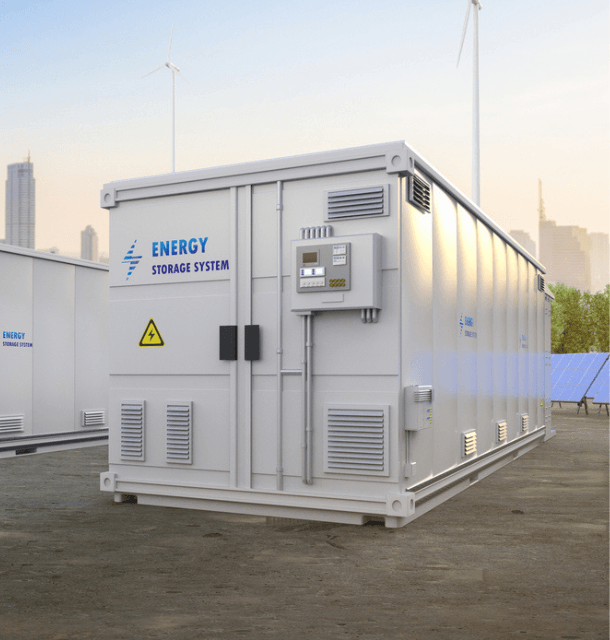
Guillaume: We are reviewing different opportunities within the energy transition. We are still investing in traditional renewables like wind and solar. But what we see is that battery storage is picking up pace. We are reviewing several opportunities right now. We can see very strong growing opportunities, and we feel that the sector will play a key role in the energy transition, especially in stabilising the grid with the inclusion of more and more renewable power generation.
This is a sector that is very interesting, but what we are looking for is a good project with good infra characteristics on cash flow visibility.
Another sector to mention is biogas. We are seeing more activity that is likely driven by EU regulations put in place to incentivise the development of biogas to increase Europe's energy security.
A lot of the biogas projects were financed by small-scale banks, these deals typically do not fit our debt size. But now we are seeing more consolidation of assets into platforms, where companies take more debt on a senior basis, portfolio basis, or even a HoldCo basis to develop the platform. Another interesting sector is electric mobility, with opportunities in rail, public transportation, and EV charging. The circular economy is also a developing theme in the infrastructure sector, with new assets being developed.
What characteristics would you like to see from BESS developers presenting their business cases?
Guillaume: As a lender, the key infra characteristics we need are the stability and predictability of cash flows. This means that we need to see some contracts in place, either offtake contracts with IG-grade offtakers or capacity market revenues.
If it is fully merchant, it is much more difficult. The financing structures are a bit different and not necessarily the best fit for long-term infrastructure lenders.
The regulatory framework is key because it is very different from one country to another. This will probably play a role in the development of the asset. We see very strong regulations in Italy and also in the UK. But a lot of other countries aren't there yet, where the market is relying on fully merchant models.
We need to be comfortable with technology risk and obsolescence risk, because these kinds of batteries are getting cheaper and cheaper. We are seeing more and more efficient batteries, so we need to be careful about this obsolescence risk.
What role can institutional debt play compared to commercial banks when it comes to financing renewable projects?
Passet: In short, I think debt funds and banks are quite complementary, and we work hand in hand with banks on financing. What we observe is that banks are positioned on the senior secured OpCo segment most of the time and are very active in the construction phase.
We are happy to partner with banks as they have strong origination capacities because they usually have a very extensive coverage network. This can give us access to local mid-size transactions, which can be attractive to us and in line with our target returns.
Institutional lenders like us also have the ability to complement commercial banks' liquidity with HoldCo financing. There are an increasing number of platforms being created, aggregating several projects and larger pipelines. In order to finance the development of these platforms, we are seeing more financing being put at the HoldCo level, which allows the equity to be redirected towards more new development and CapEx. This is a segment that fits our sub-IG junior strategy quite well. There is a high demand from developers looking to issue debt at a HoldCo level. This is an interesting complementary product that we can offer as banks are less active in this segment.
One example of this is the financing we provided last summer [2024] to Enfinity Global. It was quite a large transaction, and we were happy to be a part of that deal, which was related to a portfolio of solar PV assets in Italy.
Do you expect debt funds to play a large role in such transactions?
Guillaume: I would say yes, because the need to finance infrastructure is huge, especially in the energy transition segment. There will be a massive need for capital in order to achieve net zero targets, and some of the banks are constrained by their balance sheets. Institutional lenders will have to bridge the gap for financing. When you have new projects, a bulk of it is debt-financed. We will need this massive amount of debt capital coming from both commercial banks and institutional lenders.
Especially in Europe, we will see the market share for institutional lenders increase in the infrastructure debt space.
How do you manage the risk profiles across various technologies? Does your risk appetite favour more traditional infrastructure or new technologies?
Passet: It is not in our DNA to take on technological risk. We remain quite cautious as well on a project-by-project basis. Lenders like BNP Paribas have the ability to access the full value chain – from technology and market research to income generation – and provide a bespoke financing solution. We will have a greater capacity to invest proactively and take advantage of early-stage opportunities.
As for the traditional renewables market, the challenge is that it is attracting a lot of liquidity. It is sometimes challenging to find the right risk-return profile for investors. What is important here is to have a stronger origination network and a wider universe of deals to pick from.
What is interesting is that we are seeing the development of decentralised energy production. We are also seeing agriPV, or a mix of technologies, like a combination of battery storage with traditional renewables. These are developments which we could think could provide interesting opportunities to invest.
We have quite a disciplined approach. We are a little conservative on the lending side, trying to partner with experienced operators and looking at management teams of the projects we lend to.
How have you navigated the difficult fundraising environment over the past couple of years, and do you see this changing in 2025?
Guillaume: Fundraising has definitely been more challenging in 2023 and early 2024 due to the denominator effect and lower allocation across the private market. On the infrastructure debt side, we are lucky to have secured investors and have managed to fundraise and deploy capital over the past year [2024]. We have seen reallocation towards infrastructure debt, especially from real estate and core infrastructure equity, probably because infrastructure debt has shown strong resilience towards the inflation cycle. So, investors are convinced that this is a very strong product, especially in an adverse macro environment. We believe it will be beneficial this year a bit in terms of senior and junior strategies.
Our fundraising has been pretty strong over the second half of the past year. Our senior Climate impact fund is attracting investors looking to actively contribute to the energy transition and our junior strategy is attracting investors in demand for high cash yield that typically invest in infrastructure equity.