Q&A - BayWa r.e: Strategic evolution towards independent power production
 Ashkenaz A.L.
BayWa r.e is a renewables-focused developer and independent power producer (IPP), which has brought over 5.5GW of renewable assets to market.
In recent years, BayWa r.e. has embarked on a transformative journey, evolving its strategy to include a focus on IPP operations. This strategic pivot shifts the business towards a more predictable and stable revenue stream, distinct from the often volatile project development business.
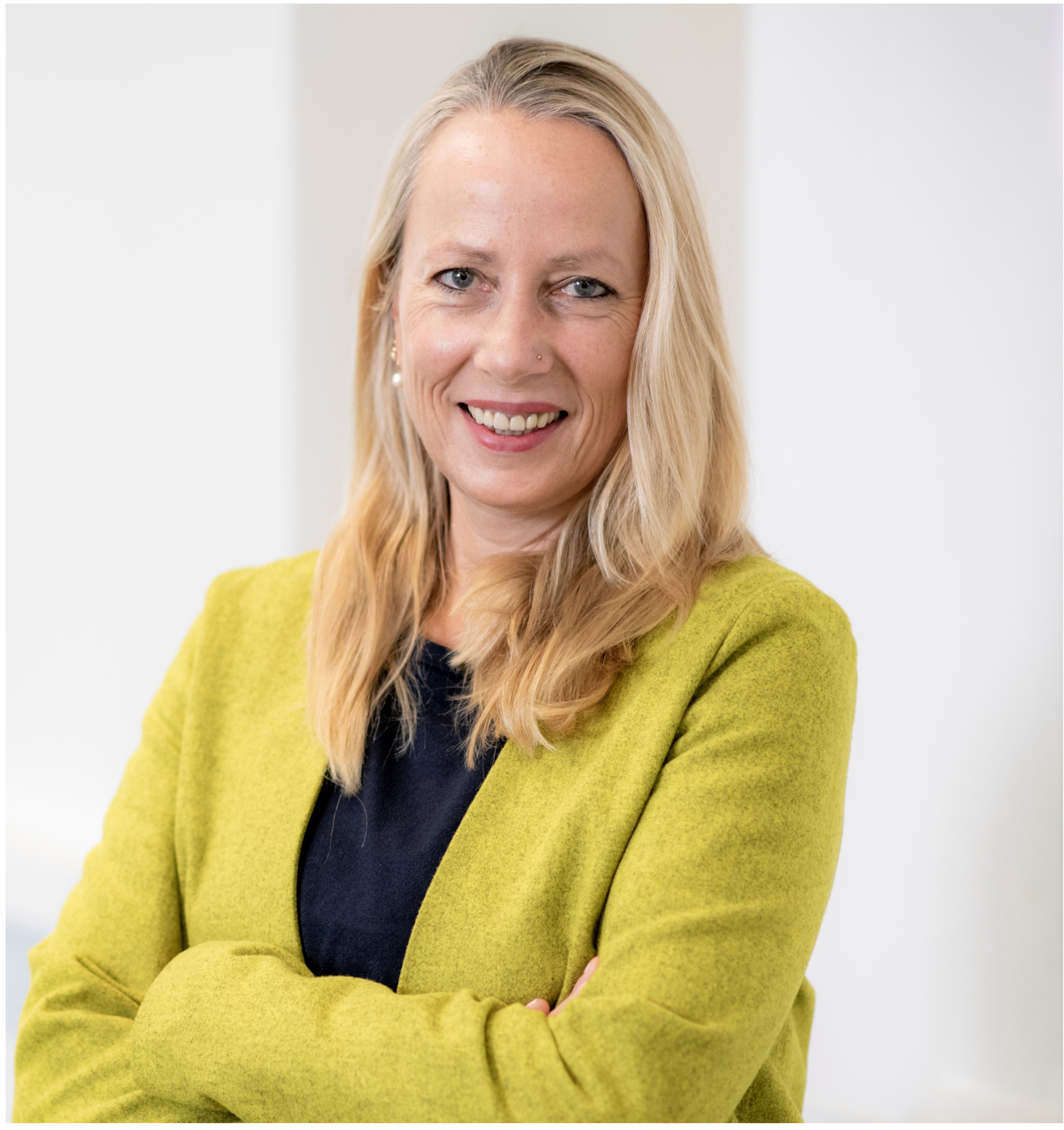
inspiratia speaks with Martina Dabo, head of asset management IPP at BayWa r.e., about the opportunities of the IPP model.
How has BayWa r.e.'s strategy evolved over the past few years?
In 2020, we launched an IPP business with the strategy to develop wind and solar projects and not sell all of them, but rather own and operate some. Developing projects has always been at the core of our business, but BayWa r.e. started with a new strategy to grow as an IPP. Owning several of these assets, we develop and operate them until the end of their life.
Our increasing IPP portfolio serves as an additional revenue stream that's more predictable and stable than the project development business. It is a demand-driven business. Within our industry, there have been fluctuations and spikes over the past few years. When you own an operating portfolio, you have a steady baseline of income in an ever-changing market. This was the strategic rationale behind adding an IPP to the BayWa r.e. portfolio.
BayWa r.e. has developed a global portfolio of over 30 projects in two years, what strategies have helped it grow so rapidly, despite turbulent market conditions?
As a global player, we have developed an integrated project platform. Before we launched the IPP, we already had a development team, a services team in charge of operation and maintenance services for solar and wind plants, as well as an experienced energy trading team. Adding an IPP entity now gives us fast access to a large in-house project pipeline.
Finding good projects is key to growth for any investor. For us, it is essential to have this in-house development platform from which we can choose projects. Combining development, servicing and trading services provides benefits across the whole value chain.
What are some factors you consider when identifying new projects to invest in?
The projects have to make business sense by meeting the typical KPIs that every industry has, whether it's the IRR, the EBITDA, or the revenue.
There are also factors outside the economic KPIs and to optimise our portfolio, we always balance economic characteristics with technical ones and sustainability criteria.
We are a global player, but we look for markets that are stable, have low regulatory risk, and, if possible, still have some kind of subsidy schemes, like feed-in tariffs. We have a very broad portfolio of utility-scale projects in different technologies, meeting certain size requirements and having access to the grid. We have also been pioneering in domains like Floating-PV and Agri-PV.
For future growth, we are looking at markets globally, but particularly in countries where they still have some government subsidy schemes. EMEA will be our biggest growing market for a while, but we are also looking at areas like Australia, South Korea, the US and Mexico.
In June, BayWa r.e. began construction on an Agri-PV project in the Netherlands, and reached financial close on a project in Spain in May. How important is Agri-PV to your portfolio, and what are the challenges in that particular subsector?
For us at BayWa r.e., the expansion of solar should take place in harmony with agriculture and nature. To this end, we should use land for food production, for the generation of solar power, and for biodiversity at the same time. We want to enable the farming sector to participate in our solar projects and to become a driving force in the energy transition.
Agri-PV is as diverse as the farming sector. We can develop large solar parks in combination with cows, hay or cereal production, or with permanent crops such as apple or berry horticulture.
The multifunctional land use of agri-PV considers the Food-Energy-Water-Biodiversity Nexus and promotes sustainable development in rural areas. It increases the resilience of farmers by diversifying and increasing their incomes, while at the same time contributing to the decarbonisation of our energy system and, thus, climate change mitigation.
Currently, we are developing the so-called Biodiversity-PV as an extensive specification of Agri-PV. In these projects, we enable the farmer to legally register the Agri-PV area as a so-called "non-productive area", as every farmer in the EU must set aside 4% of its productive farmland for biodiversity action. We thereby serve eco-system restoration, creating habitats for various species, and implement insect-friendly hay cutting: a win-win-win situation for the farmer, environment, and solar PV developer.
Are there any challenges the Agri-PV sector is facing, and how can governments address those challenges?
Agri-PV is a promising technology that combines the benefits of solar energy and agriculture, but it still faces some economic challenges. Agri-PV systems have higher upfront costs than conventional PV systems, due to the additional materials.
Governments and the European institutions can play a key role in addressing these challenges and promoting the development of Agri-PV. They could, for example, fund and facilitate more research and development activities to improve the economic performance of Agri-PV systems, as is being done with six of our new Agri-PV projects funded by the EU LIFE program.
For Agri-PV to gain traction in Europe and realise real positive change, we need legislation and subsidies supporting it. Therefore, governments should provide financial incentives and subsidies to reduce the initial costs of Agri-PV systems and increase the competitiveness and attractiveness of this solar application.
Are you looking at any other emerging technologies?
At BayWa r.e., we have an innovation team that tracks technologies and has small pilot-stage projects, sometimes working with universities and research institutions. But as an IPP, we guarantee a low-risk investment. So I would say we are perhaps early adopters of quasi-mature technologies, but we would not invest in a high-risk project that has no chance of return. Therefore, we collaborate closely with our colleagues who will then say if a certain technology is mature enough for the economics to work out.
How risky would you consider battery storage?
It depends on the market, but battery storage as a technology in itself is not very risky. I mean, it is a technology that has been around for ages and has different uses in different industries. There are technology providers and service providers, so from that aspect, there is expertise and knowledge in the market. It is just the off-take or revenue scheme that is different in different markets.
Some have a capacity market where it is easy to get attractive revenue, and some still have a subsidy scheme, like in Germany, where there is an innovation tender for battery storage. And even in other countries where there is none of these, we find good Power Purchase Agreements (PPAs) with off-takers that are happy to have storage as part of their portfolio. So, it really depends on the market.
So in Germany, we have a few projects because the innovation tender for batteries is still there. The UK is interesting because they have a lot of experience with PPAs, the off-takers are there, and the banks are also very comfortable with them. Those, I think, are the two biggest markets in Europe right now for battery storage.
Meanwhile, in the US, some states even mandate a co-location of storage with PV, so you cannot build a PV plant without storage anymore. So those are natural markets for us. Any country where there are grid shortages and curtailment issues is also viable. We also have a project in France, but it is at a very early stage, where we combine PV, storage and hydrogen all together.
What are the advantages of having ready-to-build projects versus turnkey projects, from an investor perspective?
The advantage of ready-to-build projects is that you are still in a phase where you can customise a few things. For example, you could say that you want project finance on a particular project, or would rather use this technology than the other, or have this type of service contract. Those kinds of factors are attractive because you can integrate them into your existing portfolio of contracts.
The advantage of the turnkey ones is that you do not have any construction risk. So, I am buying a plant that has already gone through all the testing, and where all the construction has been finished. So I do not have to take that risk as an investor.