Q&A - ATOME Energy: Fast-tracking hydrogen to the global market
 Zachary Skidmore
ATOME Energy is a United Kingdom-based green hydrogen and ammonia production company. The company focuses predominantly on producing, marketing and distributing green hydrogen and ammonia, focusing on fast-tracking their introduction to the global market. The company has active projects in Paraguay, Iceland and Costa Rica, each with differing focuses, ranging from domestic H2 mobility to large-scale green fertiliser production.
inspiratia speaks to ATOME's CEO, Olivier Mussat, about green ammonia's revolutionary potential, what forms of renewable energy are the most efficient to produce low-carbon hydrogen and how best the hydrogen mobility sector can be upscaled.
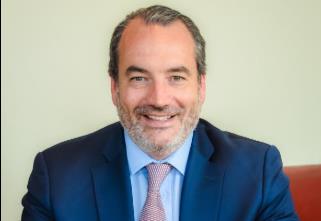
Could you provide a brief overview of ATOME?
ATOME is a world leader in producing the green commodities of our future. We are the first and still the only company to list on the London Stock Exchange focused on the production of green hydrogen, green ammonia, and green fertilisers. ATOME's primary focus is fast-tracking its introduction to the global market with our projects in Paraguay, Iceland and Costa Rica.
Our business model is simple: To develop projects that we can utilise. Two pre-existing fundamentals are that $5 trillion (£3.93tn €4.59tn) of investment is needed in the clean hydrogen supply chain to achieve net zero, and our ambition is to fast-track this requirement. First, we look for readily available renewable energy and infrastructure to accelerate the production of affordable green hydrogen. Then, we look at how green hydrogen can help decarbonise that particular market. That's why we focus on Paraguay, Iceland and Costa Rica.
ATOME, through its Icelandic subsidiary Green Fuel, is developing a green ammonia facility using available baseload power from geothermal sources in locations in close proximity to cargo ports appropriate for export and large ship fuelling. How does geothermal-derived hydrogen production differ from other renewable sources? What challenges and opportunities does it offer?
Our Iceland project is aligned with our business model that identifies opportunities to produce affordable green hydrogen by utilising readily available renewable energy. The intention in Iceland is to leverage this baseload of 24/7 geothermal energy to power an electrolyser in a green ammonia facility of c. 60MW capacity, is co-located near cargo ports appropriate for export and large ship fuelling.
It's important to note that the geothermal sources utilised will be to use green electricity to power an electrolyser. Geothermal has great attributes, particularly in Iceland, where it is in abundance, in particular, it is similar to hydropower. Geothermal is baseload, meaning that unlike wind or solar, it does not depend on intermittent weather, and supply is not unpredictable. This reduces the need for expensive battery storage to store excess renewable power, thereby reducing overall CAPEX, and reducing the need for a more mature electrolyser technology that can react to intermittent supply, reducing OPEX.
ATOME is developing a green hydrogen facility to supply Paraguay and the region's agricultural and fertiliser markets with sustainable alternatives. How and why can green ammonia revolutionise the agricultural and fertiliser markets?
Ammonia is the foundational element in nitrogen-based fertilisers, which represent half of fertilisers used in agriculture to promote plant growth, such as Calcium Ammonium Nitrate (CAN). When this ammonia is produced utilising green hydrogen, the fertiliser offers a sustainable alternative to those using conventional ammonia derived from fossil fuels. 99% of the ammonia used today is grey, and it is estimated that the carbon footprint linked to fertilisers is similar to the GHG footprint of shipping and aviation combined.
By using green ammonia as the fertiliser's feedstock, farmers can significantly reduce their carbon footprint and minimise environmental pollution caused by nitrogen runoff. It aligns with the increasing demand for sustainable and eco-friendly farming practices. For example, Unilever and Nestle have targets for net zero emissions by 2039 and 2050 respectively, and they need green fertilisers to achieve this. Moreover, consumers will soon be able to determine the lowest carbon footprint for what they buy, highlighting the importance of sustainable farming and from 2026. CAN already has 80% lower emissions than urea thanks to higher nitrogen efficiency, which are easier to decarbonise than their Urea-based counterparts, and following a number of discussions with industry leaders, we expect nitrogen-based fertiliser's market share to grow because they're easier to make green at scale in a nearly $200 billion (£157bn €184bn) per year fertiliser market.
That's why ATOME is focused on introducing the world's first large-scale green fertiliser to the market, meeting the demand that we are seeing from agriculture companies across the world. ATOME's CAN is expected to have the lowest carbon footprint of any fertiliser product today, representing approximately a 90% carbon reduction, enabling trade at a premium per ton of nitrogen as carbon border mechanisms are being implemented. This demand neatly aligns with our wider mission: to fast-track the production of green hydrogen today. By targeting existing industrial demand in the agriculture sector, green ammonia catalyses the decarbonisation of the food we eat and the green hydrogen sector that promises so much to the world's energy transition.
In February 2022, ATOME announced the creation of a new division, ATOME Mobility. What is the progress of this venture?
Many think there are too many logistical problems to overcome to make hydrogen a mainstream fuel for transport. There is a strong future for H2 mobility, especially for heavy goods vehicles. We intend to help create the market on a small scale, with a 1MW electrolyser to start on a progressive basis and provide a clean energy solution for heavy road transport and shipping industries where battery alternatives cannot provide the solutions needed using present technology.
Despite its abundant power, Paraguay lacks comprehensive access to sufficient grid infrastructure to facilitate EV expansion so this is a prime market for hydrogen vehicles to demonstrate their value.
Hydrogen-powered vehicles offer several potential benefits over electric, including: Longer driving range, faster refuelling time, reduced environmental impact, versatility, and energy storage potential. With ATOME Mobility, and with the support of our sister company Green House Capital, we are at the forefront of a $2 billion (£1.57bn €1.83bn) + per year zero-emission hydrogen mobility market potential in South America.
What are the main challenges of developing the infrastructure required for a hydrogen powered automotive industry, what lessons can be learned from the upscaling of EV charging stations?
Production and distribution are the main challenges in establishing a reliable and cost-effective system for hydrogen. Scaling up production to meet the demands of a large-scale industry requires significant investment and to an extent, advancements in technology. Establishing an extensive refuelling infrastructure for hydrogen vehicles is vital and needs to be strategically located to provide access for drivers. Hydrogen provides a suitable alternative where lack of grid access reduces the accessibility to EV charge points, allowing trucks to go longer more sustainably. The recently highlighted sustainability issues along the supply chain of batteries furthers the case for H2 vehicles.
Governments can play a key role in supporting the expansion of infrastructure, as well as collaboration, as seen during the early stages of EV upscaling. But it's important to remember that hydrogen will play a selected role in transport, and depending on the market, electrification can sometimes represent a more economical solution.
What jurisdictions do you see as having the biggest growth potential within the hydrogen sector? And where is ATOME's main focus?
Our focus is fast-tracking the production of green hydrogen for the decarbonisation of hard-to-abate sectors. We firmly believe that we cannot electrify everything, that green molecules are needed for their flexibility and multiple uses. Green hydrogen has an important role in our transition away from fossil fuels, and it is the responsibility of project developers, operators, and investors to deliver progress and not unrealistic targets that are decades away. To deliver green hydrogen today and ensure it is a developed market for green hydrogen to fulfil its potential, there are certain credentials required.
First, is access to readily available renewable power. To produce green hydrogen, you require green electricity to power the electrolyser that will split water molecules into its constituent hydrogen and oxygen molecules. Some projects that have been announced globally would need to co-construct the source of renewable power, transmission line, water treatment facilities, port export facilities and so on. Our strategy is to pick projects with an existing enabling environment and infrastructure in order to minimise "project on project risks", the need for more capital, as well as our environmental footprint.
We also need demand to make the project bankable, and investors expect offtake agreements and the ability to sell all our production without constraints. Our strategy to shift downstream to fertilisers is an example, utilising existing power and demand in Paraguay. Agriculture provides approximately 20% of the country's total employment, and Paraguay is the world's 4th largest exporter of soybeans representing significant domestic fertiliser demand. Paraguay is also in close proximity to the agricultural centres of Brazil and Argentina, with Brazil being arguably the world's largest importer of fertilisers.
In Costa Rica, we plan to use a similar strategy targeting the county's vast agricultural industry, which is 100% reliant on fertiliser imports, therefore, improving the country's self-sufficiency. In Iceland, we are targeting Europe's marine sector utilising green ammonia as a shipping fuel and targeting the sector's global maritime carbon emissions of 940 million MT annually, representing 2.5% of global GHG emissions. It is markets with these two fundamentals that will see biggest early growth for green hydrogen. Existing renewable power keeps the levelised cost of hydrogen down, increasing the attractiveness for existing offtakers that exist nearby. This also reduces the need to transport hydrogen from supply centres to demand hubs.
It's been hard to get financing for Hydrogen in the past - why has that been the case? Have investor attitudes to begun to change? What arguments can be used to convince investors to back hydrogen when there are so few real-world examples of the technology in action?
Before my time at ATOME, I was a CIO for the IFC, part of the World Bank, looking exclusively at investing into energy projects with an accelerated focus on clean energy towards the end, including hydrogen. Financing projects with technology risks are not bankable, but the technology has matured very quickly, and in a way not too dissimilar to the rapid growth of the solar industry, it is when technology and enabling regulation to meet that things move at scale (like the IRA or the EU Green New Deal).
Hydrogen projects are increasingly bankable as the demand side is being clarified, either directly by offtake agreements, or support mechanisms like CfD, or simply companies ready to buy green hydrogen / green ammonia, or green fertilisers as carbon pricing mechanisms, as well as ESG requirements, are being enforced. However, some of the struggles witnessed in the market is getting the initial capital to develop projects, particularly when compared with other lower-cost energy proposals.
The problem with today's hydrogen boom is that market and industrial reality have not yet been fully met, and there is a need for some strong support still. The recent financing for the NEOM green ammonia project at over $8 billion (£6.27bn €7.34bn) of project finance is a very significant step in the right direction and proves that a market for clean hydrogen/ammonia exists and where we should start is displacing the 95% of today's hydrogen made from fossil fuels.
Until more recently, the hydrogen market has been relatively small when compared to other energy options, creating potential market uncertainty. However, with the focus on alternative energy solutions for the decarbonisation of hard-to-abate sectors, there has been a growing interest in the financing of hydrogen initiatives. Notably, this stems from Biden's IRA, which provided nearly $1 trillion (£784bn €917bn) of support with over $370 billion (£290bn €339bn) dedicated to climate and clean energy investments, prompting a reaction from other Governments, international organisations and private investors exploring hydrogen as the solution for a carbon-free future.
What plans do you have to expand globally, and do you expect the current global economic headwinds to slow you down? How are you defending against risk?
Our near-term priority is of course our first 120MW green ammonia fertiliser project in Villeta, and we have a pipeline of 600MW of projects. We are at the back end of economic headwinds with inflation easing and supply chain issues being resolved. Building a sustainable hydrogen market requires urgency, clarity on policies, regulatory certainty, competitive prices, adherence to international standards and an ability to move at pace.
The larger energy and industrial companies are playing their part, too but have naturally been more cautious as they are not geared toward risk-taking and market-creating. So, it is about finding the right balance between taking risks, recognising and mitigating those risks, and focusing on delivery. We are working with first-class engineering partners such as Aecom, Casale and Urbas to ensure the quality of our projects. On the financing side, we are working with Natixis and the Interamerican Development Bank - IDB Invest and are discussing with a range of high-quality offtakers. We have the full backing of the Paraguayan government, which has granted us tax-free zone status on our first project. The fact that we are publicly listed on the London Stock Exchange also provides us with the financial flexibility to deal with headwinds and attract global investors.