Q&A – Altus Power: Plugging the renewables generation gap
 Maya Chavvakula
Large offshore wind farms and solar panels installed on hundreds of acres at a time tend to dominate the discussion surrounding the transition to clean energy sources. What is often overlooked are the smaller projects that
help decarbonise energy use much quicker and more efficiently than any of the behemoth projects can.
This is where companies such as Connecticut-headquartered Altus Power step in to plug a gap in the market and help corporates and other entities transition away from fossil fuel reliance while the utilities focus on grid scale consumption.
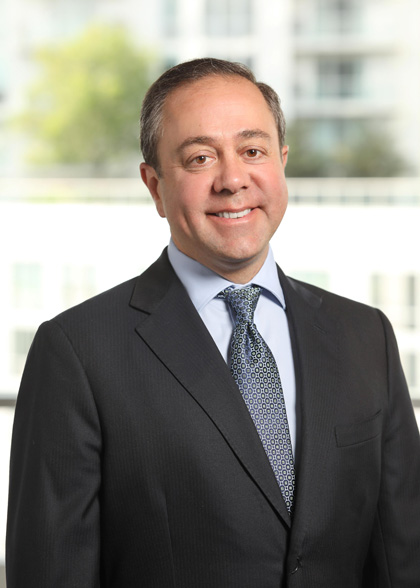
inspiratia sat down with co-founder and current chief executive of Altus Power, Gregg Felton (pictured right), to discuss the company's continued growth despite challenging economic circumstances.
Felton, a former Goldman Sachs banker, gives us a peek behind the curtain for a brief glimpse at the inner-workings of this rapidly expanding entity - from innovative financing strategies to commercial partnerships, all of which propelled the relatively young company to being one of the largest provider of clean energy to commercial, industrial and public sector clients in the US.
What was the driving force behind the inception of Altus Power and has that changed at all over the years?
Altus was originally set up in 2009 with a vision to be a clean power company. We would build, own and operate commercial-scale solar arrays which would sit atop large industrial roofs or on land in locations where power demand is robust and expensive. Our intention was to bring our solution to markets around the U.S., providing consumers with clean power—at a discount—while earning an attractive financial return for our investors. Altus was initially structured as a fund vehicle for "friends and family". Given the long-term nature of our assets (i.e. 35 year life), in 2013, we decided to convert Altus Power into a traditional C Corp with a long-term ownership model. We began to raise institutional capital. Blackstone became our first significant institutional investor in 2014. Soon after in 2016, Goldman Sachs and Global Atlantic insurance (now KKR) also invested in the company.
Today, under the C Corp structure, we operate solar facilities across 25 states.
What would you say are the primary challenges faced by a mid-market operator such as Altus?
One of the biggest challenges in the solar energy space is the fragmented nature of the sector in the United States. We essentially have 50 different states with 50 different strategies, so we have to work closely with local program administrators, municipalities, utilities and other such bodies to implement our projects successfully. Altus' strategy has been to build a network of "channel partners" throughout the country. This not only helps us identify opportunities but also kick starts the development process allowing Altus to eliminate some of the early time-consuming processes such as validation of a project's viability. Our goal is to streamline the development process while producing a robust pipeline of commercial solar projects with long-term customer contracts.
Would you agree that for a relatively young company, the growth has been exponential?
Yes, I would agree and believe it's because of the vision we had from the beginning. Our goal was always to build a business at scale that would be successful over the long term. We surrounded ourselves with valuable strategic and financial partners as well as a network of channel partnerships which helped us cement our presence in the states we operate in and created more of a straightforward path for our expansion.
Expansion can be expensive. What is the company's preferred financing strategy and how has it evolved over the years?
Historically, asset-level project financing was the typical financing solution for the sector. But our view was that utility scale projects are much better suited for this model, given the relatively large size of those transactions.
Altus operates, primarily, in the mid-market space. Our assets, individually, might cost between $2 and $10 million so a project financing structure on each project would be very inefficient. So, we instead opted for portfolio financing, which would require that we build a portfolio of scale. Blackstone, Goldman Sachs and Global Atlantic helped us create that scale and, in 2019, we successfully launched the first commercial scale securitization with an investment grade rating. This was our first "efficient financing" transaction.
Since 2019, our portfolio has grown significantly and we have continued to leverage the private placement market. Today, we believe that the size of our balance sheet and efficiency of our financing facilities is definitely one of our core strategic advantages which gives us a leg up over our competitors.
We created somewhat of a unique financing solution with our dynamic securitization structure, which allows us to add "collateral" of new builds which we developed or newly acquired operational assets to our existing facilities and upsize the financing.
Another unique feature of Altus' financing architecture was the creation of a construction facility in collaboration with Blackstone which offers greater flexibility than a traditional bank facility. With this facility, we can finance not only construction projects but also smaller acquisitions as well as other inventory. Finally, we also have access to a $200 million revolving credit facility which gives us additional balance sheet flexibility.
What's your strategy for creating these portfolios? Are they grouped by geographical location i.e states or is it the development stage?
When you create diversity of assets the way we have, the composition of each portfolio becomes less significant for our financing partners.
Lenders tend to prefer a diverse portfolio. Having all the projects in a portfolio located in a single state may create a small level of additional risk so we tend to finance our portfolios which are diverse by a number of measures including geography, offtakers among others.
Most of your projects are located in the Eastern seaboard and then a cluster across the country in California, is there a reason for this?
The common denominator is that our projects are located predominantly in states with the highest power prices. Solar power relies on the sun to generate electricity and we are competing with traditional sources of power. Therefore, the higher the price of transitional sources of electricity, the more we are able to save customers on our value proposition.
Being a commercial solar company, most people find it surprising that we don't currently have assets in Texas, but we operate in Maine. While there is less sunlight in Maine, the power prices are four times higher compared to Texas so, even though it's more expensive to build assets in the Northeast relative to Texas, the project economics of Maine are far more compelling.
Does being present in states which higher average power costs allow you to take merchant risks?
We tend to limit our exposure to merchant risk. The utility scale market is predominantly one that is selling power in the merchant market, whereas, we are largely selling at discounted retail power rates via long-term "take or pay" contracts.
Is the composition of your assets uniform across your portfolio?
Not really. We build two types of systems. One is a behind the meter system, where we install a solar facility on the rooftop and sell power into the building tenant.
The other one is a front of the meter system, where we send the energy generated to the grid which then disburses it to our customers.
We recently built a community solar site on the Morgan Stanley campus in Purchase, New York. The system was built in collaboration with the local utility, ConEdison. Up to 40% of the energy produced at site will be used by Morgan Stanley and the remaining 60% will benefit other Altus customers in the ConEdison utility territory.
Does the company have plans to expand beyond the 25 states?
In an ideal world we would love to be in all 50 states. That's our long-term goal but the expansion has to be economically viable.
If we try and break down what makes a project economically viable, the largest factors are cost of construction and prevailing power prices and potential revenue opportunity from the sale of retail power.
Construction cost is relatively uniform except for a few variables. What really creates opportunity is he projected increase in power prices. Given the AI boom and electrification of everything, demand for power is predicted to rise dramatically over the next decade and beyond. With that increased demand, retail power prices are expected to rise across the country, even in the states that currently enjoy record low energy prices. This should expand the market opportunity for commercial solar projects.
Beyond rising demand and associated power prices, another industry tailwind is the current reshoring of domestic supply chain for solar components. The Inflation Reduction Act (IRA) provides incentives for both the manufacturing of domestic components as well as the consumption of domestic materials. We expect the IRA incentives to put downward pressure on the cost to build. This combined with higher electric prices makes us optimistic about further expansion.
Are you worried about competition from offshore wind, given a good chunk of the states you currently operate in appear to the ones pursuing these mega-projects quite aggressively?
No, not really. The reason is because the forecasts which predict an increased demand for energy also predict a potential strain on supply. We should also remember that traditional energy assets are being decommissioned leaving a very large gap in the market. This leaves more than enough room for large utility scale renewable assets as well as smaller ones like those we develop.
And we are not solar evangelists in the sense that we don't believe we are the only solution. We are definitely just one part of what is required to make the shift to clean energy more sustainable and commercially feasible.
Finally, decommissioning of traditional assets also leaves a big gap in firming capacity. Will Altus, perhaps, venture into battery storage to help fill the void?
We currently do own battery storage assets at a few of our solar sites and we are looking to replicate the model at more of our sites. Adding battery storage is a question of economics. At current prices, battery storage makes commercial sense in several states, including California which has relatively large differences in time of use pricing. Batteries can be used to shift load, that is store energy when it's cheap and transmit it when prices rise.
Batteries are currently not competitive at commercial scale as backup generators. That said, we do expect the installation costs to come down which will provide opportunities to add battery storage across our portfolio.