inspiratia’s New Tech, Hydrogen, and CCUS Summit
 Oliver Carr
inspiratia's latest landmark industry event was the New Tech, Hydrogen, and CCUS Summit in Berlin. This event brought together the very best of the hydrogen industry for a day of discovery, learning, and connecting, both on stage and off.
In recent years, hydrogen energy has garnered significant attention as a pivotal element in the global transition to clean energy. To explore the intricacies and potential of this emerging sector, five distinguished panels of experts convened to discuss various aspects of hydrogen energy, ranging from investment strategies to regulatory frameworks.
A special note of thanks is due to our esteemed partners at CIBC and FRV-X, our sponsor Squire Patton Boggs, and our supporters in ERM, and JLL. We are profoundly grateful for your partnership and commitment to advancing discussion within the energy transition.
Panel 1 - Making the business case for investing in hydrogen
- Samuel Simon, Director, Energy & Infrastructure Advisory at JLL
- Marina Villalante, Green H2 Market & Regulation Manager at FRV-X
- Bilal Ahmad, Senior Investment Associate - Energy Transition at Octopus Energy Generation
- Moderator: Robert Todd, Managing Director - Energy, Infrastructure and Transition Group at CIBC
In our first panel of the day, industry leaders discussed the future of hydrogen energy, focusing on its financing and commercialisation. CIBC's Todd opened up by emphasising the EU's ambition to be climate-neutral by 2050, noting the significant role of hydrogen in this goal. He highlighted the current dominance of grey hydrogen and the shift towards low-carbon alternatives.
The panel discussion provided a pragmatic view of the green hydrogen sector, with insights into the challenges and opportunities currently facing the industry. FRV-X's Villalante spoke about the complexities of introducing renewable hydrogen into established markets. She highlighted the need for robust regulatory frameworks to support these innovative projects, which are currently taking "baby steps" in their development.
The conversation then shifted to the importance of integrating different sectors to leverage the full potential of green hydrogen. As Villalante noted, merging the gas sector with renewable power is crucial. This requires a deep understanding and collaboration across the entire value chain of the project, ensuring that each player brings their expertise and knowledge to the table.
The experts also discussed the geographical variations in the development of green hydrogen projects. Different regions present unique challenges and opportunities, with some areas like the European Union and the UK showing more regulatory and policy support for these projects.
On the topic of finding commercialisation and financing pathways, JLL's Simon from JLL highlighted the unique challenges in hydrogen projects, differentiating them from typical renewable projects due to their technological and regulatory complexities.
The panellists agreed that the current state of hydrogen projects often requires strategic investors who are less focused on immediate financial returns and more on learning about the industry and contributing to its development. The conversation also touched on the importance of project scalability and the necessity of developing a hydrogen pipeline network to enhance project viability and investor interest.
Octopus Energy Generation's Ahmad shared insights on the importance of engaging with offtakers and understanding their operational and commercial needs. He emphasised the patience and commitment needed to secure high-quality offtake agreements.
Financing these projects remains a significant challenge. The panel highlighted that while banks and investors are keen on the topic, the nascent stage of many hydrogen projects and the associated risks often necessitate innovative financing approaches. These include leveraging support mechanisms, exploring non-traditional investment sources, and building partnerships with stakeholders who bring more than just financial support to the table.
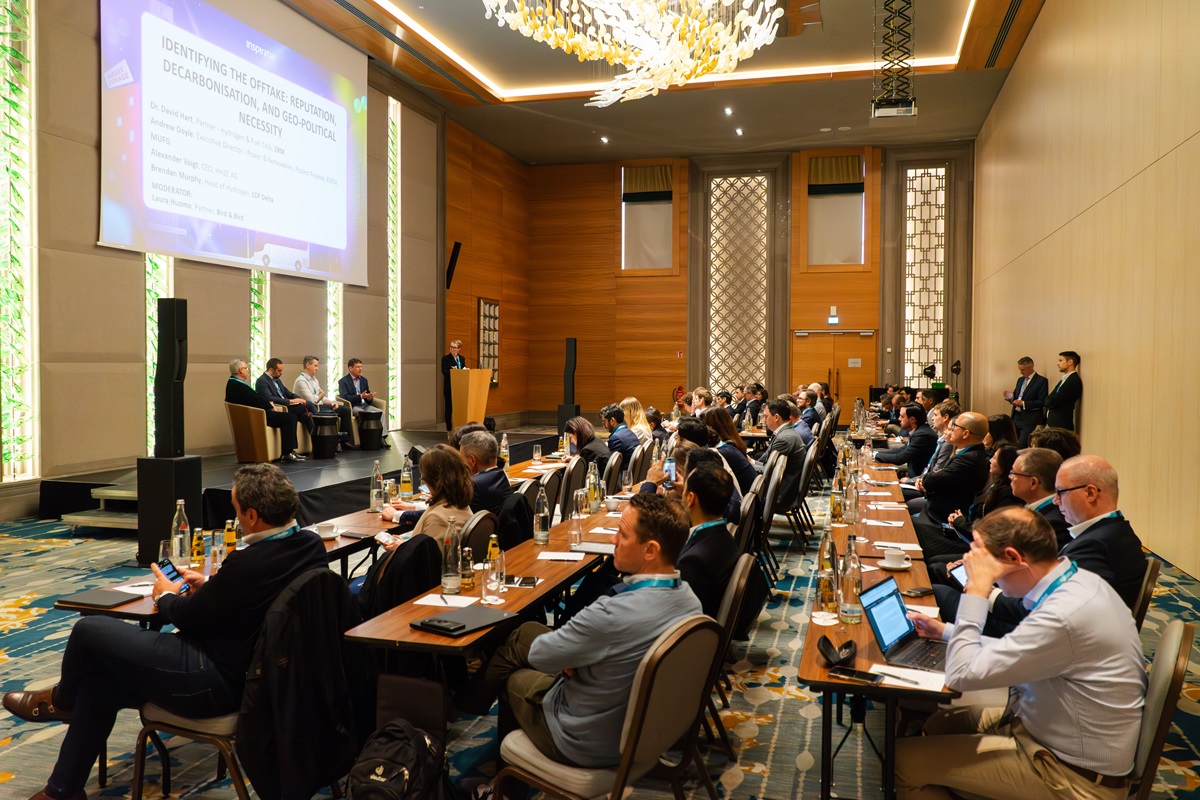
Panel 2 - Identifying the offtake: Reputation, decarbonisation, and geo-political necessity
- David Hart, Partner - Hydrogen and Fuel Cells at ERM
- Andrew Doyle, Executive Director - Power & Renewables, Project Finance, EMEA at MUFG
- Alexander Voigt, CEO of HH2E
- Brendan Murphy, Head of Hydrogen at LCP Delta
- Moderator: Laura Huomo, Partner at Bird & Bird
In the next panel, we turned our attention to the complexities of hydrogen offtake and project bankability. Bird & Bird's Huomo, moderating the discussion, emphasised the intricate role of legal frameworks in hydrogen energy projects. She also highlighted the complexities of offtake agreements, and underscored the challenges these agreements pose. Huomo pointed out that the evolving regulatory frameworks and the lack of clear definitions and constant revisions, such as the European Commission's regular reassessments, create a climate of uncertainty.
MUFG's Doyle addressed the significance of storage in enhancing project appeal. He noted that storage assures supply continuity, which is vital for the stability of green hydrogen projects. Doyle also touched on the role of battery storage in managing electrolyser operations and energy volatility.
Drawing parallels between hydrogen and other renewable energy sectors, such as offshore wind, Doyle highlighted hydrogen's critical role in the global energy transition strategy and emphasised MUFG's commitment to partnering with customers in navigating the hydrogen sector's bankability challenges, demonstrating a keen interest in the evolving financial landscape of this nascent industry.
On the topic of price alignment, LCP Delta's Murphy highlighted the challenges in determining the price and term for hydrogen offtake agreements. He underscored the sector-specific nature of these agreements and the difficulties in aligning the price of hydrogen with existing fuels without significant intervention.
During the panel, ERM's Hart emphasised the systemic transformation needed for hydrogen integration, pointing out the complexities of regulatory and legacy structures in this transition. He also cautioned of the dangers of committing capital in an unsettled market.
Putting a note of scepticism into proceedings, Hart said: "This is a hype cycle that we're going through. A lot of big announcements were made, a lot of money was promised, and a lot of people made very speculative efforts to get into the market. And a lot of these projects should never have happened, and they won't happen. Now we are in this settling phase."
HH2E's Voigt stressed the importance of regulatory frameworks in incentivising industrial players to invest in green hydrogen. He highlighted the success of sector-specific quotas in Germany for decarbonisation, forecasting a rapid scale-up of the hydrogen market.
Voigt also remarked on the evolving technology landscape, suggesting the need for innovative solutions to meet the market's demands and the limitations of current technologies.
Panel 3 - Building certainty: Regulations
- Antonio Bañón, Legal Director at Squire Patton Boggs
- Lars Hummel, Policy Officer at EFuel Alliance
- Carlos Terre, Group Managing Director, Head of Markets And Business Development, Scope
- Moderator: Elsa Fucile, Head of Production at inspiratia
The discussion focused on navigating the complex landscape of EU legislation and political risk in the hydrogen sector.
Bañón discussed the evolution of regulations and how they adapt to market needs, stressing the importance of aligning regulations with market realities. He highlighted the need for educating local authorities about new technologies like hydrogen to facilitate the permit-granting process.
Hummel spoke about the crucial role of regulations in shifting the entire energy system. He emphasised the need for legislation that enables market competition and fosters the development of renewable technologies, including hydrogen.
The panel discussed the importance of regulatory frameworks that support the hydrogen industry without hindering its growth. They highlighted the challenges in implementing regulations, especially at the local level, and the need for more pragmatic and flexible rules to foster the industry.
The discussion also touched on broader topics, including the impact of CO2 pricing, the role of subsidies, and the balance between regulation and market dynamics. The panellists agreed on the necessity of clear, effective regulations that support the transition to green hydrogen while acknowledging the complexities and challenges involved in achieving this goal.
Terre, stressed the need for regulations to ensure safety and the rule of law while cautioning against overregulation that could stifle market innovation. He advocated for a market-driven approach, where the most efficient and reliable solutions naturally emerge.
Panel 4 - Weighing up the costs: Biogas vs. Hydrogen
- Jens Schmidt, Chief Technology Officer at TES-H2
- Shirley Chojnacki, Senior Investment Director, Infrastructure and Structured Finance at Edmond de Rothschild
- Rish Chandarana, Partner, Energy & Infrastructure Advisory at ERM
- Moderator: David Hart, Partner - Hydrogen and Fuel Cells at ERM
In this session, the panellists explored various aspects of biogas and hydrogen derivatives. Hart set the stage by discussing the need to view the energy sector as a system, where various elements like hydrogen, biogas, and methane must be integrated efficiently. The panel agreed that hydrogen plays a crucial role, particularly in heavy industries and sectors where electrification is challenging. However, they also highlighted challenges, including cost, maturity, and infrastructure requirements.
Edmond de Rothschild's Chojnacki, discussed the investment perspective, particularly the importance of long-term volume commitments in energy projects. She acknowledged that while biogas is currently more mature and bankable due to its established framework, hydrogen projects could become attractive with the right offtake agreements and price structures.
TES-H2's Schmidt agreed with this and added that biogas and synthetic methane offer flexibility and can utilise existing infrastructure, a significant advantage over completely revamping systems for hydrogen. The panellists saw biogas as a viable short-term decarbonisation strategy, even as hydrogen gains momentum. Schmidt emphasised that while TES-H2 is primarily a hydrogen company, its process also includes utilising biogenic CO2 to form synthetic methane, thereby providing a climate-neutral energy carrier.
ERM's Chandarana elaborated on the complexities involved in biogas production, such as feedstock availability and operational challenges. However, he also pointed out that biogas presents short-term decarbonisation opportunities, especially in the industrial sector. He noted that for investors, the entire value chain of an energy project, from feedstock availability to offtake agreements, needs to be economically viable. Chojnacki echoed this, emphasising the importance of securing long-term offtake volumes to make projects bankable.
The panel discussed the complexities of international trade and certification in the context of renewable fuels. Schmidt noted the regulatory hurdles, especially in Europe, which could slow down the adoption of innovative solutions like synthetic methane, while Chojnacki stressed the critical role of certification in investment decisions, indicating the need for clearer regulatory frameworks to drive the energy transition.
The discussion concluded with a consensus on the need for a systemic approach to decarbonisation. While hydrogen is a key part of the puzzle, biogas and synthetic methane are equally vital, offering immediate solutions and flexibility. The panel underscored the importance of not prescribing a 'one-size-fits-all' solution but rather developing a diversified, inclusive energy strategy that considers economic, technical, and infrastructural factors.
Presentation: Clean ammonia and its potential for the energy and materials transitions
Carol Xiao, director business development at ISPT (Institute for Sustainable Process Technology) Xiao presented a comprehensive overview of the potential of clean ammonia in the energy and materials transition. Her keynote emphasised ammonia's role as an energy and hydrogen carrier, particularly in the Netherlands and the greater region. Xiao highlighted clean ammonia's potential to significantly reduce CO2 emissions in industries beyond its traditional use in 'grey ammonia' production.
The presentation delved into the opportunities and challenges associated with developing clean ammonia value chains. Xiao discussed the need for investment to meet future demand and the envisioned supply chain for clean ammonia. She also touched upon the benefits of ammonia cracking technologies to produce hydrogen and the enablers required for scaling up to ensure a profitable business case.
Xiao underscored the importance of understanding the future of ammonia in the energy transition and its position in the regulatory framework. She noted the challenges of establishing reliable, affordable supply chains and the high capital expenditures involved. The presentation also touched on the importance of creating a stable and clear policy environment to encourage investment in green hydrogen markets.
Focusing on the Netherlands, Xiao highlighted the significant potential for ammonia import growth, estimating that by 2030, around 16 million tonnes of ammonia might be imported into the Netherlands. The report Xiao referred to examines the key aspects of ammonia import, including bunkering, power generation, and export to neighbouring countries.
A significant portion of her talk centred on the challenges and solutions for transporting ammonia. She detailed the various methods of transporting ammonia, including train, pipeline, and inland barges, and how these methods depend on the intended use of the ammonia – whether for direct use as a molecule or for cracking into hydrogen.
The presentation concluded with an invitation to the audience to download the detailed public report on ammonia's role in the energy transition for a deeper understanding of the facts, figures, and strategic implications.
Panel 5 - Hydrogen infrastructure and power-to-x
- Daniel Muthmann, Vice President Business Development at Höegh LNG
- Christian Friebe, Head Of Public Affairs at STOFF2
- Catherine Gras, Non-Executive Director, Board Member/Supervisory Board at Storengy Deutschland Infrastructure GmbH
- Joseph Ciccone, Senior Consultant at Apricum - The Cleantech Advisory
- Moderator: Oliver Carr, lead analyst at inspiratia
The final panel discussion brought together experts from across the hydrogen value chain, including production, storage, and transmission, to illuminate hydrogen as a key player in the energy transition.
The discussion opened with Apricum's Ciccone stressing the heterogeneity of the hydrogen space and underscoring the challenges companies face in scaling up hydrogen production. He touched on the need for effective competitor and market analyses, particularly in understanding the risks associated with ramping up electrolyser production.
STOFF2's Friebe introduced the concept of 'dark green hydrogen'. Friebe described a system that combines the functionalities of a battery and an electrolyser, underscoring the potential for more cost-effective hydrogen production.
Storengy's Gras brought to light the pressing issues in hydrogen storage development. She stressed the need for a clear market design and business model, supported by governmental decisions, to enable financial investments in large-scale storage projects. While Höegh LNG's Muthmann expanded on the theme, discussing the intricacies of developing a robust infrastructure for hydrogen. He emphasised the 'chicken and egg' problem of needing infrastructure to develop hydrogen projects, while also requiring hydrogen projects to justify infrastructure investment. Both panellists agreed on the critical role of policy and government in bridging these gaps.
Friebe also discussed the integration of electrolyser technologies within the energy grid and noted the potential to enhance electrolysis efficiency. He stressed the need for diverse capital investment, stating: "If only half of the projected targets are implemented, there's a lot of room for all electrolyser technologies to sustain."
Ciccone offered insights into the relationship between energy storage and hydrogen. He highlighted the need for realistic and optimistic business cases in the electrolyser production sector, emphasising: "It's silly to believe a company who thinks they're going to have hockey stick growth and be able to sustain that with limited uptake into the future."
The panel then shifted focus to the integration of heating solutions in the energy transition. Ciccone highlighted hydrogen's role as a flexible storage medium, particularly its potential in sector coupling. However, he cautioned against overreliance on hydrogen for heat, suggesting a more targeted approach where hydrogen is used where electrification is not feasible. Muthmann echoed this sentiment, pointing out the underestimated challenges in decarbonising the heating market. He advocated for keeping all options open, including hydrogen, to ensure the most efficient and affordable pathway to reducing CO2 emissions.
An underlying theme was the economic impact of transitioning to green energy, including concerns about potential stranded assets. The panellists agreed on the need for a balanced approach, combining public policy support and investor confidence to foster a green hydrogen economy.