Financing European Renewables 2024 - Key Takeaways
 Maya Chavvakula
EU
MultisectorsEventAuctionEsgFinancingLast week [on 16 May], inspiratia headed to Madrid for the Financing European Renewables Summit, a full-day conference on this persistently evolving topic, with panels on the challenges faced by the sector, associated risk and potential pathways to navigate the turbulent economic outlook.
The key takeaways from this year's event, hosted at the Rosewood Hotel, were illuminating and foreboding in equal parts.
inspiratia insights:
- The appetite for merchant risk continues to grow among commercial lenders, with institutional investors hot on their heels
- Firming capacity remains a challenge, and meaningful progress can only be made with appropriate government intervention
- More support is needed for nascent technologies which are needed to decarbonise hard-to-abate sectors
- Risk needs to be destigmatised and better understood to maximise revenue streams
Panel 1 - Financing toolbox: Minimising risk
Rafael Montero - Operations for State Accounts, CESCE
Roly Hawker - Director, BlackRock
Stefan Vatchev - Executive Director, Project Finance & Infrastructure, CIBC
Giulia Noli - Director, European Infrastructure & Project Finance, MetLife Investment Management
The panel was moderated by Pierpaolo Mastromarini, Partner, Bird & Bird.
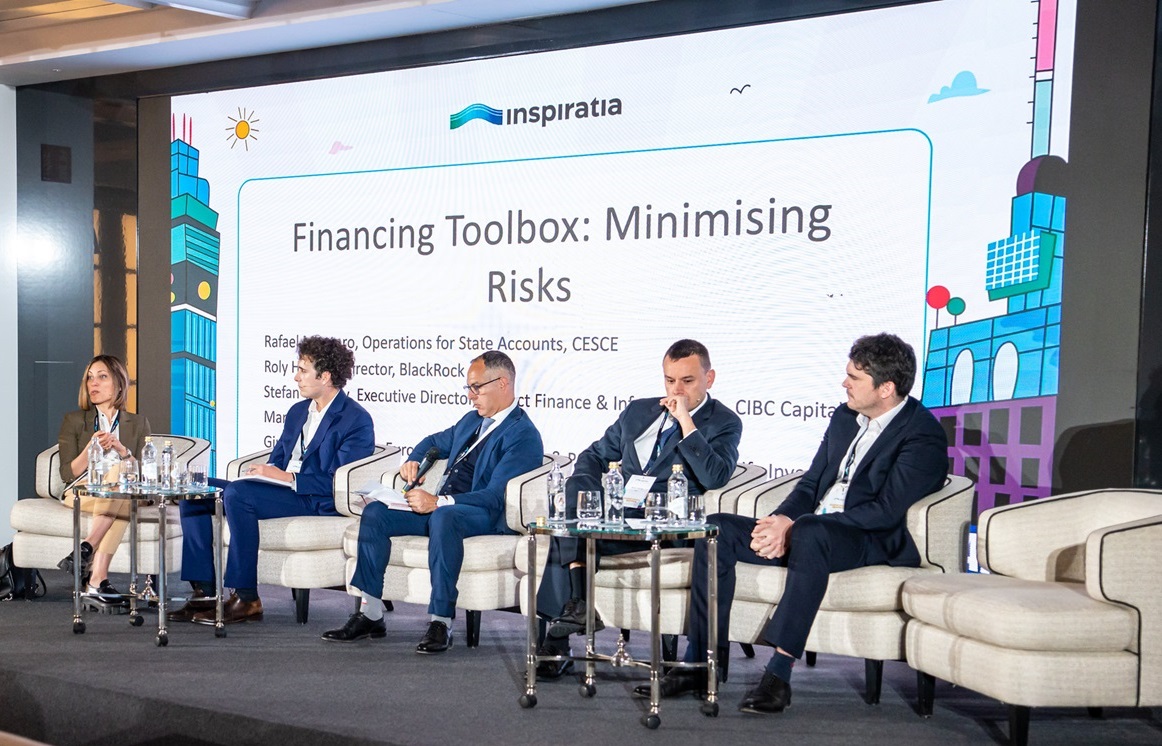
The discussion started with the importance of "affordable energy for everyone". Rafael Montero, the representative from Spain's export credit agency (ECA) CESCE, laid out initiatives being made available for local lenders to invest in renewable energy projects both locally and abroad. The pivotal role ECAs can and should play in helping finance large-scale generation assets was highlighted with a focus on the steps Spain is taking to facilitate the transition.
CESCE, for the first time, is able to support up to 80% of the credit risk associated with projects that are backed by Spanish developers or investors.
Despite the positive movement, several roadblocks remain to be resolved along with new challenges, such as supply chain constraints and inflation.
The discussion centred around steps commercial lenders need to take to overcome these challenges and the changes needed for institutional investors to actively participate in renewable energy financing.
Commercial lenders, on the one hand, have been and continue to be active in the sector providing enough liquidity to finance established renewables technologies in a timely manner, but the new economic constrains are forcing lenders to reconsider their positions.
Commercial lenders are seeking certain guarantees to help them adapt to the challenging economic environment.
Institutional investors, on the other hand, are proposing a diversified risk structure in the form of portfolio financing to facilitate their entry into the sector.
The portfolio financing structure would spread out the construction risk and merchant exposure making the deal more palatable for institutional investors. This will also allow for larger tickets which tend to be favoured by these players.
The panel debated the possibility of commercial lenders being crowded out by institutional players but both sides agreed that new solutions are needed to face newer challenges and that close cooperation between the developers and financiers is vital to propagate the transition.
Presentation - Financing the evolution of renewable energy offtake
Niels Jakeman - Head of Energy Origination Europe, Nord/LB
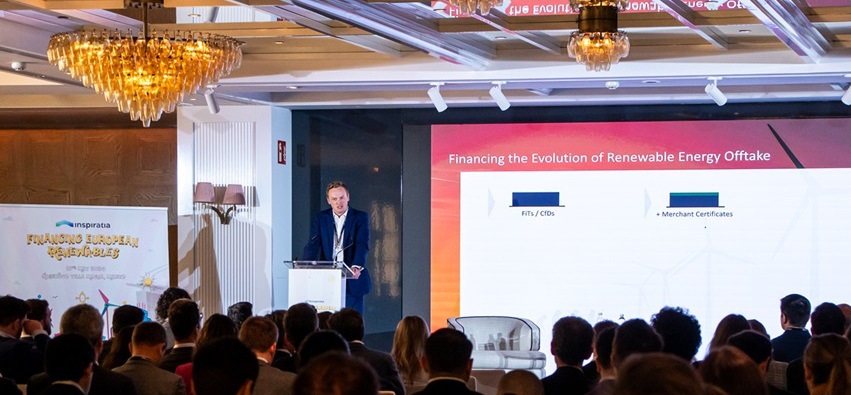
The one-man show, and most definitely a crowd-pleaser. Nord/LB's Jakeman laid out the pitfalls and opportunities available in the turbulent market.
The last decade saw 20GW financed, but we need a four-fold increase to meet the current net-zero targets. The challenges are evident. Permitting is holding up projects across Europe and the matter is not helped by long waits for grid connection agreements.
The solar and battery storage sectors are doing marginally better than wind, both onshore and offshore. Another pinch point is the transformers, another area which saw very little improvement over the last year.
On the financing front, the past year was quite challenging, with the cost of debt available to these projects going up by over 200 bps. At least the liquidity is there in European markets, but the case is entirely different across the pond. There is not enough bank debt to finance the current pipeline of offshore wind projects in the US. This, coupled with the fact that the project finance market there is relatively new, means that there is a gaping hole in the human capital needed to see these deals through.
There has been positive movement on the PPA front, but there is a very large gap that needs to be filled, quickly, to meet 2050 targets. Going merchant is an option, but doing this at scale will risk alienating commercial banks.
CfDs will continue to play a vital role, but the industry needs to find a new way to complement these agreements. That could be in the form of short-term PPAs to go along with long-term agreements.
Debt needs to be optimised to facilitate more PPAs.
Portfolio of projects, BESS included, needed to produce more stable output and cash flows to produce a better financing package.
Renewables financing will require financial close agreements, as the industry knows them, to be amended to accommodate milestones and amendments after the fact to optimise revenue streams and, in turn, make the investments more attractive to commercial lenders.
The evolution has not been straightforward. Despite the headwinds, renewable energy capacity being deployed year-on-year has only increased, and that is a testament to the resilience of this sector, but there is still more work to be done.
Panel 2 - The PPA surge
Silvia Escudero Santos-Ascarza - Head of Upstream Origination, Statkraft
Pedro Capote - Senior Director, Structured Finance Europe, Energy Origination, Nord/LB
Mauricio Garrico Sanz - Director of PPA Origination, Europe & LatAm, EDPR
The panel was moderated by Marta Vizcaíno, counsel, DLA Piper.
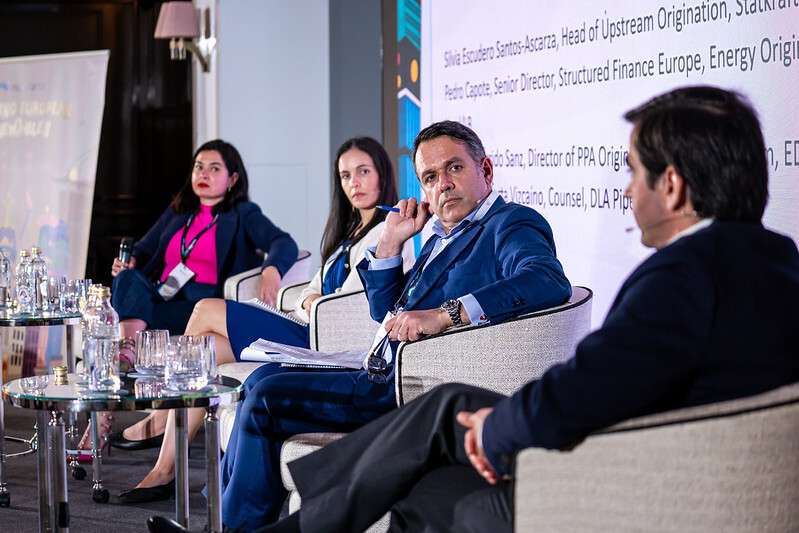
This year, so far, has been difficult for PPAs. Record low prices in the spot market and even negative prices for the first time. This does not bode well for merchant deals. Deals that are "as produced" are somewhat protected, but even most of them still have a merchant element which affects the equity parties.
Baseload PPAs suffer when the load is low, leading to cannibalisation. In Spain, this was very evident in the solar market.
Even financial PPAs with corporates are not exempt from the squeeze. The hedge, in these cases, is often triggered after three to four months leading to a cash flow issue that would affect the repayment of the debt in the beginning. This will require creative restructuring to allow projects to stay afloat.
PPA prices remain low due to lower gas prices and lower-than-projected demand for usage.
Spain, in particular, was counting on a faster rollout of EVs, heat pumps and other load consumers, but the targets were not met.
This is not helped by the middling appetite for renewables investment over the last year. PPAs are essential to manage risk, the panel agreed.
There is significant demand from corporate buyers, and this needs to be fostered to promote growth in the sector.
Panel 3 - Under the microscope: Spain
Daniel Fernández - Public Affairs, Regulation & Corporate Support Director, Engie
Fernando Salinas - Managing Director, Iberia, FRV
Alberto Rodríguez – Director, Head of M&A and Structured Finance, Sunco Capital
Isabel Toledo - Senior Vice-President, Investment, NextEnergy Capital
The panel was moderated by Luis Gil, Counsel, Osborne Clarke.

The panel kicks off with an emphasis on the regulatory changes needed in Spain to attract renewables developers. There is an immediate need for a regulatory overhaul with the aim of establishing a framework to incentivise developers to pursue projects in the country.
Regulatory changes were discussed in relation to EV infrastructure and battery energy storage systems.
The EV infrastructure sector in Spain has failed to meet previously set targets, with EVs currently accounting for just over 5% of all consumer vehicles. There is an immediate need for the country to catch up with its European counterparts such as Sweden and Norway with regards to the uptake of EVs.
The sector is further held back by Spain's transmission network, which needs to be expanded to accommodate new load consumers such as EV chargers.
The country's current tax regime for renewable generation is also proving to be a roadblock. There is a significant gap between wholesale and retail electricity price due to application of several levies including grid charges which is further hindering growth in the sector.
Government support is needed to facilitate the growth of the BESS sector, starting with a route to market.
BESS developers also need to be able to access other market instruments to compensate for higher CapEx costs along with legal certainty surrounding capacity payments.
Panel 4 - Overcoming the headwinds: Tenders on the horizon
David José González - Head of Legal Offshore Wind, Iberdrola
Pablo Alcón Valero - Offshore Director, Iberia, Qair
The panel was moderated by Alfonso Bayona, Partner, Pinsent Masons
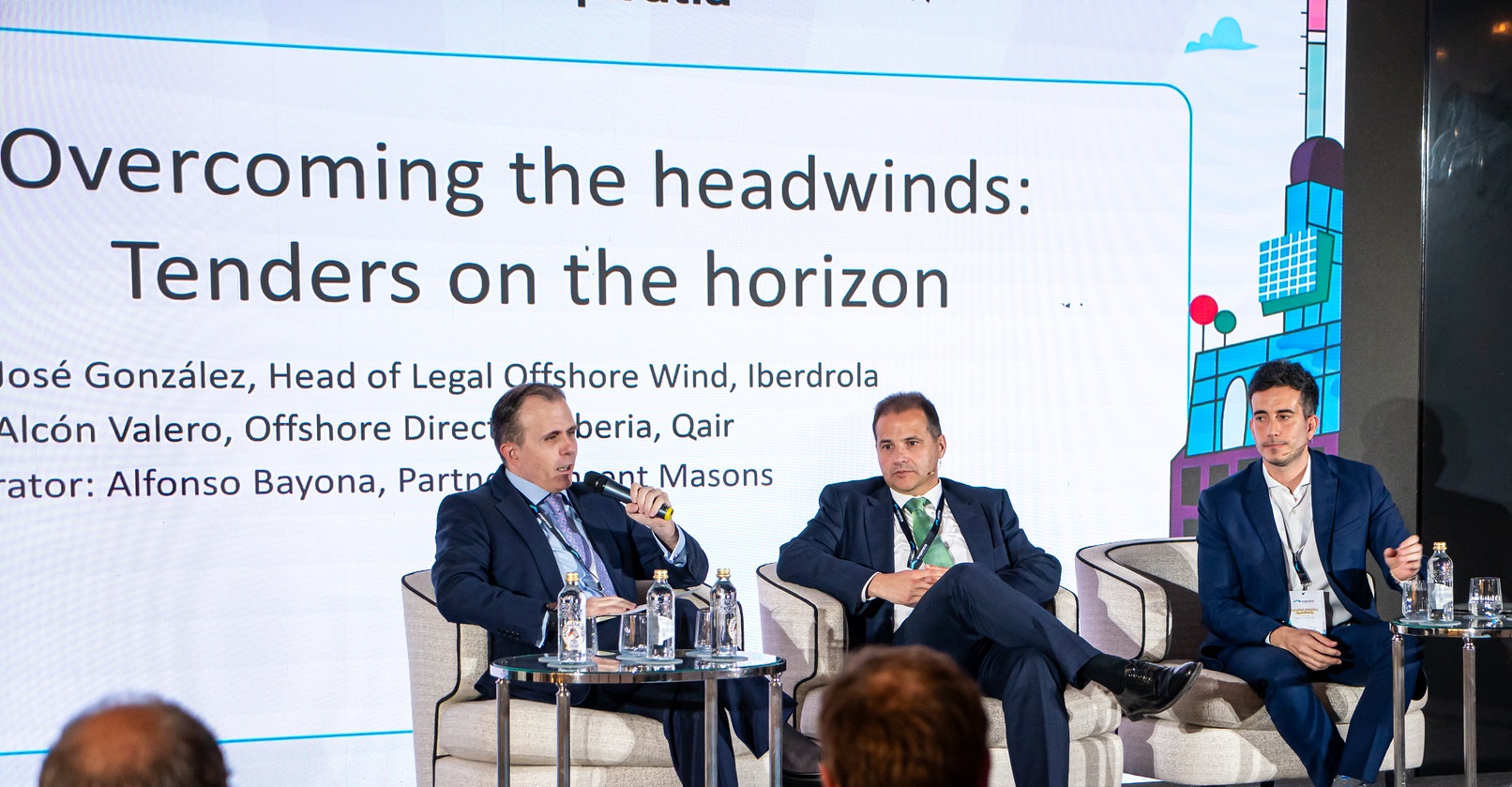
The panel started with a discussion on floating offshore wind technology. There appears to be unanimous agreement that the cost of this newer technology is unlikely to go down drastically in the near future, in line with what some European developers hoped, and instead will rely heavily on public sector support to prove commercialisation.
The French A05 tender, which saw the BayWa JV walk away with the development rights to a 250MW floating wind farm off the coast of Brittany, will be seen as a pathfinder for the sector.
The implementation of this newer technology will require higher electricity prices to make the projects commercially viable. This issue will not be resolved by the free market in the near term and will require considerable state support.
The more established fixed foundation counterpart has also faced headwinds in the past year, with significant roadblocks observed even in the more mature European markets.
The rising cost of debt and supply chain constraints, among other economic factors, have stalled projects and, in some cases, led to tenders having to be relaunched.
Electricity prices have proven to be another major crutch, with the UK having to significantly increase its offshore strike under the latest allocation round, AR6, in a bid to attract interest.
Developers are calling for more incentives to pursue projects in these challenging times, along with proposals to expedite permitting and grid connection processes.
In Europe, there is a need for countries to standardise the procurement and subsidy tariff scheme to address offshore wind on a global scale.
The offshore market in the US is very much in its infancy and will require a significant regulatory overhaul before it can be properly established.
Panel 5 - Developers: Building the European pipeline
Nicolas Navas - Chief Financial Officer, Matrix Renewables
Mauricio Garrico Sanz - Director of PPA Origination, Europe & LatAm, EDPR
Javier Asensio - Managing Director, Spain & Head of Business Development, LatAm, Renantis
The panel was moderated by José de Santiago Forn, Partner, Bird & Bird.

The key bottleneck for European renewables continues to be lengthy processing times. Developers are having to reconsider their position and weigh up the benefits of stepping back temporarily to allow the current pipeline to clear the permitting process before proposing new projects.
Spain has an enormous potential for new projects. The electricity demand in the country, however, is not increasing as expected, and it may take a few years for EVs, data centres, and other load consumers to come online to move the needle.
Renewables auctions can be used as a tool to gain momentum in the sector, at least in the short term. In the past, government intervention through the public tender process for traditional renewables was not necessary because there was enough momentum to propel private markets, but in these challenging circumstances, we could use a bit of a nudge.
Supply chain issues post-Covid have further complicated matters. Before 2020, if a solar project made it through permitting, delivering it was quite straightforward. Now, developers have to plan ahead and, in some cases, join waiting lists for equipment.
The situation is far more complicated for wind projects. Because of this, the projects being built over the last year are those that were permitted and financed several years ago.
Given these conditions, the market may not recover until 2028/29.
Smaller developers have been hit hard by this contraction in the market. A few years ago, it was relatively straightforward for small-scale developers to get a project to RTB and onboard an investor, but as larger players are waiting for bottlenecks to clear before embarking on new projects, the smaller players are being forced to finance and deliver the projects themselves. This is made infinitely more difficult as they do not have the strongest balance sheets.
Chinese turbine manufacturing capabilities being made available in Europe could prove to be a reprieve.
Panel 6 - CCUS in Europe
Marco Carrasco - CEO, Carboncause
Miguel Ángel Hernando García - Carbon Management Senior Manager, Técnicas Reunidas
Miguel Ángel Ocando - CEO, H2 Vector
The panel was moderated by Hermenegildo Altozano, Partner, Pinsent Masons.
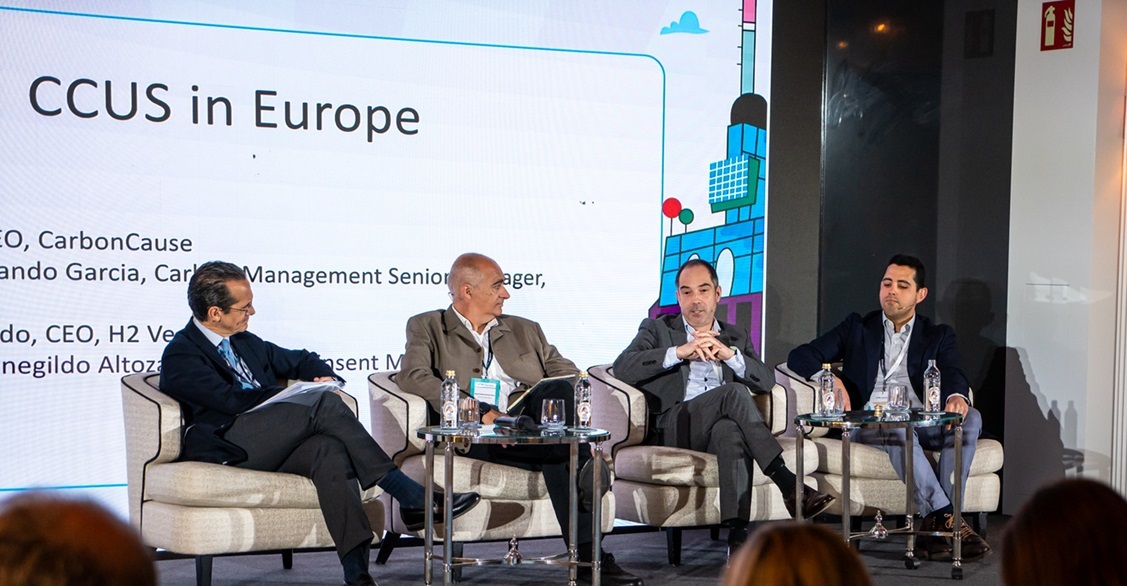
CCUS is essential to decarbonise hard-to-abate sectors such as cement, steel and other chemical manufacturing. It is also an important tool to secure firming energy capacity while the renewables generation solves the intermittency conundrum.
Baseload generators such as gas-fired power plants need to be fitted with CCUS as a part of net zero targets, and the technology can also be used to optimise the production and utilisation of sustainable fuels.
The technology is not new, but commercialisation is being held up due to the lack of an optimal solution for storage of the sequestered CO2. The technology in its entirety is also very "top heavy" and requires a substantial up-front investment.
The transportation of CO2 is also a challenge due to the lack of available infrastructure. This makes the technology very expensive in the near term until the necessary infrastructure is in place.
Financing this infrastructure could also prove to be a challenge and will require both the public and the private sector to agree to share the initial burden. It will take a mix of will and appropriate financial support to help the technology gain a proper foothold.
The UK is far more advanced in propelling the sector along in comparison to mainland Europe but even in the UK most projects are at very early stages. It is a CapEx heavy sector which crowds out some market players.
Panel 7 - Battery Storage: The new horizon
Gareth Dauley - CEO, Koe Group
Roberto Castiglioni - CEO, Ikigai Capital
The panel was moderated by Dídac Severino, Partner, Pérez-Llorca.

A meaningful and sustainable transition to renewable generation cannot be achieved without battery storage to provide firming.
There is no commercially feasible alternative to battery storage projects. Without BESS, governments will have to potentially spend trillions to upgrade the electricity grid to accommodate and manage intermittent renewable generation. Even if the funding was available, which it is not, by the time the grid upgrade is complete, the technology will have changed to a point which will require a further upgrade.
Storage is the key to the penetration of renewable energy. Currently, European markets are more focused on the generation aspect and are falling behind on storage.
The technology has been around for decades, and it is only getting better, but financing has been a crutch. The technology carries a certain degree of volatility which makes risk estimations challenging for commercial lenders.
Despite this, the sector has managed to take a foothold in the UK without government intervention, but this may be required in other European markets.
Renewable generation, as it is, cannot exist without corresponding storage capacity. The grid simply cannot handle it. There is movement in the sector with developers increasingly proposing co-location for new generation assets. Financing a retrofit could prove to be challenging from a financing perspective but co-development can make the merchant risk of batteries more palatable for commercial lenders.
The complexity is understanding how to integrate storage into an operational energy generation asset.
Panel 8 - Steering through risk: Managing European renewables portfolios
Riccardo Rossi - Head of Southern Europe Origination, Centrica
Ewout Eijkelenboom - Energy Valuation, Optimization & Risk Management, Kyos
The panel was moderated by Maya Chavvakula, News Editor, inspiratia.
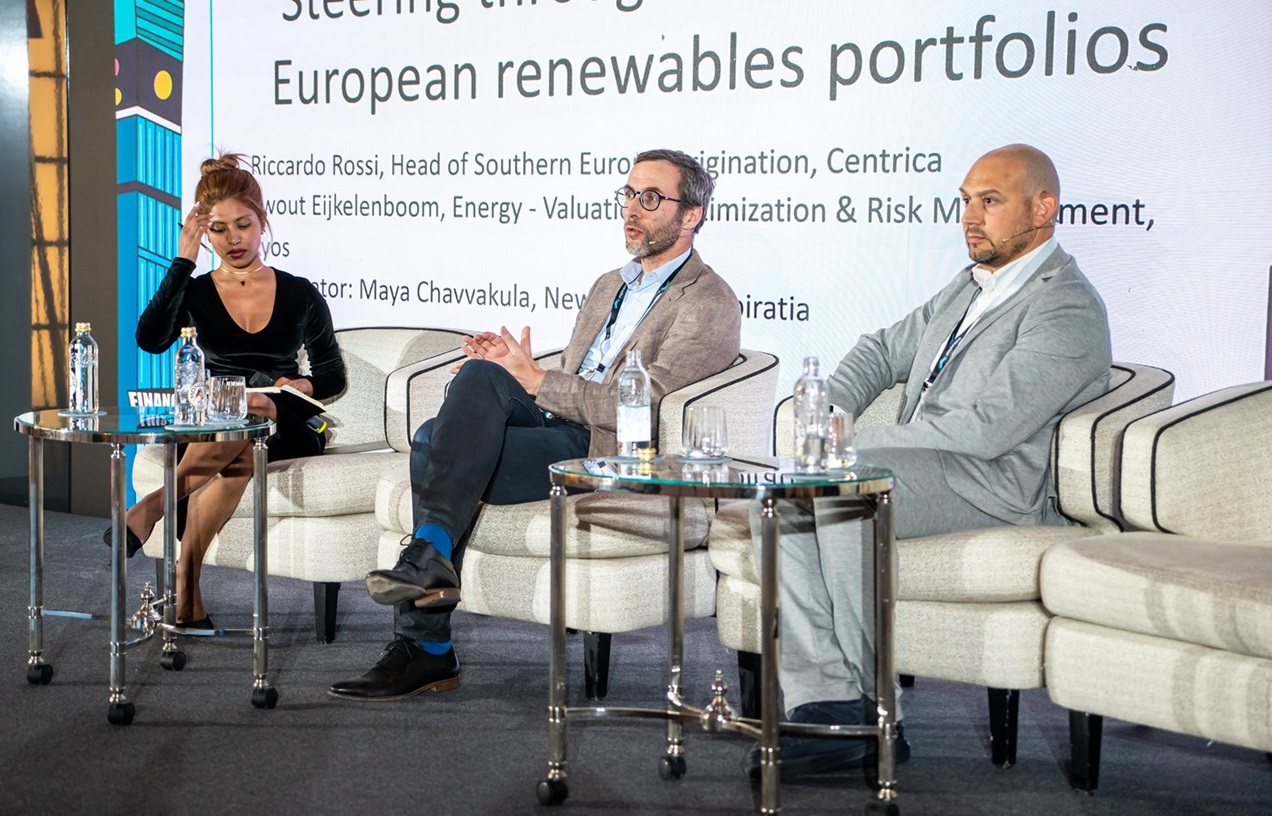
Renewables developers need to embrace risk and use it appropriately to maximise revenues on generation assets to make them commercially viable. Understanding merchant risk is particularly important for IPPs.
Taking on merchant exposure gives developers a bit more flexibility as they will not be held to certain delivery timelines or pre-set prices. It will also allow market players to consider financing at a portfolio level.
Lately, it has also become a necessity, given the current energy prices.
However, the ability to take on this merchant exposure may only be available to larger players who are able to make substantial equity contributions, crowding out the more leveraged smaller players, which may be beholden to terms set forth by debt providers.
This will require financiers to change their attitude towards risk in more mature markets.
There is a need to diversify revenue streams to maximise profitability.
In some cases, government intervention can make the developers and financiers more risk averse but, at the end of the day, the public pot is limited, and the sector needs to find alternative ways to maximise revenues.
Increasingly, even smaller developers are starting to explore avenues that will allow them to take on more risk, and services that companies like Kyos and Centrica provide will help them manage and take advantage of the risk.