Can aqueous polymer batteries challenge lithium-ion at home?
 Leonard Mueller
As lithium-ion faces mounting pressures around safety, cost, and material scarcity, investors and infrastructure developers are turning their attention to alternatives. Among these is Superdielectrics, a Cambridge-based start-up developing a radically different type of battery: an aqueous polymer system designed specifically for residential energy storage.
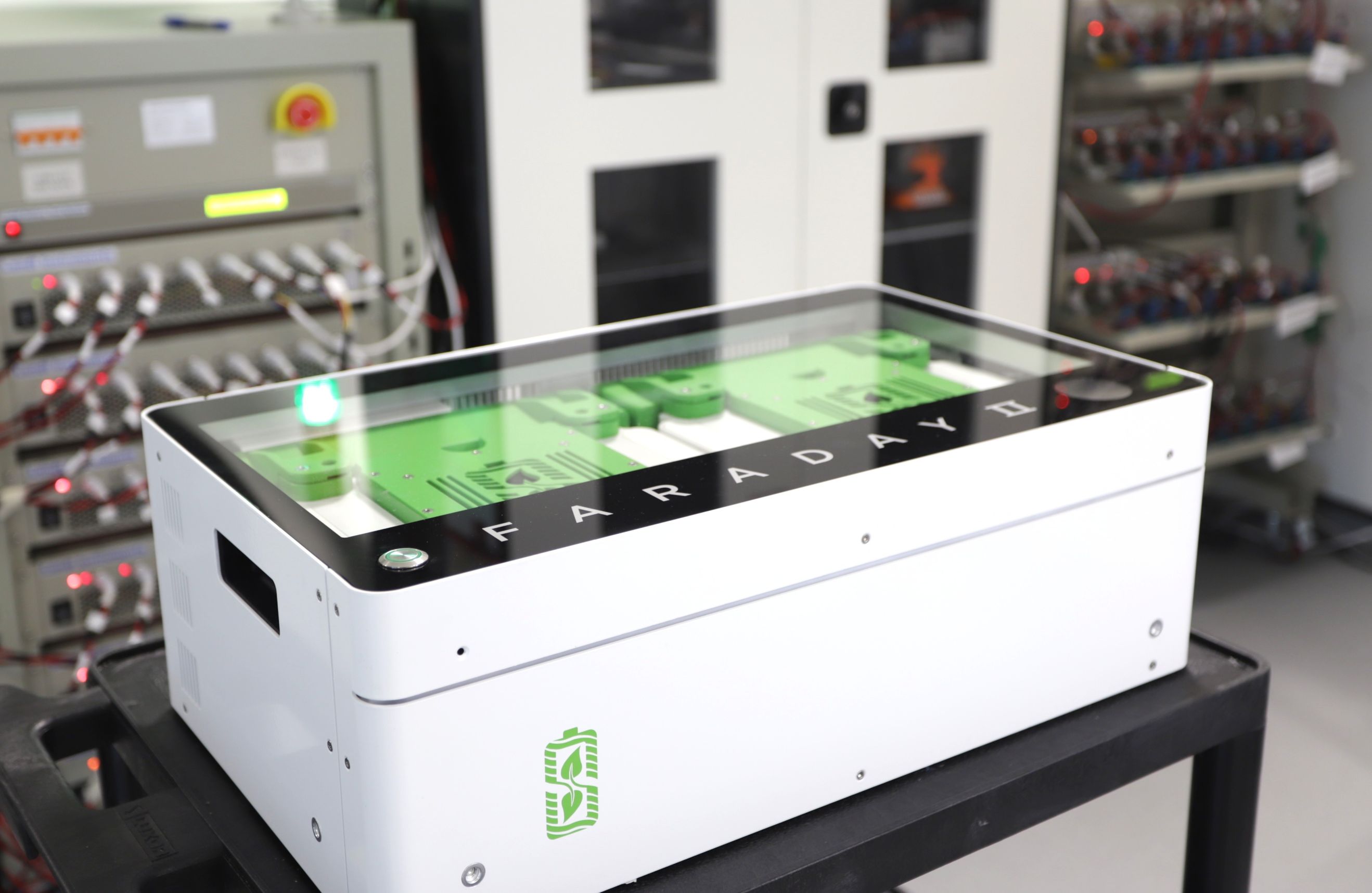
With a chemistry built around widely available, low-cost materials like carbon electrodes, hydrocarbon polymers, and water-based electrolytes, Superdielectrics is developing an alternative to home energy storage. Its second-generation prototype, the Faraday 2 (pictured right), aims to refine that approach. Crucially, its technology avoids the thermal runaway risks associated with lithium-ion, addressing rising concerns about battery fires and volatile supply chains.
Now approaching a pivotal stage, the company is raising fresh working capital to fund its development through to late 2027, when it plans to launch its first commercial product. At stake is not only the feasibility of a novel battery technology but also the potential to reshape the residential energy market with safer, decentralised storage solutions at scale.
A simpler, safer alternative
Superdielectrics' aqueous polymer battery uses a water-based electrolyte system, carbon electrodes, and hydrocarbon-derived polymers, avoiding rare or critical raw materials. The prototype is reported to reach an energy density of around 40 Wh/kg and can charge and discharge in 30 minutes each. While these early figures show promise, the technology remains in the laboratory phase and is yet to be tested or validated at scale.
Battery specs compared to other commercial alternatives:
|
Metric |
Lithium-Ion (Home Storage) |
Lead-Acid (Deep Cycle) |
Faraday 2 Polymer |
|
Energy Density |
~150–200 Wh/kg |
~30–50 Wh/kg |
~ 40 Wh/kg |
|
Charge Time |
~2–4 hours |
~8–16 hours |
~30 min |
|
Discharge Time |
~4–8 hours |
~5–10 hours |
~30 min |
|
Lifespan |
~10–15 years |
~3–5 years |
~10 years targeted |
The design, a fridge-sized home appliance, is intended to handle rapid renewable energy fluctuations that typically wear down lithium-ion systems, but commercial performance will depend on successful translation from prototype to production.
According to Marcus Scott, Finance Director at Superdielectrics, the choice of materials is intentional and strategic. He added: "Sustainability, security, and supply chain risk are all major concerns, we use widely available materials. Our product is 50% water by weight and doesn't have thermal runaway risks."
This approach not only makes the battery safer but could reduce geopolitical and environmental risks compared to incumbent technologies.
Building a scalable solution
Superdielectrics sees its battery as a vital piece in the transition to decentralised renewable energy, providing households a safer, cheaper alternative to lithium-ion storage. The company's ambition isn't confined to labs and patents; it aims to become an infrastructure-scale player, capable of high-volume manufacturing or licensing to global partners.
The immediate focus is mastering the production process. "Ideally, we would like to build a pilot production plant. That's how we control the manufacturing process and increase the value of our IP and know-how," explained Scott.
Establishing a robust, replicable process is critical before the planned 2027 commercial rollout and broader market entry. Whether that ambition can translate into competitive manufacturing at scale will depend on the success of its pilot phase.
Funding the path to market
To reach commercial scale by late 2027, Superdielectrics needs fresh capital. The company is currently raising working capital, intended to fund the company through its pre-commercial phase.
The capital raise is understood to be pure equity. Scott clarified: "It's pure equity. We don't have any debt, and we've kept a single class of ordinary shares. We want to keep it that way for as long as possible."
The company is understood to be targeting family offices "who are interested in long term high growth companies".
The capital will directly fund final product development, the planned pilot production plant, and commercial preparations.
From concept to commercialisation
Superdielectrics is still a long way from market, but it has put forward a novel proposition with clear relevance to energy storage investors. Its water-based chemistry and reliance on abundant, low-cost inputs set it apart from lithium-ion at a time when concerns around safety, sustainability, and mineral scarcity are rising.
"We expect to have an ISO-compliant product in the second half of 2027, and we're optimistic that there will be substantial global demand for this product," said Scott.
Whether this optimism holds will depend on the outcomes of its pilot production efforts and the ability to prove performance at scale. For now, Superdielectrics joins a growing cohort of challengers seeking to redefine the battery playbook from the ground up.