Q&A - Infracapital: A disciplined approach to BESS
 Ashkenaz A.L.
For many fund managers, investing in battery energy storage systems has been unpredictable. An initial gold rush into the emerging asset class, followed by a steep decline in BESS revenues, has left many investors with a sour taste in their mouths. As a result, many fund managers have questioned whether BESS projects should be regarded as infrastructure.
For Infracapital, the answer is a resounding yes. The mid-market player sees a clear path to success for BESS, targeting contracted revenues early and only building assets where they believe the project could play an "essential role" in supporting the national grid, rather than simply looking to arbitrage power.
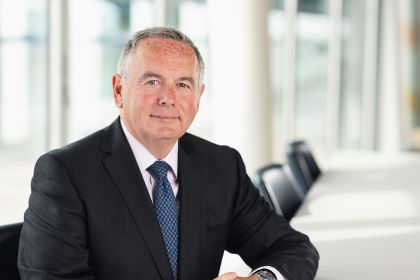
"That was far too merchant to be a real infrastructure play," says Andy Matthews, the chief investment officer at Infracapital. Across its various portfolio companies in the energy transition space, the asset manager is perhaps most well-known for investment in Zenobe, a platform focused on large-scale BESS projects and the electrification of transport.
Matthews sits down with inspiratia to discuss its approach to investing in battery storage, and whether Infracapital still sees value in investing in traditional renewable generation assets.
What role does Infracapital see itself playing in the energy transition space?
Energy transition has really been a focus since our first fund. We are a mid-market player, so we are very focused on how we can find businesses, grow them, deliver value through things like energy solutions and then exit to larger players to give our investors a return.
We are focused on three main sub sectors in this space: transport, energy generation and infrastructure, and industrial decarbonisation.
In transport, we have invested in EV charging businesses, both in Norway and the UK. We were also an early investor in Zenobe, the leader in grid-scale batteries and electric buses. We see opportunities in both decarbonisation and improving the efficiency of EVs, and that could evolve into other forms of transport including HGV, train, and potentially shipping.
Energy generation and energy infrastructure could include things like interconnectors, district heating systems and battery storage. We can, and we have, invested in wind and solar before. However, I think our value lies in the more complex transactions, and Zenobe is a good example. Looking at a pure wind or solar farm deal, those have become more tightly priced and are better placed to be accessed through a lower returning strategy than our flagship funds.
There needs to be continued focus on the storage element of the transition to renewable power. In Scotland, they have vast amounts of wind that cannot be distributed around the country because of the under-invested network. There is an opportunity to invest in a network build to facilitate that or in the batteries that help manage capacity around the Scottish-English border.
There are huge opportunities in interconnections between the UK, Europe, and Ireland that we could invest in if we get the right investment model.
The final sector, which is quite an exciting area, is industrial decarbonisation. EnergyNest is a business in our portfolio which provides thermal battery solutions for industrial heat and has huge potential. There is so much more to do, not just in green energy, but also in trying to reduce the use and consumption of energy.
Of these three main sectors, where do you see the most growth potential in the near term?
Transport is a big one. There is a huge need for decarbonisation of transport that goes beyond cars. Take heavy goods vehicles; only 1% of the European fleet has been electrified. It requires a whole different model when you think about the weight and amount of power required for a 40-ton truck.
Through Gridserve, our UK EV charging platform, we are looking at how we start to invest in charging electric trucks. They need four or five times the power an EV does, and they need security of supply across long-distance travel.
Recharge is our EV charging platform in Norway, which is the most developed EV market in the world. It has been a helpful investment to monitor how the market has matured, and we can use that information for a more nascent market like the UK.
For railways, our joint venture with Rock Rail is a good example of investing private capital to replace diesel trains. Elsewhere, we could invest in shipping and looking at how we can get the sector away from more polluting fuels.
Has your outlook on the BESS sector changed in any way over the past year, given market concerns over BESS revenues?
There was a whole cavalry charge of investment into battery storage about two years ago. We invested in Zenobe back in 2020 and were really focused on the revenue stack rather than looking to arbitrage power, which I think some developers who were building batteries on the distribution network hoped for.
That was far too merchant to be a real infrastructure play. I suspect those people who are having problems now have business cases for when the power price was really high post-COVID. Now they are finding that arbitrage is not that easy to manage, and it is not easy to dispatch. You are not playing a vital grid service role.
With Zenobe, we sat down and looked at what contractual revenues were available in the revenue stack. What statutory and regulatory revenues can we find? That gave us more of the fundamentals that we require, and then on top of that stable base, we can look at what other revenues we can capture outside of that envelope.
That is why the location of Zenobe's batteries was so important in terms of trying to help this national grid problem of where the surplus power and distribution network needs to be transmitted.
Zenobe is focused on where it can help the network operator and the generators rather than purely just trying to store electricity, buy it cheap, and sell it high. We are focused on quite large schemes in Scotland to alleviate some of these grid issues.
The UK national electricity system operator is a lot further ahead than most European operators, and hence why we have seen so much opportunity in the UK. We are starting to see other operators across Europe looking at how they can attract capital. Otherwise, it is a pure trading platform, and you are taking complete merchant risk. That is not infrastructure in our world.
It is interesting to see different countries like Germany starting to develop new mechanisms for investments. We have seen it in Poland as well, which has extended capacity market auctions to include BESS.
Being on the transmission line gives us more relevance and essentiality rather than being at the end of the distribution network where you are relying on a trading business case.
The point of generation has moved in the big shift from coal-fired power stations to renewables. In the UK, we have closed down our power stations, but the national grid was originally designed to distribute power from inland coal stations. Now the majority of wind generation is in the North Sea or Irish Sea. Therefore, you need a whole new network to build around that generation and this is where the opportunity is.
Infrastructure is about essentiality and being in the right place, and that is how we have looked at BESS.
Speaking to other sponsors, many say that having those contracted revenues means that the returns are too low. How do you navigate that?
It is about getting the unit cost down, and we have done that by being focused on design and procurement, buying smart, and getting the right warranties from battery manufacturers. Getting the right returns means managing both costs and revenues and maintaining that balance.
We have been astute when building the revenue stack from the various providers, whether that be counterparties or utilities. We are particular in launching new projects and only do so when we have confidence in them. The location of the BESS is also an important point. Where is your project, and how essential are you to your network provider?
Figuring out the unit cost, picking out the right location and working out the revenues is part of being diligent. Zenobe is a good example of being focused because only sites that work will move forward.
We have seen a lot of people try to land grab. They develop and get planning permission, only to find out there is no economic case for it. Being disciplined is the key point. It is really important that you do not waste time on sites that are never going to work.
Do you still see value in traditional renewables, given the "risks" you mentioned in the beginning?
As returns start to go down to a single digit for an offshore wind farm with huge risk, I am trying to look at where we can add value in our investments. Infracapital is renowned for adding value by active asset management, not just the arbitrage between buying and selling discount rates.
For a standalone wind farm in our flagship funds, it is very hard to see how we add value. They are good for yield, and they are good for short-term investments. We are well placed, especially in the UK, to help local authorities do smaller deals in this area, but that would be part of a different strategy.
In our flagship funds, where we can add value is having a wind or solar farm and an energy transition asset on the same site. I think that integration risk and building risk are where we add the value. We have seen that through both Adven, which we used to own, and Cogenio, we can help industrial partners or towns have an integrated renewables solution.