sponsored · Q&A - FRV's Amós Guillén Duarte on instability and opportunity in the German BESS market
 Dan Burge
Ahead of inspiratia's 2025 Energy Storage Summit, hosted in Munich, Germany, we sat down with Amós Guillén Duarte, Country Manager at FRV Germany, to talk all things German BESS.
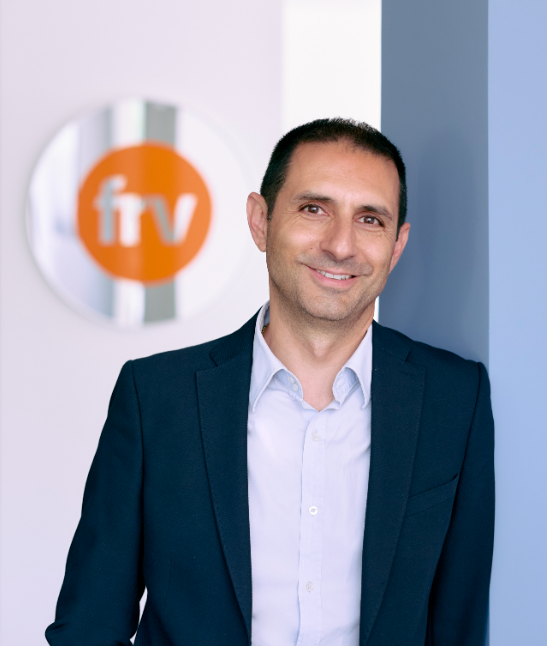
Duarte spoke about the challenges of the market, explored how FRV is adapting its strategy to seize the opportunities emerging in Germany, and broached the elephant in the room: how should developers navigate the extreme volatility that currently characterises the country's renewable generation and storage ecosystem?
What aspects of the German market do you at FRV find most exciting?
Before entering the country, we had recognised Germany as an ideal market for us to develop PV and BESS projects over the long-term.
We initially identified the ecosystem as very stable. Yet, in the three years since we entered, it became clear that Germany is perhaps Europe's most unstable market. Here, a developer is vulnerable to significant merchant exposure, with wildly negative prices, high spreads, and a lack of supportive schemes for BESS, among other normative changes.
But, despite these challenges, Germany remains a country in which BESS providers can drive significant impact over the long term - and to which FRV is committed.
So, you foresee Germany being a core market for FRV in the future?
Absolutely. Germany could even be one of the firm's largest markets by capacity in two to three years, given the size of the prospective projects.
When you enter the German market as a developer, you must be clear you are taking a country-centric, market-specific view. It is not an ecosystem you can treat as a short-term development location. If you drop in with the intention to be here for one or two years, lacking a committed, strategic approach, you are approaching the market incorrectly.
For us, while we will continue to develop across Spain, LATAM, Australia, and the UK, we expect Germany to be a significant growth area from our traditional base.
What is FRV's delivery timeline, and where in Germany will these projects be developed?
We see 2025 and 2026 as pure development windows, in which FRV will engineer, undergo technical assessments, and secure permits. Then, from 2027 to 2029, the target is to bring sequentially these sites to COD. The key for now is to bring these projects to ready-to-build status over the next year.
Regarding location, FRV will target those areas under the most stress of network bottlenecks and where large, 200-400MW projects can be properly connected. Northwest and northeast Germany are therefore a particular focus, as Transmission System Operators (TSOs) are experiencing significant grid congestion in these areas.
How are you leveraging your experience of mature BESS markets to drive project success in Germany?
The wealth of expertise and commitment to markets is a real differentiating factor for FRV, especially regarding BESS projects. We progress projects with the aim of owning and operating them. This forces us to finetune our developments and make the most of their technical possibilities.
After FRV entered the UK in 2020, a core learning was the importance of preparing projects to be attractive and suitable for how the market could be, not just how it is.
At the beginning, the UK market was purely driven by merchant agreements but has evolved significantly since. Taking that experience to Germany means preparing battery sites to be state-of-the-art for future markets - inertia markets, capacity markets, grid-forming markets, etc. - which may emerge from 2027 to 2030, as well as adaptable to the requirements of the specific country in which the asset is located.
What will be the profile of your German battery portfolio? Capacity, duration?
FRV tends to develop BESS sites in larger, tailor-made blocks, rather than building smaller projects which are less suitable for a project-by-project financing approach. We plan to continue this strategy in Germany, where large, standalone storage projects are well suited for TSO needs.
Developing 200MW+ sites will be our focus. We would also like to develop projects with longer duration capabilities, provided they are compatible with the local regulations and TSO stipulations.
Regardless of capacity and duration, the sites must be prepared for what future markets need. Like other elements of our strategy, our approach to technology is to move steadily to be ready for when the market reaches its upswing.
Will standalone projects be the sole focus for now? Are you also considering co-location?
Co-location is complicated in practice, especially for a company with no current generation pipeline in Germany. A developer must manage agreements with current generators, agree on interconnection points, and run the batteries based on the availability of existing renewable energy facilities.
Co-location is great for those who have assets and aim to hybridise their own facilities. But for a developer like FRV, without an established operational portfolio, it is challenging.
For now, the core business will be standalone BESS and PV-BESS hybrid projects for TSO-level clients, with whom FRV is well-aligned. If a large enough opportunity does emerge, FRV will consider co-location – but this is not the focus for now.
What are the key challenges to entering the German market?
The German BESS market is extremely competitive, with batteries given free access to the network, as is the case for other renewable generation types. The result is over 400GW of requests that operators are reluctant to answer.
The instability is made worse by the exceptionally low profitability of renewable generation in Germany, in stark contrast with the extreme profitability of BESS assets.
If you are a renewable energy generator, you are losing money due to negative and zero prices. In contrast, owners of batteries are experiencing high profits compared to the average in the sector. This is a system in which storage operators gain while generators and consumers do not.
Germany is a super competitive market, with aggressive requirements for renewable energy production and a detached scenario for batteries, which does not create long-term stability. Batteries are needed, but perhaps not in this manner.
As a reality check we must ask: how poorly paid is generation versus storage? And can that continue? Synergy between the two elements is essential.
Are lenders aware that these returns cannot realistically continue?
All major forecasts indicate negative prices for renewable energy generation will continue over the next five or six years. Forecasters know that intermittency will remain a core issue over this period. Therefore, the asset class will continue to generate high Interest Rate Repayments (IRRs), which will allow developers to entirely repay their debt. Because of this situation, lenders are not concerned.
At the end of the day, lenders are playing by the rules here and are fairly reaping the benefits. Clear financing models for German BESS remain to be codified, but are not the main challenge for now.
How will FRV finance the German portfolio? And will this differ from your strategy for other markets, like the UK?
The UK has many markets for BESS projects, primarily operating via merchant contracts and balancing markets. Germany is different - we are looking at blending offtake methods.
FRV is looking to create systems that are fully bankable: a key measure for projects in Germany, as German lenders have the appetite for this asset class but tend to be more risk averse than their counterparts in the UK and Australia.
To make projects more bankable for German lenders, FRV is leveraging its extensive project finance and legal expertise to create collaborative and innovative structuring agreements that incorporate tolling, floor agreements, and methods for hedging against spreads.
Tolling, in particular, is a popular topic in the German market, as it provides an 100% financeable solution by leasing the facility to a final user - usually a direct offtaker or trader. While FRV will not fully finance projects via tolling, it will be a useful source of reliable financing as part of blended approaches going forward.
How is FRV navigating German policy, permitting, and grid interconnection processes to accelerate project timelines?
In part, by progressing steadily and owning what we build. Having a longer-term view, our strategy allows us to learn while we develop, and gives time to effectively collaborate with relevant municipalities, local people, policymakers, and system operators. This also gives space for us to optimise our projects and financing for the market as we expect it to be while also engendering trust and commitment from local stakeholders, including landowners and officials involved in the process.
Another key element is having a very strong team. Members of FRV Germany have been in the market for over 20 years and have a wealth of development, policy, technical, and origination expertise. In an unstable environment, policies and technological requirements may change unexpectedly, affecting everyone in the market. Having expertise on hand is crucial for navigating that instability.
What lessons is FRV learning from the German market which can be of use in other regions?
From a developer's perspective, modelling for profitability is changing significantly. Batteries, over the next three to five years, will generate most of their profit in the German merchant market. But long-term, you have to think of longer motivations for batteries to be developed and introduced. Tolling is at the heart of the current conversation, but we need to establish how projects become profitable over the longer term.
This has led market players to take a longer-term view of the asset class, particularly as relates to financing models. Five years ago, profitability models were on 10 to 15-year timelines, now we are planning for 20 to 25 years. The strategic thinking that we are developing in Germany will be taken forward and applied to other markets.
Give us a sense of your outlook on the German market. What are the main takeaways for the readers?
Germany is becoming a paradise for BESS developers but a nightmare for renewable energy generators. If the current trend of deep negative pricing for renewable generation continues, many IPPs will face bankruptcy.
Those companies that were pushed to develop renewable capacity as part of EU-wide and national targets are now making losses despite doing what was asked of them. Meanwhile, the storage market is profiting from the same volatility.
If participants themselves fail to accommodate for this imbalance, then regulators may react with overly aggressive policies, for instance by instituting minimum and maximum prices, which could kill appetite for the German BESS market.
To avoid this, storage developers must aim to also realise upside for generators. Naturally, those profiting now are unlikely to independently re-evaluate themselves. But as policymakers begin to create the conditions for this rebalancing, developers will need to play an active role in creating a lasting sector that does as intended – delivering clean, stable, and cheap energy for the German market.