Q&A - Mercer International: Rethinking carbon-heavy supply chains
 Aishwarya Harsure
When we discuss decarbonisation, the spotlight typically falls on familiar sectors such as solar, wind, electric vehicles, and battery storage. However, a quieter shift is underway in sectors that are rarely referred to as "green." Industries like pulp and paper are now being pushed to rethink their operations from the ground up. The pressure to reduce carbon emissions is real, and the cost of doing nothing continues to rise.
Mercer International, based in Canada, with operations in Germany and the US, is a major producer of market pulp that finds itself at the centre of this shift. The company is electrifying its rail logistics in Germany and investing in carbon capture at its Canadian mills. These changes reflect something much broader: the decarbonisation of supply chains and the raw materials behind everyday products, from packaging to construction.
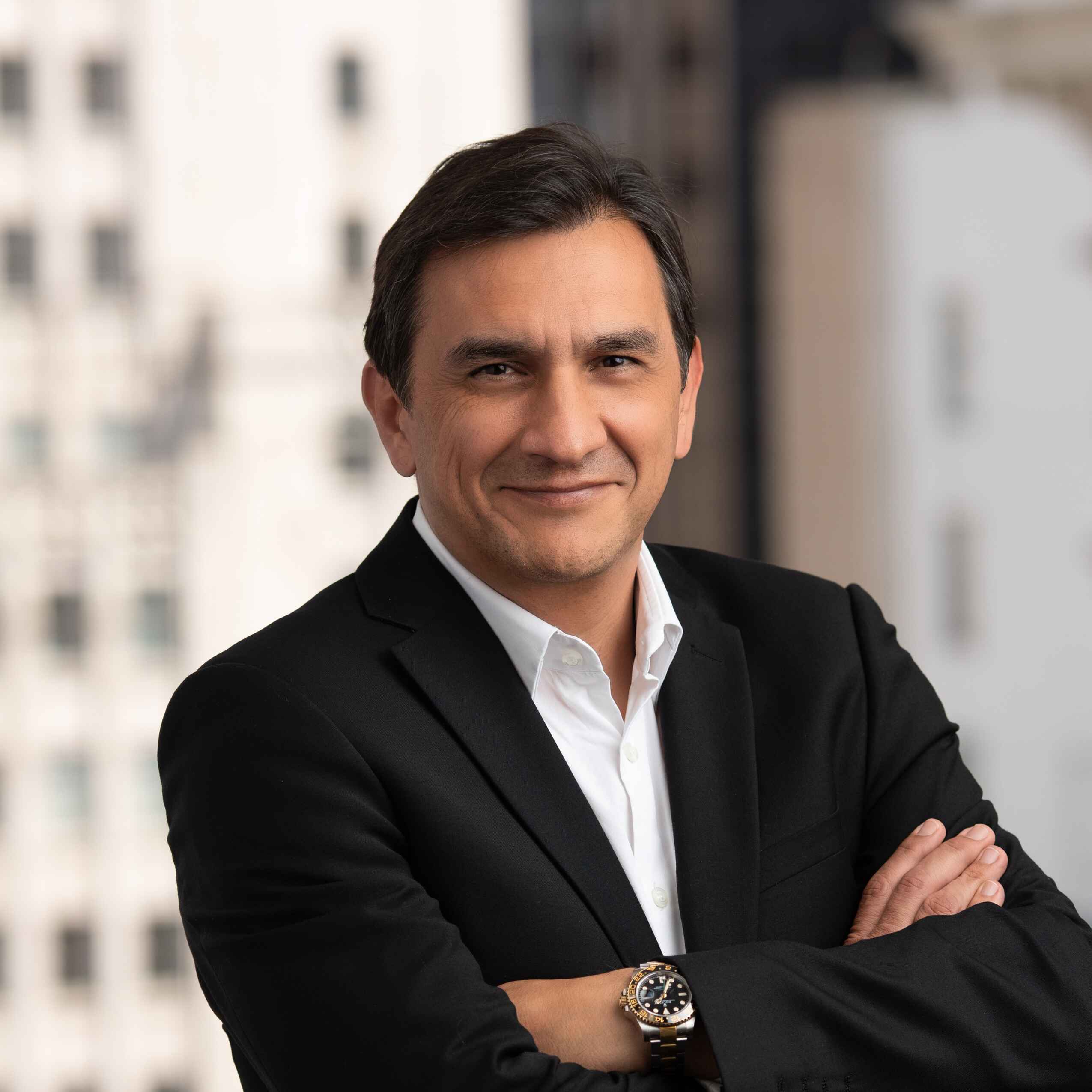
inspiratia sat down with Juan Carlos Bueno, Mercer CEO, to reflect on what that transition looks like from the inside, and how a business can navigate its legacy of carbon and chart a new course.
At its core, what does Mercer International do?
Our core business is transforming forest resources into bioproducts and biomaterials. That has been our purpose for years. What is critical now is not relying on a single product stream. We are focused on diversification that adds value to what we already do. We are investing in lumber and mass timber for construction. These materials store carbon for decades in the buildings they go into, aligning with our vision for a circular economy.
A key advantage is that byproducts from one part of our operations become raw materials for another. Chips from our sawmills go to the pulp mills. Sawdust and fines can be turned into biofuels or pellets. It is a system designed to maximise resource use and keep materials in the loop for as long as possible.
We are also exploring how pulp-derived products can replace fossil-based ones, like using bio-pellets for fuel or pulp fibres to replace plastics. Altogether, it is a tightly integrated, circular model rooted in renewables and efficiency.
Could you provide us with an understanding of Mercer's current carbon footprint?
Sure. In terms of emissions:
- Scope 1 (direct emissions from our own operations): around 486,000 tonnes of CO2
- Scope 2 (electricity): under 10% of that, about 45,000 tonnes
- Scope 3 (value chain): roughly 2 million tonnes
We have committed through the Science Based Targets initiative (SBTi) to cut Scope 1 emissions by 50% by 2030, using 2019 as our baseline. For Scope 3, we are targeting a 35% reduction by 2030.
Is there a plan in place to meet those targets? And how does this biomass-heavy business tie into energy transition efforts?
Yes, and we are approaching it from several angles. Our biggest source of Scope 1 emissions is our pulp mills, especially the lime kilns that currently run on natural gas. One major project is converting these kilns to run on biomass using our own byproducts as fuel.
The first conversion is at our largest kiln in Germany. It has been approved by our board, and work will begin next year. We plan to replicate the model at our other German pulp mill.
We are also improving mill efficiency. Smarter operations alone can reduce emissions meaningfully, even without large capital investments. So yes, there is a clear roadmap to 2030.
And it is not just about our footprint. Our customers are looking closely at their Scope 3 emissions, and they need lower-emission suppliers. We are committed to being one.
We operate four pulp mills: two in Canada, two in Germany, as well as two sawmills in Germany, located close to the pulp mills for efficiency.
Together, our facilities generate around 400MW of energy. About 60% powers our own operations; the rest goes back to the grid. It is a highly efficient setup that supports our sustainability goals.
Could you walk us through how you produce biomass energy? Are you looking at green hydrogen or synthetic fuels?
We are not looking at hydrogen production at the moment. It is not commercially viable for our operations right now. Pellet combustion remains the most practical approach.
As for biomass, logs are harvested and sent to our sawmills. The leftover chips go to our pulp mills, where we cook them to extract cellulose. What is left is a mix of chemicals and organics, which is called "black liquor."
Black liquor is rich in lignin, one of the most carbon-dense natural materials. We extract reusable chemicals, then burn the lignin-rich black liquor to generate energy, and that is where our 400MW comes from.
But we are going further. Instead of burning the lignin, we are looking at turning it into new bio-based materials. At our Rosenthal mill in Germany, we have invested €10 million (£8.5mn $11.5mn) in a pilot plant opened in 2023. It currently produces 1 tonne of lignin per day, with plans to scale to 30,000 - 40,000 tonnes annually.
Lignin has many potential uses, including as a bio-based alternative to phenols in resins and adhesives, as a replacement for graphite in battery anodes, and even as a substitute for carbon black in tyres and rubber parts. There are dozens of applications, and we are actively developing markets around them.
When lignin is used in durable goods, it can remain locked in for years, storing carbon significantly longer than if it were combusted for energy. This shifts its role from short-cycle energy to long-cycle material storage, offering both emissions reduction and product innovation opportunities.
If hydrogen becomes viable in future, would you reconsider?
I would not say it is a hard no, more a "wait and see." If hydrogen infrastructure develops efficiently and cost-effectively, then yes, we see potential.
However, we are also exploring other "green molecules" that could serve as precursors for fuels or products. The focus is on finding value in black liquor, a carbon-rich material we already have, and turning it into something more valuable while enabling long-term carbon storage. Our goal is to transform it into something far more valuable, while also offering long-term carbon sequestration benefits.
When operating in Canada, the US, and Germany, do you notice regulatory differences? Are some countries stricter? And do you have expansion plans?
We genuinely appreciate all three countries where we operate (Canada, the US, and Germany), mainly because we think they all have well-defined environmental policies and robust sustainability frameworks.
Take Germany, for example, it has led the way in Europe with the Green Deal and strong investments in renewables. Canada is also highly committed to environmental stewardship. And even in the US, despite shifts in political tone around environmental issues, the fundamentals of how industries like ours operate remain consistent.
As for expansion, we are not looking beyond our current geographies for now. There is still untapped potential in Germany, Canada, and the US.
Who are your main customers across pulp, lumber, and biofuels?
For pulp, we supply tissue, specialty papers, paper and packaging producers. For lumber, our clients include construction companies, developers, and architects, especially in mass timber.
We also produce pallets; we are actually Europe's largest pallet maker, essential for goods transport. In bioenergy, we supply small pellets for home heating and larger briquettes for industrial use. In Europe, these are widely sold in supermarkets, especially in Germany, so we reach both industrial and residential users.
Since the company was launched, have you noticed any shifts in customer behaviour or market demand?
Absolutely. More and more, our customers are asking what we are doing to reduce our carbon footprint. Many of them, especially large paper companies, serve markets that are demanding greater sustainability, whether in Europe, the US, or beyond. They have targets of their own and, since we are in their supply chain, our emissions count toward their Scope 3. That shared accountability is increasing alignment on emissions reduction across supply chains.
Being signatories to the Science-Based Targets initiative (SBTi) provides a common, credible framework that allows us to collaborate effectively and transparently with our customers and suppliers alike.
You have recently made headlines for your transport fleet in Germany. Can you tell us more?
Rail is a major part of our logistics; Mercer moves about 1% of Germany's total rail freight tonnage.
We have invested heavily in custom-designed railcars in partnership with TWA Group, a Swiss rail wagon firm. These cars are tailored for our operations, improving capacity, aerodynamics, and loading times.
95.5% of our transport uses electric locomotives; only remote forest areas require diesel. Overall, it is a highly efficient and sustainable system.
We move about 2 million tonnes of wood and 800,000 tonnes of pulp annually in Germany alone, so having a fleet built for our needs makes a real difference.
How do you see Mercer evolving over the next five years?
We expect to be a much more diversified business. Our mass timber segment, currently around $100 million, could grow to $500 million using existing assets, a shift into high-value, non-commodity products.
Our sawmills in Germany will be running at full capacity, and on the pulp side, we are expanding into lignin, green molecules, and CO2 sequestration.
In Alberta, we are in the second phase of the front-end loading process for a carbon capture and storage project. This engineering and techno-economic assessment stage will determine the feasibility of capturing and storing CO2 underground at our Peace River mill. The site is geologically suited for sequestration, and if successful, this project could position the mill to become carbon neutral within the next five years.
Will global demand for biomass continue growing?
Absolutely. Biomass is key to replacing fossil-based materials.
Demand for packaging and tissue products continues to rise. Paper, unlike plastic, is highly recyclable up to eight or nine times and in Germany, recycling rates for paper are at 84%.
In construction, mass timber is gaining traction, with North American growth at approximately 20% annually. This demand is being driven not just by volume, but by the materials' superior environmental profile.
With that rising demand for biomass, do you think there is enough sustainable supply to meet it?
That is a fair question, and the answer is yes, provided it is managed responsibly.
Recyclability is a big part of the supply equation. It is not just about producing more virgin fibre; it is about extending the life of that fibre through recycling. That plays a major role in supply.
We source wood only from certified, sustainably managed forests. Sustainable forestry means harvesting trees at the right time and replanting to ensure a continuous cycle. There is a misconception that cutting trees is always bad, but if you are cutting older trees that no longer absorb carbon and replacing them with young trees that will sequester CO2 for the next 70 years, that is a net positive for the climate.
So, the argument is not against forestry, it is about sustainable forest management. Done right, it is not the problem, it is part of the solution.