Q&A - X-ELIO: Renewables journey from Spain to the world
 Aishwarya Harsure
Launched in 2005 in Spain, X-ELIO started as a modest renewable energy developer before undergoing a major transformation in 2015 when it was acquired by KKR. This milestone set the company on the path to becoming a global renewables company. Brookfield joined as a joint owner in 2019, and by March 2023, it became the sole owner of the company, steering X-ELIO into its next phase of growth.
Over the years, X-ELIO has steadily expanded its focus on solar and battery energy storage technologies. With 3GW of projects completed and a pipeline six times larger, the company continues to grow its impact in renewable energy.
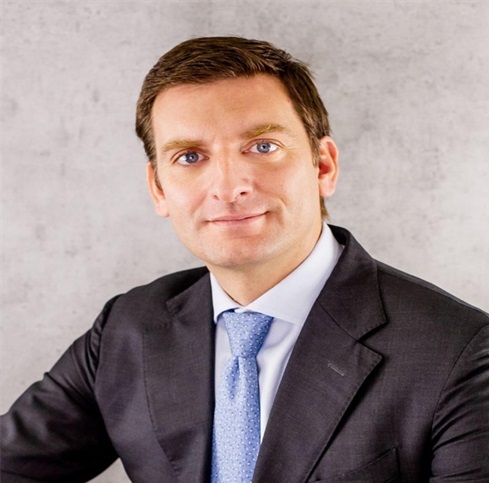
inspiratia sat down with Mirko Molinari, X-ELIO's Chief Commercial Officer, to discuss the company's journey, its global reach, and its ambitious plans for the future. As Molinari explains: "It's an exciting time for us as we're in the process to build more projects in the next two years than we did in our first decade".
Where are X-ELIO's key markets?
While our roots are in Spain, we truly are a global company today. Our core markets include the US, Mexico, Chile, Spain, Italy, Australia, and Japan. We also have strategic partnerships, such as a joint venture in the Middle East and a stake in Germany's energy storage platform, EcoStor.
Spain and Italy remain essential markets, with most of our projects under construction being located there. But looking ahead, the US and Australia are where we see the most growth potential. The diversity of these markets also helps us manage risks like regulatory changes, when one region slows down, others can pick up the slack.
Energy storage seems central to your strategy. Why is that?
A: It is! Solar is the backbone of what we do, but energy storage has become just as important. The two technologies are highly complementary. Solar generates power when the sun is shining, but storage allows us to shift that energy to when it's needed most — such as evenings.
The way I see it, the energy grid is one of the largest machines humanity has ever built, but it was designed for a world where production was predictable, like from coal or gas plants. With renewables, production is less predictable, it depends on the weather. Storage fills that gap, discharging to release energy when necessary, during peak demands, power outages or extreme weather events. It also provides support to the network system as it improves power quality by smoothing out voltage fluctuations, congestion relief, stabilizing frequency, grid balancing and demand-side energy management.
Solar and storage will go hand-in-hand, and we're positioning ourselves for that.
Is X-ELIO exploring other renewable technologies?
For now, we are sticking to what we are good at, solar and storage. We have looked at other technologies like wind and offshore wind, but they do not align as well with our strengths. Wind, especially offshore, requires longer planning and larger capital investments. That is more in line with what traditional energy companies do.
Our focus has always been speed, agility, and efficiency. By specialising, we can ensure we are delivering the best possible results in solar and storage.
Let's talk about Spain and Italy. What do you see as the opportunities and challenges in these markets?
Spain and Italy are very different markets. Spain has been a solar leader for years, but the main constraint there now is interconnection capacity. There is only so much room to connect new projects to the grid, and competition for that space is tight.
Italy, on the other hand, has very high electricity prices, which makes projects economically attractive. But the permitting process can be a nightmare. It is a complex regulatory environment with many stakeholders, and every region has its own rules.
That said, when you can get a project approved in Italy, it is incredibly valuable. The difficulty is part of the reward, if you can navigate the process successfully, the outcomes are worth it.
What makes a "good project" for X-ELIO?
That's our secret sauce! But seriously, a good project comes down to experience. We have learned a lot over the years about what works and what doesn't. There is no magic formula, you have to assess everything: land quality, grid connections, community support, and market dynamics.
One key is knowing when to say no. It is easy to chase bad projects and waste time and resources. We focus on keeping our pipeline clean, only pursuing projects with a high likelihood of success.
You also mentioned energy storage in Germany. What's fuelling your interest in that market?
Germany is fascinating because it has one of the highest renewable penetration rates in Europe. The government is retiring a lot of the country's thermal power plants, which means the grid needs new ways to stay stable. Storage is perfect for that - it can help balance supply and demand, manage price volatility, and provide grid services.
We are investing through ECO STOR, a platform focused on energy storage in Germany. It is an exciting market with a lot of growth potential.
You operate in the US and Australia, too. How do those markets compare?
Both are critical to our strategy. The US offers huge growth opportunities, especially with support from the Inflation Reduction Act. Australia is equally exciting, it has one of the most liberalised energy markets, which creates opportunities for innovative storage solutions.
We are building large-scale projects in both countries, often in the hundreds of megawatts. These are markets where scale really matters.
What about the UK? Any plans to enter the market?
Not at the moment. The UK has a well-established renewable market, particularly for wind and energy storage, and there are already strong players there. We tend to focus on markets where we can be early movers or add unique value, like the US, Australia, or Germany.
That said, we are always reassessing. If the right opportunity comes along, we would consider it.
How do you see the future of renewables?
The renewable sector has always adapted to challenges, whether it is regulatory changes or economic shifts. Even though interest rates are falling, they are still high. So interest rates are certainly making financing more expensive, but the long-term economics of renewables remain strong.
What is clear is that the world is moving toward dispatchable renewables, a combination of generation and storage. The technology is there, and markets are catching up. It is an exciting time to be in this industry!