Q&A – Gore Street Capital: Fundamentals of energy storage investing
 Ashkenaz A.L.
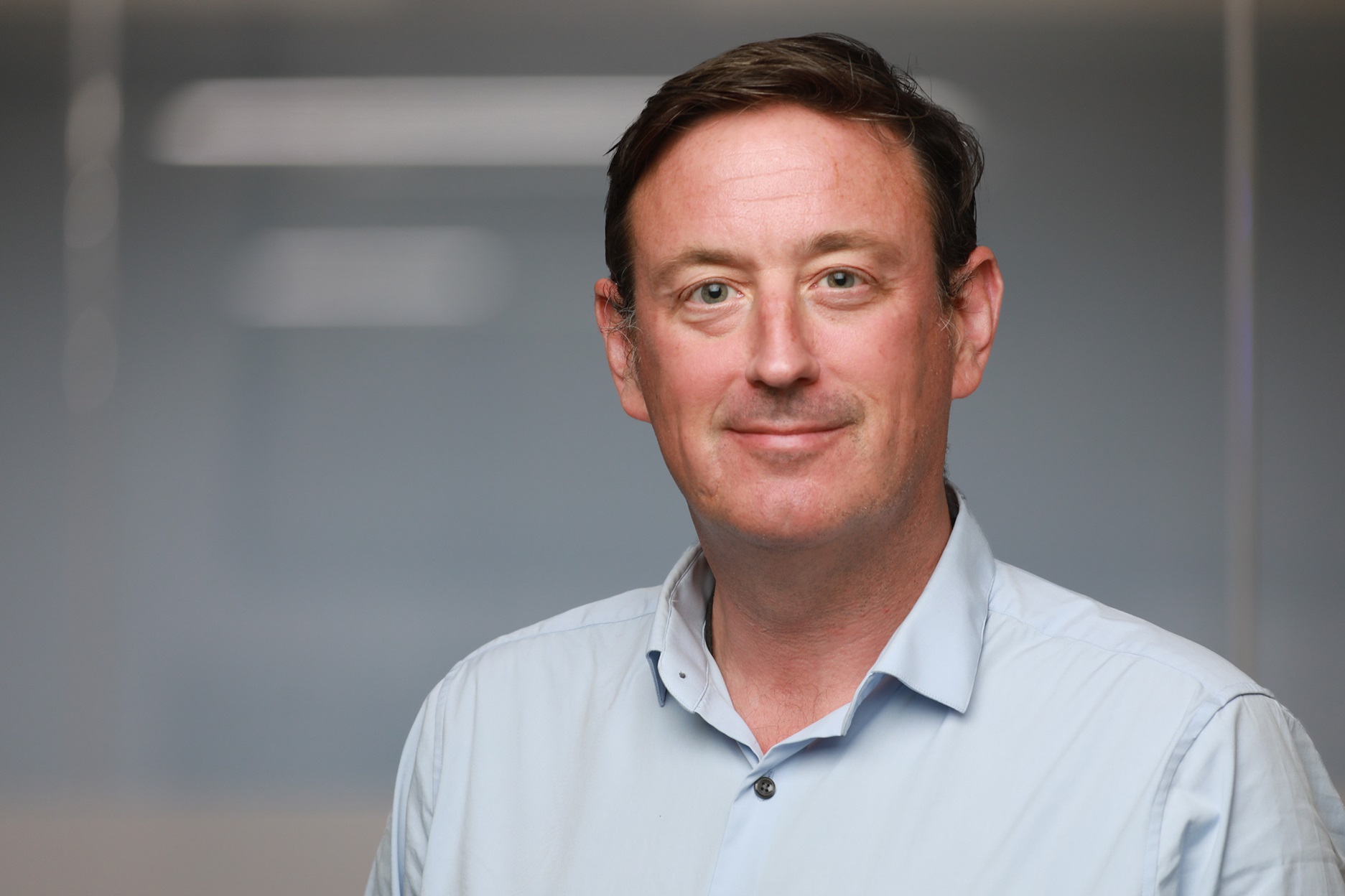
The battery energy storage system (BESS) market has gone through a significant shift over the past year. As the sector matures, developers have to do more work to prove the bankability of their projects. As a result, lenders are looking for portfolios where contracted revenues make up an increasing proportion of the revenue stack.
inspiratia sat down with Alex O'Cinneide, the chief executive officer of Gore Street Capital (GSC), to discuss how developers can adapt to this changing market. O'Cinneide noted that the "fundamentals of good investing" are just as applicable to BESS projects as any other asset class.
GSC is a well-established asset manager in the energy storage space, with a portfolio of nearly 1.3GW of assets. The company has been investing in BESS assets since 2016 and is now active in six countries across three continents.
O'Cinneide also touched on GSC's revenue strategy, as it favours merchant revenues in certain markets while opting for contracted revenues in others. No matter what route to market GSC takes, O'Cinneide stressed the importance of GSC managing its own assets and minimising risk across its BESS portfolio.
What key factors are driving Gore Street's investment strategy?
The firm was established with the mission of making a meaningful impact on the global energy transition. While this is a broad objective, it presents a wealth of opportunities for us to strategically deploy capital toward achieving both financial returns for our investors and advancing the transition to a low-carbon society.
We recognised the importance of energy storage early on and became one of the first movers in the British and Irish markets. In Germany, Texas, and California, we were quick to follow emerging opportunities, and we are now early entrants in Japan. We have consistently been at the forefront of the global energy storage sector, a critical asset class for driving the transition to a sustainable energy future.
Where do you expect to be the busiest for the next couple of years?
We expect to see significant activity across the EU in the coming years, particularly in Italy, Spain, Germany, and France. While our presence in Ireland is well established, markets like France, Spain, Italy, and Germany still have substantial storage capacity that needs to be developed. These regions represent significant growth opportunities for us, and we are actively pursuing them.
In the US, we are also looking to expand our portfolio in California, where we are currently constructing one of our largest assets with a capacity of 200MW/400MWh. In Texas, we already have a strong foothold and plan to extend some of our existing projects, increasing both their MW and MWh capacities. This is a strategy we've executed successfully in the past. For example, in the Republic of Ireland, we have increased the capacity of Porterstown by 60MW and Kilmarnock by 90MW.
A lot of renewable energy trusts have been trading at a discount over the past few months. What are the factors driving that trend?
The recent trend of renewable energy trusts trading at a discount can be largely attributed to shifts in the interest rate environment. As interest rates rise, investors have the option to earn 7-9% by investing in government bonds, which are considered low risk compared to the operational risks associated with dividend payments from renewable platforms. This shift makes bonds a more attractive choice for some investors, contributing to the decline in share prices and widening discounts in the renewables sector.
Since 2010, we experienced a prolonged period of very low rates, followed by two years of relatively high rates. Many forecasts suggest that rates will eventually decrease again, which should support a recovery in the value of renewable assets.
As a fund manager, how do you increase investor confidence in this high-interest environment?
For us, it's about demonstrating that the risks associated with our returns are effectively managed. If investors perceive the returns from owning Gore Street as being lower risk, those returns become more attractive. Our focus is on the fundamentals: developing assets at the right price, in the right locations, and at the right time, while executing strategies that deliver optimal returns. By excelling in these areas, we believe investors will continue to support and invest in our stock.
How do you manage risk-adjusted returns, especially for technologies like BESS, which can be considered higher risk?
I don't think the technology is perceived as high risk. Our 1.25GW fleet, which is one of the world's largest fleets of energy storage, is all lithium-ion. That is a well-known, well-understood technology solution, and one that we have operated to date in a very safe and secure manner.
To minimise risk across our portfolio, we focus on several key areas. First, we ensure we are spending the right amount of money, that we are not overspending on our assets. Second, we ensure assets are geographically diversified, to access diversified and uncorrelated revenue streams. Third, we ensure that our assets have the right availability, so their assets are well maintained; making sure our assets are safe, so they have the right systems in place.
Lastly, we focus on ensuring our assets have optionality. Energy storage, while part of the renewable's ecosystem, is unique in that it offers multiple revenue streams. Unlike solar and wind, which generate revenue solely from selling green electrons, energy storage can generate revenue in up to 20 different ways, and those opportunities can evolve over time. Therefore, we design our assets to be adaptable, ensuring they can meet changing market demands.
What can BESS developers learn from all that's been happening over the past year, especially with concerns about revenues?
I think what they should learn is that the fundamentals of good investing apply to energy storage just as much as they apply to any other asset class. Key principles include maintaining a diversified portfolio, avoiding excessive leverage, and minimising the amount of money spent on building that portfolio. Those core characteristics apply just as much energy storage as to any asset class. Additionally, the unique capabilities of GSC, with the in-house technical and investment functions, allow GSC to maintain a broader perspective of the opportunities available.
Speaking at our recent BESS event, you sounded keener on merchant revenues from BESS rather than contracted revenues like Italy's upcoming MACSE auction. What is the rationale behind going purely merchant?
If you look at our overall portfolio, I would say about 11% of our portfolio revenues contracted out north of 12 years. We expect this to increase as Big Rock, the 200MW/400MWh project, is operational, due to its eligibility for the long-term Resource Adequacy contract. We are absolutely happy to take contracted revenue as long as it is at the right price but what we are not willing to do is give up the upside of being active managers of our assets.
We have, since inception, generated 20% per annum cash yield over invested capital, and a circa 10% unlevered IRR, and we have done that by being the active managers of assets in a merchant revenue stream situation. We are happy to take contractual revenue as long as it hits our base case, but it is very clear that we need to maintain our ability to be in the merchant market because that is what will generate the Alpha returns for our investors.
Are there certain markets where having contracted revenues will be more favourable?
There are markets which will offer more contracted revenues, and if we like the price, we will take them. So, in the British market, there are capacity market contracts. These are 15-year contracts, inflation-linked and guaranteed by the UK Government. They are stackable, so we can do other things while having that contract. The majority of our UK assets have capacity market contracts.
In California, there is the resource adequacy contract. That is a 12-year contract that could provide up to 40% of an energy storage assets revenue. We are happy to contract into it.
What we are not willing to do is give up the management of our assets. You could hand over the management of the asset to another company to manage on their behalf at a certain fixed price, those options are available. However, that means that you have decided that you are not good enough to actively manage your assets. That's not who Gore Street is.