Q&A - 3i Infrastructure: Investing in critical infrastructure
 Zachary Skidmore
EU
InfrastructureQ&A3i Infrastructure is an investment trust listed on the London Stock Exchange. The trust invests mainly within the European and Asian markets, focusing specifically on the utilities, transportation and digital infrastructure markets.
3i Infrastructure holds interests across various portfolio companies across these sectors, which it works closely with to support its growth. Most recently, in April [2023], 3i Infrastructure portfolio company Tampnet acquired dasNetz AG, a leading provider of offshore wind connectivity in the northern European market.
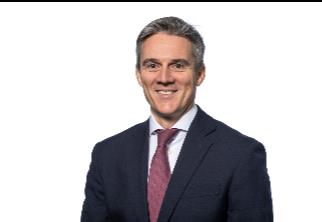
Inspiratia spoke to Scott Moseley, managing partner and co-head of European infrastructure at 3i Infrastructure, about the future of the data centre market, the role of essential services in the upscaling of offshore wind and what sectors to look out for in the near to mid future.
What is 3i's infrastructure business?
3i is one of the oldest private equity institutions in Europe. 3i was established after the second world war to rebuild Britain. In that sense, it has a long-standing connection with infrastructure.
It is best known now for its private equity business and set up an independent infrastructure business in 2007. The creation of the infrastructure arm came with the realisation that infrastructure was emerging as a separate asset class with different characteristics to a typical private equity investment. But the way that we think about managing and investing shares a lot of heritage with that found in our private equity approach.
Therefore, we're very active managers and strive to work closely with the 3i private equity network throughout Europe and North America. Much of how we interact with our businesses is based on the knowledge we've learned through the long-standing private equity franchise. Subsequently, we're very active in how we deal with management teams and are very thoughtful in how we think about growing value, and ultimately looking to exit our investments at the right moment in time.
Last year 3i Infrastructure acquired a 100% stake in Global Cloud Xchange (GCX). What was the rationale behind the acquisition?
The acquisition is illustrative of the way we like to do things at 3i Infrastructure. We secured the investment through a bilateral dialogue with the management team. Carl Grivner, the CEO, saw great potential in their business but realised they needed a backer who was prepared to invest further in the company, and the shareholders that it had at the time were limited in how they were prepared to help that company grow. We were very excited because it's a space we've been thinking about for a long time. In particular, we liked the uniqueness of the routes within GCX's architecture.
There's a lot of excitement around digital infrastructure, including data centres. On the surface, digital infrastructure is a single asset class. However, as you dig a little deeper, you realise there's a wide variety of investment potential within that asset class.
In GCX, we saw a unique infrastructure footprint, as well as operational expertise. Its value is predominantly in routes connecting Europe to Asia through the Middle East, where you benefit from very fast-growing demographics and populations with underdeveloped digital infrastructure at the moment. GCX is predominantly an existing network of subsea cables globally, but the growth potential, particularly in the markets it serves now, is exciting.
The data centre market has seen a boom in investment over recent years. What has driven this growth?
There are two interesting dynamics that we observe within the data centre market. Everyone is aware of the exponential growth in data demand at the consumption level. The other trend that's interesting is the increasing complexity of the network architecture. We're seeing the number of connections into and out of data centres exploding, as well as the underlying capacity and bandwidth consumption.
As an infrastructure provider, that is very interesting as it means the number of routes that data centres need from a fibre perspective is increasing. A data centre's individual relevance to the market is increasingly correlated to its ability to serve as effectively as other data centres within the community.
Our view is that this is only going to increase in velocity, particularly as drivers like AI come through. You'll see very fast growth in data centre required capacity, but also in that sort of mesh architecture, which plays favourably into GCX's positioning. So that's something that we're super excited about. At the same time, you can't assume that every data centre will be a beneficiary. You do need to be thoughtful in the way that you go about selecting the infrastructure that you invest in, and there will be winners and losers.
What do you think about the risk of political intervention?
We start from the perspective that our investments are critical infrastructure. As a manager, you need to acknowledge how vital your assets are to the underlying communities you serve. Subsequently, it's naïve to think that there isn't going to be some form of observation as to how you manage those assets. And we need to be responsible custodians of those assets.
So we start from that perspective. But at the same time, the obvious flip side is that these assets are potentially politically sensitive and not wholly immune from political intervention. At the macro level, we saw that across Europe in the last 12 months in the form of energy levies and windfall taxes. However, it's impossible to say there will be no political intervention, and it's impossible to predict precisely where political intervention might come from.
The way we approach it is to be thoughtful. For something like inflation, where our companies are passing through price increases, we ask ourselves – Is it the responsible thing to do to entirely pass through everything that's entitled under the contract?
I think working closely with management teams is the best way to make sure that you achieve a balanced outcome. Of the managers in our space across the board, the most successful are those who make sure that they don't lose sight of the fact that the services we are providing are essential services, and we need to be responsible custodians.
Sustainability and ESG are critical tenets of 3i Infrastructure's investment strategy. How does the firm ensure that the companies it invests in adhere to its ESG guidelines?
We approach it collaboratively as we're trying to have a positive influence on our companies. If we were considering a new investment and, through a due diligence process, we had the sense that a management team was absolutely opposed to embracing any ESG agenda or did not understand the importance of that agenda, that would be a deal breaker for us.
There are two pieces to this. Firstly, the custodian piece. It is increasingly important that you behave with sustainability at the core of your thinking. But there's also the value creation piece, thinking about managing my shareholders' interests and delivering value for my shareholders. I genuinely believe, and my team is in the same place, that the companies that can be at the forefront of the ESG conversation are the ones that are going to be sold into the deepest pool of liquidity because you're going to have institutional investors, pension funds, that are even more concerned about that element. So for us, ESG is directly linked to value creation, reputation and the licence to operate now for these assets that we manage.
3i Infrastructure portfolio company ESVAGT recently signed a 15-year contract to service the largest offshore wind farm in North America. With the US coming to the fore as a major player in offshore wind, do you see the market for Service Operation Vessels (SOV) within the country growing significantly?
That contract was a milestone as ESVAGT is the market leader in Europe for SOV by some distance. When we bought the business in 2015, we found an incredibly innovative business and a management team with a history of being very innovative in the space.
In Europe, ESVAGT has a market share of 40%, with further growth expected. In addition, it has been pulled into some other parts of the world by European operators, and that's exactly what's happened in the US, where ESVAGT's JV is the counterparty to Siemens.
It's really exciting for us because it opens up a new market. To give some context, the US offshore wind operating capacity is only about 40MW currently, but with the Inflation Reduction Act and the ambition to have 30GW of offshore wind operating by 2030, there is huge growth potential. Therefore we expect that we'll be able to build on this as the offshore wind pipeline materialises in the US, and we'll continue to win more contracts.
What technologies have you earmarked for future investment? Are there any emerging technologies you see coming to the fore as investable assets?
It's a really exciting time to be an infrastructure investor because the world is changing so quickly, and the things we're investing in facilitate that change. We have a fast-growing portfolio. In 3i Infrastructure's recently announced results, we reported that the EBITDA of the underlying portfolio grew 18% in the 12 months to year-end. In addition, we invested more than £400m in our portfolio.
For the near term, we'll be continuing to invest in our portfolio companies, and the innovation we're looking to back is through those companies, such as GCX moving with the data centre market as well as data transmission operation, Tampnet moving into building capacity to help service the data centre community, and Infinis thinking about how best it monetises its distributed inventory of electricity grid connections.
That's where we're predominantly focused at the moment. When I look back on the core elements of our success over time, it is the ability to identify trends in the market, successfully prove the infrastructure characteristics that go with those trends, de-risk the volatility that we might see at the point of entry, and then exit.
The easiest way to continue to do that is through our portfolio companies, particularly when we consider some of the earliest-stage technologies that we've touched on today. Suppose you have an existing company with a really strong footprint, downside protection, a high EBITDA margin, and a strong market position. In that case, it's much easier to dip your toe into the water around some of these earlier-stage technologies, as things are moving so quickly with management teams who have industry experience. In turn, that's where our team is focusing. We're looking to make further growth investments through our portfolio, predominantly in sectors where we've got an interesting perspective that will allow us to deliver shareholder value.