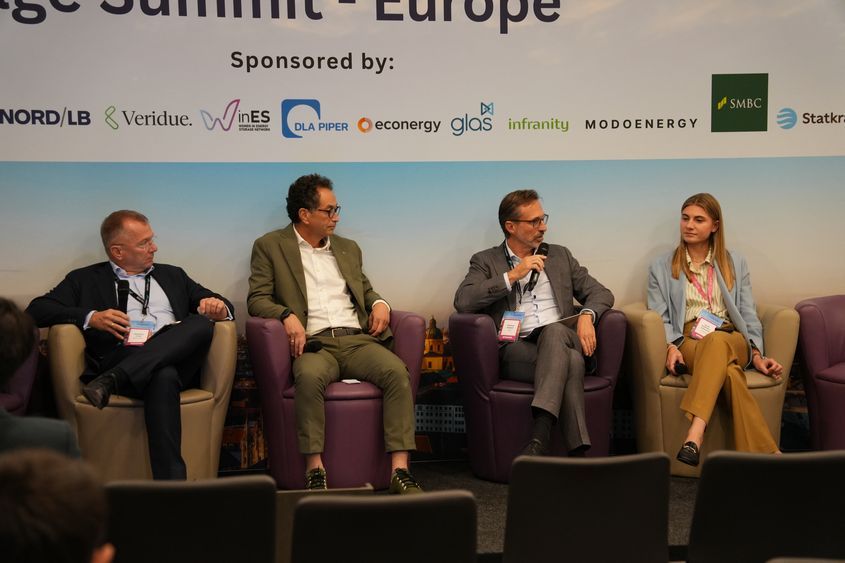
Inspiratia’s Energy Storage Summit – Europe 2026: key takeaways (Day 1)
 Maya Chavvakula
EU
Battery StorageEventEsgAuctionFinancingFundsGeopoliticsM&APermittingPolicy & RegulationRiskinspiratia is back in Munich for our annual Energy Storage Summit – Europe, and for the first time this year [2026], the conference has been extended to include a second day.
We’ve shed the glamorous Allianz Arena for the picturesque and infinitely more convenient setting of the Eurostars Grand Central in Maxvorstadt.
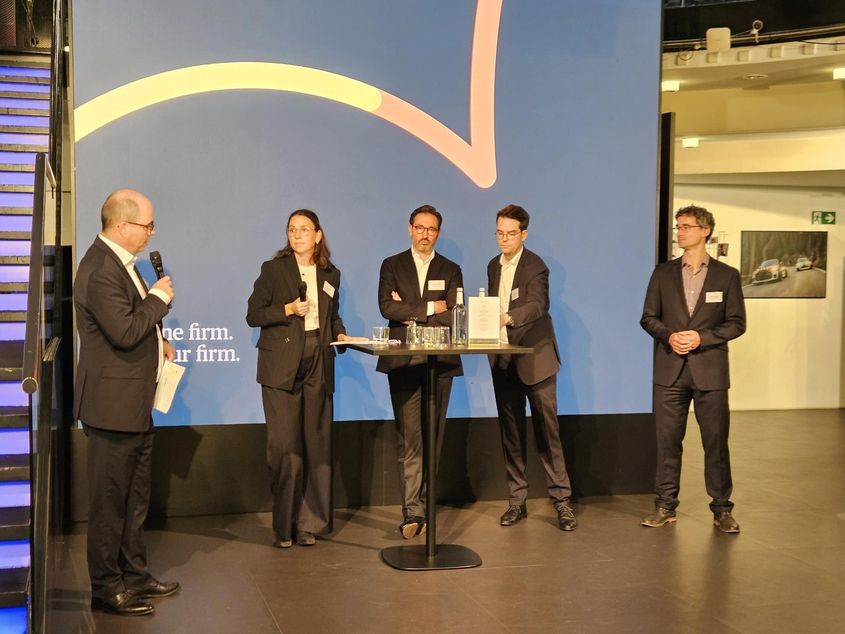
The conference kicked off with an exclusive gathering on 28 October, hosted by global law firm Bird & Bird. The law firm hosted a panel which discussed three prominent themes:
Bankability of flexible connection agreements (FCAs)
“It comes down to addressing two main issues:
Off-taker creditworthiness and contract tenor (which is often shorter than the debt amortisation period);
Mitigating the risk that availability/performance penalties or accelerated battery degradation impair the cash flows dedicated to debt service.
Bankability aspects may change from North to South Europe since Northern markets rely primarily on short-term commercial tolling or floor contracts to manage saturated ancillary services, whereas Southern markets offer long-term government capacity contracts and extreme solar price spreads, allowing lenders to provide higher leverage and longer debt tenors”.
Use of AI in the due diligence process and its limitations
“At Bird & Bird, we use Legora alongside bespoke AI tools throughout the entire due diligence process to organise data-room materials and automate elements of initial document review. This enables our lawyers to analyse larger volumes of information efficiently and deliver clearer, more consistent due diligence reporting. AI supports rather than replaces legal judgement.
"There are practical limits: data-room restrictions may prevent documents from being downloaded for AI review, while certain documents such as land-registry extracts can be harder to process and may require manual review. Our lawyers check the AI’s findings against the underlying documents and remain responsible for the final advice.”
The latest restrictions on batteries from outside the EU, and the impact on the market
“The Net-Zero Industry Act (NZIA) aims to scale up European manufacturing and reduce the EU's dependency on single suppliers, which for batteries is largely China. In public procurement, products from a single third country on which the EU is heavily dependent may account for no more than 50% of the contract value.
Chinese manufacturers are not excluded as such, since the rules look at the origin of the product rather than the nationality of the manufacturer, and they do not apply to private projects. However, origin is determined under the Union Customs Code, which contains no sharp product-specific criteria. There is therefore room for interpretation as to which production steps must take place in the EU for a product to be recognised as of EU origin. The proposed Industrial Accelerator Act could add some clarity by specifying which components must be of EU origin.”
Opening of day 1
NORD/LB’s Niels Jakeman opened the conference [29 October] with welcome remarks. It turns out that beer and battery permits have a lot in common (his views, not the bank’s).
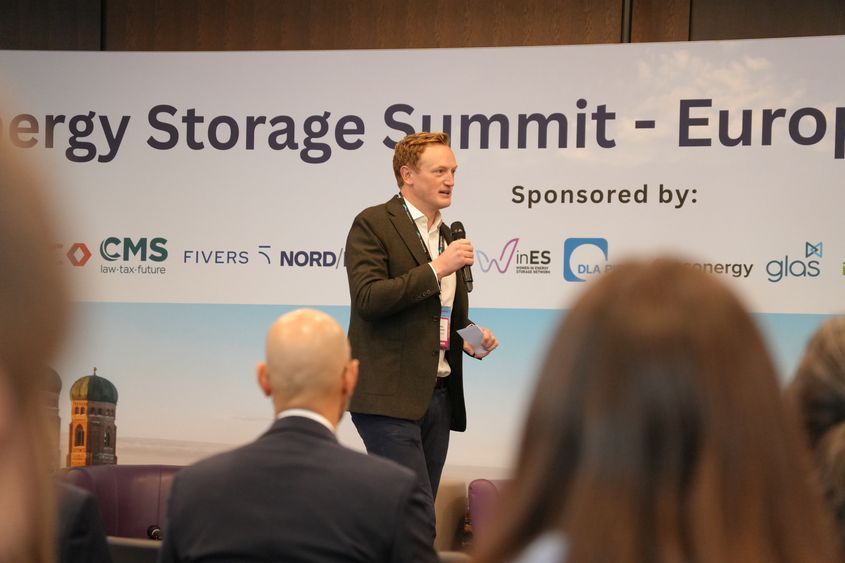
Amit Ranjan from Modo Energy then presented on bankable revenue streams for battery storage assets.
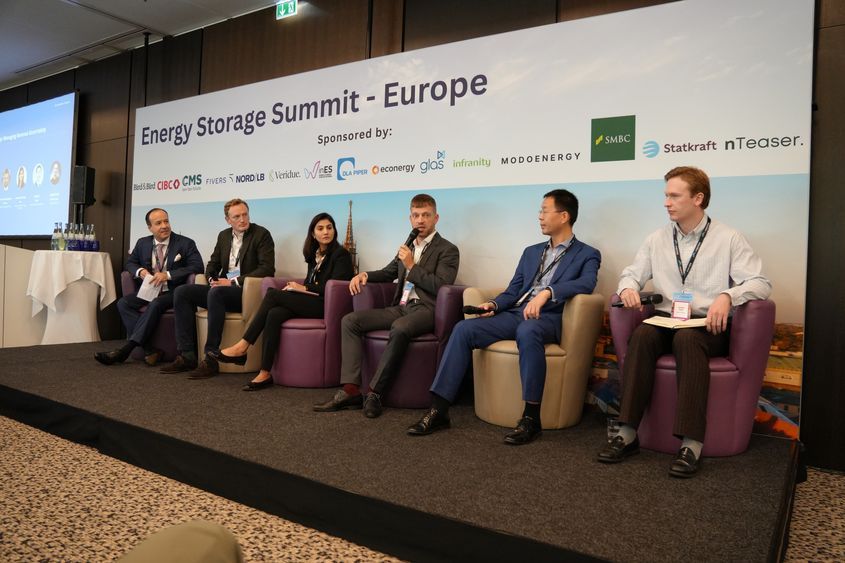
The first panel of the day was on financing models for energy storage assets with a focus on revenue uncertainty.
Speakers included:
- Niels Jakeman – head of energy originations Europe at NORD/LB
- Stefan Rattensperger – investment MD at Infranity
- Sanchita Thaker – executive director of energy transition at CIBC
- Jing Liu – head of power & renewables at SMBC
- Joseph Bush – head of advisory at Modo Energy
The panel was moderated by Wolfram Distler, partner at DLA Piper.
Financing Energy Storage: Managing Revenue Uncertainty - Key takeaways:
- The size of batteries varies in different European markets, which translates to different approaches to financing. Single asset PF in the UK is possible, as the average size is 100MW, while lenders may prefer a portfolio approach in Germany, where individual assets on average are around 30MW
- Lenders are prepping for changes in battery function from the very start as the market matures to include larger capacities and longer durations
- Underwriting may become more prominent in the sector as project size, and therefore CapEx costs, go up
- Banks still prefer contracted revenues, at least 50% threshold
- Investors don’t tend to have fixed offtake thresholds and rather rely on rationale for strategy
- Near-term outlook: wider range of investors participating in the sector, including hyperscalers & emergence of hybrid offtake agreements
- Batteries will evolve to become an infrastructure asset class
The second panel centred around building bankable storage projects.
Speakers included:
- Pedro Pablo Gomez – deputy engineering centre manager at AVL UK
- Hanna Kunzmann – vice president at EQT
- Vincenzo Roccuzzo – VP of engineering at NHOA Energy
- Daniel Csonth – founder and CEO of Veridue AI
- Simone Thrun – head of project finance at Helaba
The panel was moderated by Philip Duffield, partner at CMS.
From Concept to Close: Building Bankable Storage Projects – Key takeaways:
- BESS is broadly understood by investors from a tech perspective, but nuances in grid connection agreements complicate investment decisions
- Quality of pipeline matters more than sheer capacity
- Lenders are looking for “high-quality partners” to make the asset class sustainable during the growth period
- Degradation risk: much different in practice compared to models developed before battery enters operation
- Software risk: evolving tech could drastically change functional performance of batteries
- Tech risk: relying on manufacturer specs may complicate matters, especially with the EU’s stringent regulations on noise
- Closer attention to policy changes that affect project bankability
- Good BESS assets are in demand; visibility and early access are key to buyers
- Use of AI to streamline M&A processes in the sector could be infinitely beneficial for sellers and could reduce advisory costs on both sides of the deal
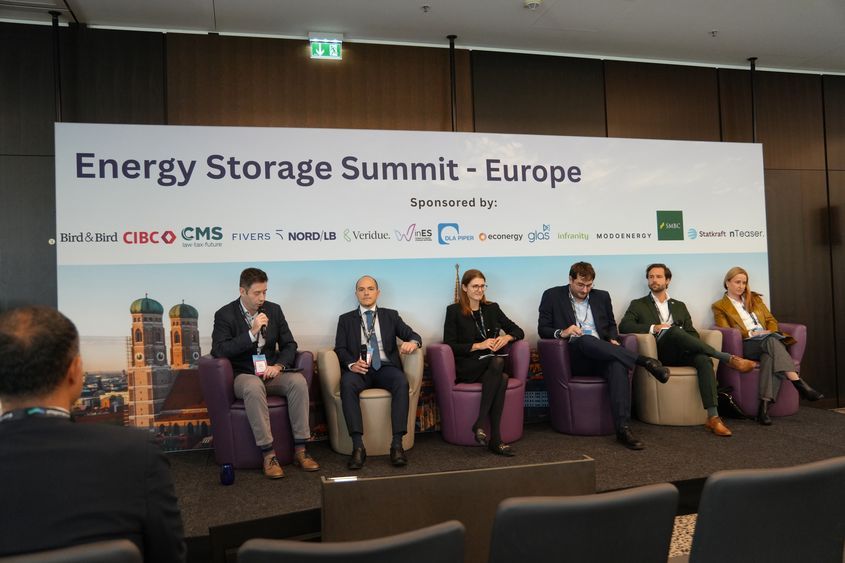
The third panel focused on revenue stacking and other models for battery storage assets.
Speakers included:
- Lars Maehl – CCO at Ampyr Solar
- Thaddäus Kreisig – principal at Aurora Energy Research
- Simon Kornek – VP of southern Europe origination at Statkraft
- Lisa McDermott – head of energy transition project finance at ABN AMRO
- Maria Di Marzio – senior director of specialist project finance at BayernLB
The panel was moderated by Louise Dalton, energy & infrastructure partner at CMS.
Revenue Stacking and Offtake Strategies for Energy Storage – Key takeaways:
- Regulatory framework is key for long-term investments
- For investors: depth of offtake markets, competition and bankability are crucial
- Revenue stack for batteries is a moving target unless they have a full physical toll
- For developers: ability to price risk and route to market, along with access to ancillary markets, are key considerations
- Lenders are becoming increasingly comfortable with the merchant model in mature markets, particularly in a portfolio scenario with a mix of contracted revenues
- Lenders cannot have a cookie cutter for the asset class due to the diversity and mix of revenue stacks
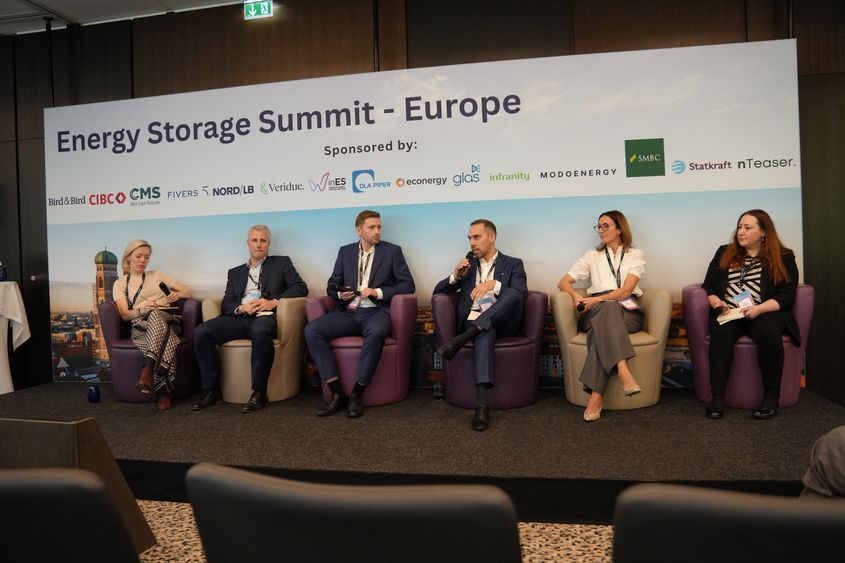
The fourth panel included a closer look at balancing systems and was sponsored by Women in Energy Storage Network (WinES).
Speakers included:
- Louise Dalton – energy & infrastructure partner at CMS and founder of WinES
- Lisa McDermott – head of energy transition project finance at ABN AMRO
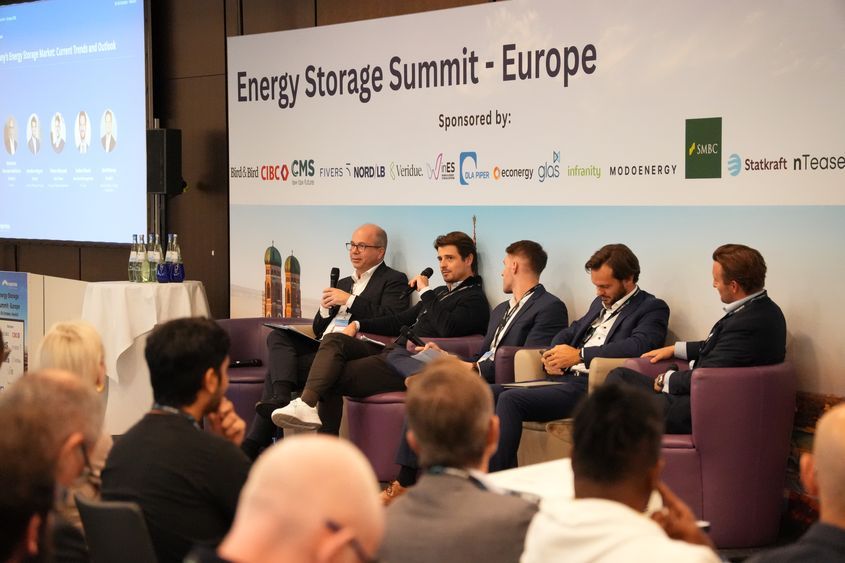
The fifth panel of the day explored the current trends and outlook for Germany’s energy storage market.
Speakers included:
- Jonathan Wagner – Germany country manager at Zenobe
- Florian Kloryczak - Mirai Power | Manager, Project Development
- Stefano Fissolo – principal at Ares Asset Management
- David Stomps – senior director of energy originations at NORD/LB
The panel was moderated by Hermann Rothfuchs, partner at Bird&Bird.
Germany’s Energy Storage Market: Current Trends and Outlook – Key takeaways:
- A lot of support for the asset class at EU level, but policy clarity is pivotal for local pipelines
- Revenue cannibalisation is an issue, and capacity increase (from 4GW now to a target of 20GW by 2030) needs to be factored in
- Germany’s battery market is still heavily reliant on merchant models, but investors are still keen on contracted revenue, which could lead to the creation of a parallel market to cater to the need
- Banks don’t finance batteries; they finance cash flows
- Flexible connection agreements (FCA) add a layer of complexity for financiers
- Grid connection fees for BESS in Germany are palatable, which further encourages investment, but policy uncertainty could lead to “mass disappointment and chaos”
- Investment in German battery is straightforward, but details are in the execution
- Grid fees transferred to the offtaker as part of the optimisation structure
- Optimistic outlook for the near term; all market participants show willingness to adapt to evolving market conditions
This panel was followed by a presentation on Spain’s battery storage market by inspiratia team. Detailed debrief in an article to follow.
For the sixth panel, the discussion turned to energy storage markets in southern Europe.
Speakers included:
- Quentin Pletinckx – commercial lead at Veridue AI
- Maria Teresa Solaro – partner at Fivers
- Carmen Izquierdo Serrano – CEO of nTeaser
- Maria Di Marzio – senior director at BayernLB
The panel was moderated by Pierpaolo Mastromarini, partner at Bird & Bird.
Southern Europe’s Storage Market: From Project Pipeline to Delivery – Key takeaways:
- A drop in capture prices corresponds to a wider four-hour spread
- Cannibalisation is a real issue in Spain
- Data centre demand in southern Europe outpaces the rest of Europe, but risk management could hinder buildout
- Storage is crucial to Spain, but the pace of delivery needs to catch up
- Italy has a strong pipeline target, but integrating it into the grid is an issue
- Development of primary and secondary frequency market in Italy in response to the buildout targets
- Market saturation in Italy is inevitable and will require lenders to adapt their approach to the asset class
- Grid connections and policy uncertainty remain issues in both Spain and Italy
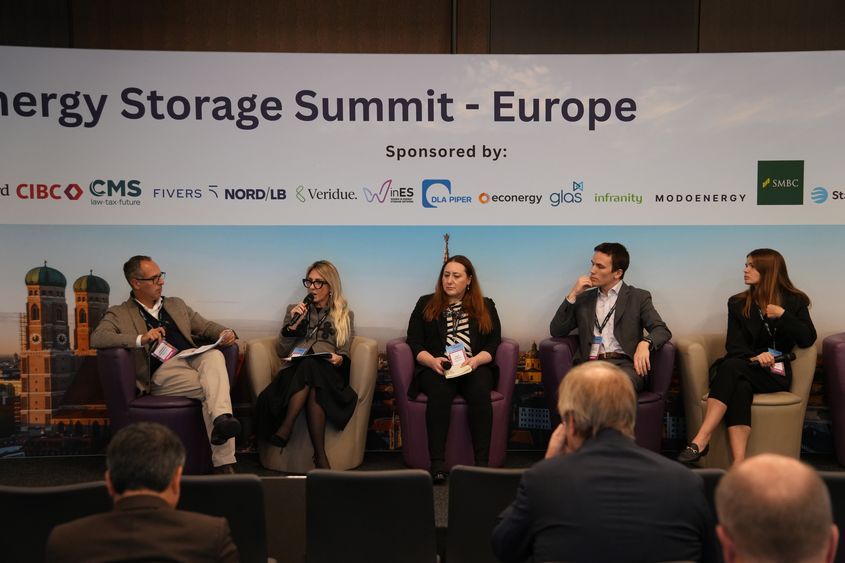
The panel was followed by a brief presentation on M&A and EU trends from nTeaser CEO Carmen Izquierdo Serrano.
The seventh panel centred around energy storage markets in Central and Eastern Europe with a focus on Poland and Romania.
Speakers included:
- Pawel Kordala – head of investment office at R.Power
- Gijsbert Huijink – co-founder of Sol Renewables
- Jan Kłoczko – MD at Entrix Poland
- Henriette Weser – consultant at Enervis
- Jacopo Buriollo – founder and CEO of Megawatt
- Calvin von Bassewitz – project manager at Finadvice
The panel was moderated by Maya Chavvakula, head of news at inspiratia.
Energy Storage in Central and Eastern Europe – Key takeaways:
- Poland remains attractive to investors despite reduced state-backed support; parallel private offtake market growing quickly
- Romania, right now, is for discerning investors with a track record in the sector
- Lenders active in both countries are sophisticated and able to quickly adapt to evolving delivery conditions
- Both countries offer significant opportunity with increasingly direct paths to project delivery
- UC84 in Poland: positive overall and expected to expedite battery delivery
- Grid fee in Romania: will clear out “zombie” projects but could be amended to reduce burden on developers
- Significant growth expected in the near term in both markets
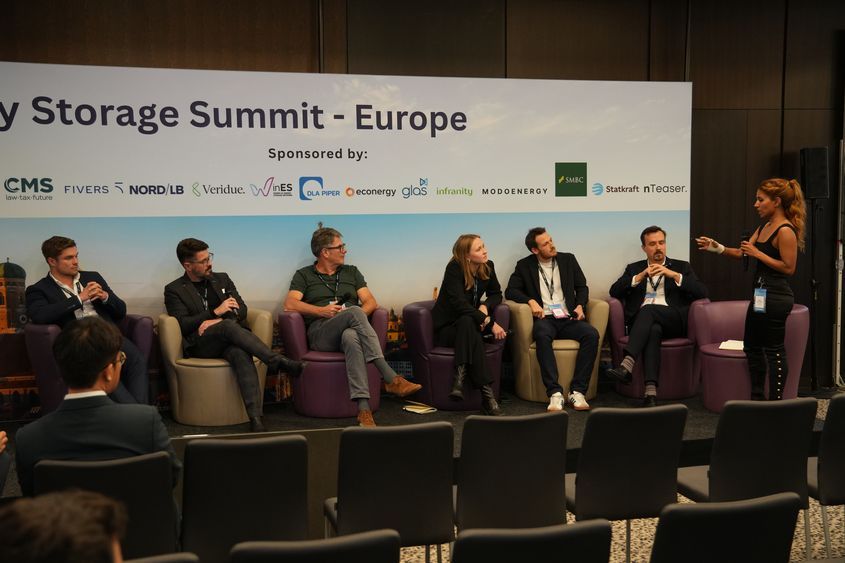
The final panel for the day took a closer look at the growth in data centre demand and its implications for energy storage systems.
Speakers included:
- Christian Pho Duc – CTO at SMARTENERGY Group AG
- Thomas Hamerl – partner at CMS
- Laura Hoffmann-Ostenhof – central Europe industry lead at Gridcog
Data Centres, Demand Growth and Implications for Energy Storage – Key takeaways:
- Flexibility in delivery models crucial to plug gaps left by grid connection delays
- Location of data centres still crucial, but planning will also play an equally important role
- Battery can be used to provide uninterrupted energy supply for data centres and potentially replace dependence on fossil fuel alternatives
- Data-centre demand for storage is complicated because it doesn’t translate MW for MW